
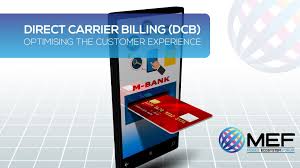
In the global payments conversation, innovation is usually framed around cards, wallets, real-time payments, and crypto rails. Carrier billing, by contrast, is often relegated to the margins seen as a legacy option for ringtones, games, or app subscriptions. That perception is deeply misleading. This represents one of the earliest and most successful examples of embedded payments at scale, long before the term “embedded finance” entered boardroom vocabulary. It turned telecom operators into de facto payment intermediaries, enabled digital commerce without banks, and brought millions of first-time users into the digital economy. To understand carrier billing is to understand a parallel payments universe one that operates on trust in connectivity rather than trust in banks.
What Is Carrier Billing?
Carrier billing (also known as Direct Carrier Billing – DCB) allows consumers to pay for digital goods and services by charging the cost directly to their mobile phone bill or prepaid mobile balance.
Instead of using:
-
Cards
-
Bank accounts
-
Wallet balances
The payment is settled through:
-
A mobile network operator (MNO)
-
The telecom billing system
-
Periodic reconciliation with merchants and aggregators
From the user’s perspective:
“Confirm purchase → charges appear on phone bill.”
That simplicity is its greatest strength—and its greatest constraint.
Why Carrier Billing Emerged
It emerged at the intersection of three realities:
-
Mobile penetration outpaced banking penetration
-
Digital content needed a frictionless monetization model
-
Telcos already had billing relationships with users
In many markets, especially emerging economies:
-
Consumers owned phones but not bank accounts
-
Telcos had trusted billing infrastructure
-
Monthly billing cycles normalized deferred payment
It was not invented to disrupt banking.
It emerged to solve a practical access problem.
How Carrier Billing Works
A typical carrier billing transaction follows this flow:
-
User selects a digital product or service
-
Merchant offers “Pay by mobile”
-
User enters mobile number or confirms via device
-
Telco authenticates the user (SIM, OTP, network check)
-
Charge is applied to prepaid balance or postpaid bill
-
Telco settles with merchant via aggregator
Behind the scenes:
-
Telcos assume collection risk
-
Merchants accept delayed settlement
-
Aggregators manage routing, compliance, and reconciliation
This model flips traditional payments logic:
The network collects first; the merchant gets paid later.
The Trust Model: Connectivity as Credit
Carrier billing relies on a fundamentally different trust model than banking.
Banks ask:
-
Who are you?
-
What is your credit history?
-
What is your balance?
Telcos ask:
-
Is this SIM active?
-
Is the device authenticated?
-
Is the account in good standing?
In effect, connectivity becomes a proxy for identity and creditworthiness.
For prepaid users, spending is capped by balance.
For postpaid users, spending is bounded by telco-defined limits.
This makes carrier billing:
-
Predictable
-
Contained
-
Highly controlled
But also:
-
Limited in ticket size
-
Restrictive for high-value commerce
The Early Use Cases: Digital Content and Micro-Payments
Carrier billing found its first mass success in:
-
Ringtones and wallpapers
-
SMS-based services
-
Games and app downloads
-
Streaming subscriptions
-
In-app purchases
These use cases shared key traits:
-
Low transaction values
-
High frequency
-
Digital delivery
-
Impulse-driven consumption
It thrived where friction killed conversion.
Why Consumers Adopted Carrier Billing
Consumers embraced because it:
-
Required no bank account
-
Required no card
-
Eliminated form-filling
-
Worked on basic phones
-
Felt familiar and safe
For first-time digital consumers, carrier billing was often:
The first time money moved digitally on their behalf.
That makes it a quiet but powerful inclusion tool.
The Telco Perspective: Accidental Fintechs
For mobile network operators, carrier billing created:
-
New revenue streams
-
Higher ARPU (average revenue per user)
-
Stickier customer relationships
-
Expanded role in digital ecosystems
Telcos already had:
-
KYC data
-
Billing engines
-
Fraud controls
-
Distribution reach
It turned telcos into accidental payment institutions, even if regulation did not always recognize them as such.
The Merchant Perspective: Reach Over Margins
From a merchant’s point of view, carrier billing is a trade-off.
Pros
-
Access to unbanked users
-
Higher conversion rates
-
Simple user experience
-
Strong authentication
Cons
-
High fees (often 15–30%)
-
Settlement delays
-
Limited transaction values
-
Complex reconciliation
Merchants use carrier billing strategically:
-
As an acquisition channel
-
As an inclusion layer
-
As a fallback option
Rarely as a primary payment rail.
The Aggregator Layer: Invisible but Essential
Carrier billing does not scale without aggregators.
Aggregators:
-
Connect merchants to multiple telcos
-
Normalize APIs
-
Manage compliance and reporting
-
Handle dispute resolution
They act as the payments middleware between telecom and commerce—similar to acquirers in card payments.
Without aggregators, It would remain fragmented and local.
Fraud and Risk in Carrier Billing
It is not fraud-free but its fraud profile is unique.
Lower Risk
-
No card data to steal
-
SIM-level authentication
-
Spending caps
-
Network-verified users
-
Higher Risk
-
Subscription fraud
-
User confusion over recurring charges
-
Social engineering
-
Regulatory scrutiny over consent
As a result, regulators focus heavily on:
-
Explicit user consent
-
Clear disclosures
-
Easy opt-out mechanisms
Trust is fragile when billing feels invisible.
Regulatory View: Payments Without Banks
Carrier billing occupies an unusual regulatory space.
It is:
-
A payment mechanism
-
But not always regulated as a payment service
-
Operated by telecoms, not banks
-
Settled off traditional payment rails
Regulators worry about:
-
Consumer protection
-
Transparency
-
Billing disputes
-
Revenue sharing models
In many jurisdictions, rules evolved reactively—after abuse cases—rather than proactively.
Carrier Billing and Financial Inclusion
It is the most underappreciated role is in financial inclusion.
In markets where:
-
Banking access is limited
-
Cards are rare
-
Smartphones are widespread
Carrier billing enables:
-
Participation in digital commerce
-
Access to content, education, and services
-
Familiarity with digital payments
It often acts as:
A bridge, not a destination.
Many users move from carrier billing to wallets, then to banks.
Why Carrier Billing Never Became Mainstream Commerce
Despite its strengths, It did not evolve into a universal payment method because of structural limits:
-
High fees restrict merchant adoption
-
Telco billing cycles slow settlement
-
Regulatory ambiguity limits expansion
-
Ticket size caps restrict use cases
It excels at small, frequent, digital transactions—not at general commerce.
Carrier Billing vs Wallets vs Cards
Compared to cards:
-
Lower fraud exposure
-
Higher fees
-
Smaller transaction limits
Compared to wallets:
-
Less flexibility
-
Less programmability
-
Fewer value-added features
It is not competing to replace wallets or cards.
It competes to capture moments of friction-sensitive demand.
The Smartphone Era: Reinvention or Decline?
With the rise of app stores and platforms like Google and Apple, carrier billing found a second life as:
-
An alternative checkout option
-
A regional payment enabler
-
A tool for emerging markets
Platform-level integration gave carrier billing:
-
Better UX
-
Standardized flows
-
Improved compliance
But also reduced telco control.
The Economics Problem
Carrier billing’s biggest challenge is economic sustainability.
High fees reflect:
-
Collection risk
-
Infrastructure costs
-
Revenue sharing across multiple layers
But as digital commerce margins tighten, merchants increasingly:
-
Limit carrier billing to specific regions
-
Use it only for acquisition
-
Cap usage aggressively
It must evolve its economics or narrow its role.
The Future of Carrier Billing
It is unlikely to disappear—but it will specialize.
Future roles include:
-
Emerging market digital inclusion
-
Gaming and entertainment
-
Subscription onboarding
-
Backup payment option
-
IoT and machine-initiated payments
In some scenarios, the SIM itself becomes a payment credential—especially in connected devices.
Strategic Lessons from Carrier Billing
It teaches the payments industry that:
-
Distribution can matter more than sophistication
-
Trust can be network-based, not bank-based
-
Friction reduction drives adoption
-
High margins limit scalability
-
Inclusion often starts outside formal finance
These lessons are deeply relevant in today’s embedded finance debates.
Carrier Billing in a World of Embedded Payments
Ironically, many modern payment innovations are rediscovering carrier billing’s core insight:
Payments should disappear into the experience.
As embedded payments expand into:
-
Media
-
Mobility
-
IoT
-
Subscription economies
The principles behind carrier billing remain highly relevant.
Conclusion: A Payment Rail That Knew Its Role
Carrier billing never aspired to replace banks or cards.
It succeeded because it:
-
Knew its use case
-
Solved a real access problem
-
Leveraged existing trust
-
Scaled quietly and effectively
In a world obsessed with disruption, It reminds us that:
The most powerful payment systems are often the least visible.
It is not the future of all payments. But it is a permanent part of the global payments mosaic. And for millions of users, it was the first step into the digital economy—charged, quite literally, to their connection with the world.
Comments
No comments yet. Be the first to share your thoughts.
Leave a comment