
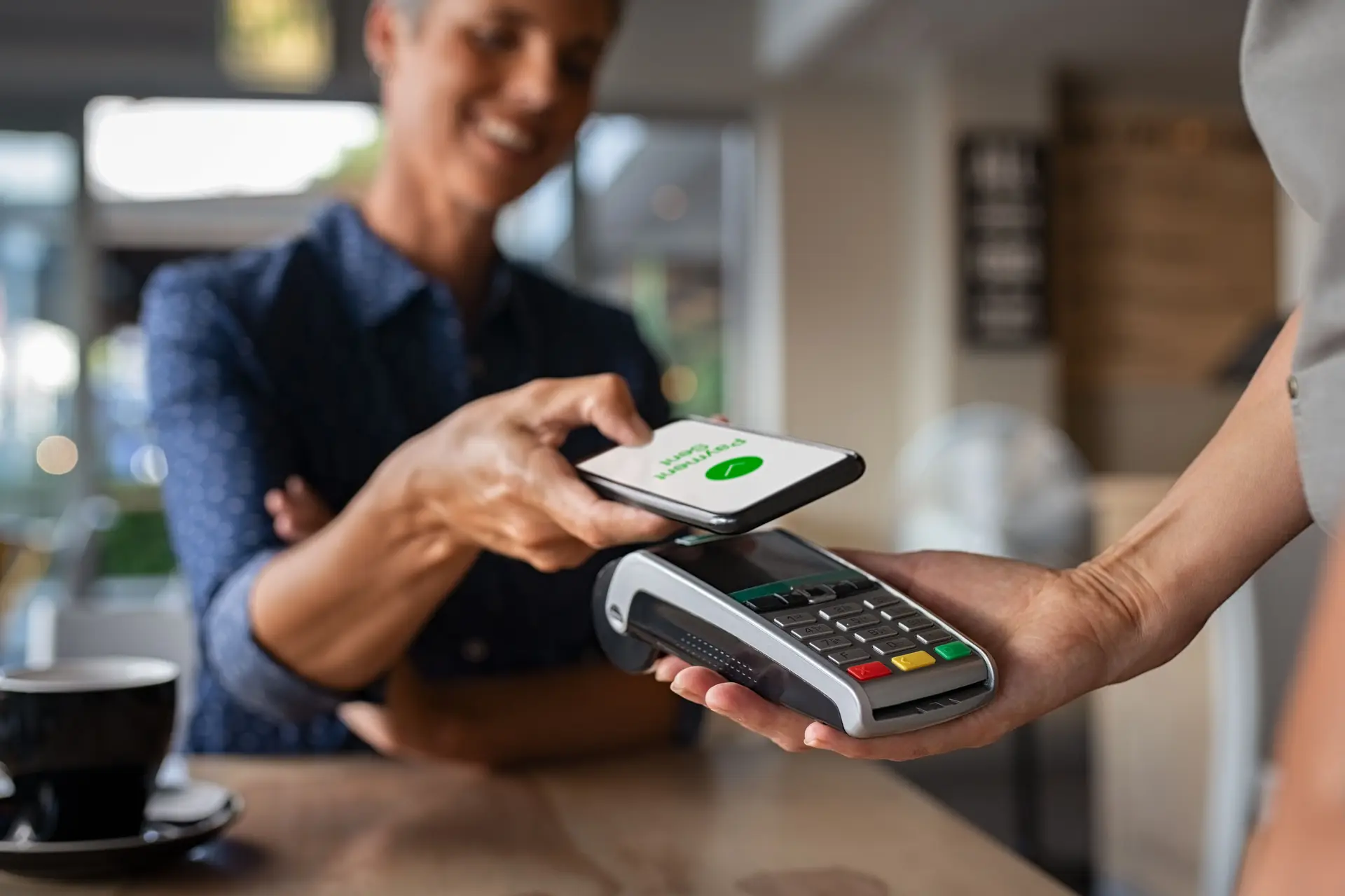
Few innovations in payments have changed consumer behavior as quickly and as permanently as contactless or tap-to-pay payments. What began as a convenience feature has quietly evolved into a default expectation. Today, millions of consumers tap phones, cards, watches, and wearables without thinking twice. The physical act of paying once deliberate and time-consuming has been reduced to a near-invisible gesture. Yet contactless payments are far more than a faster checkout mechanism. They represent a fundamental shift in how trust, speed, security, and user experience are balanced in modern commerce. They are also reshaping merchant economics, bank strategies, fraud models, and regulatory thinking.
This article explores contactless payments not as a trend, but as a structural evolution in how money moves at the point of interaction.
From Swipe to Tap: A Behavioral Breakthrough
Payment methods rarely change human behavior overnight. Contactless payments did. Before contactless, payments followed a familiar ritual:
- Hand over cash or card
- Insert or swipe
- Enter PIN or sign
- Wait for authorization
Each step reinforced the psychological weight of spending.
Tap-to-pay compressed this ritual into a single motion. The result was not just speed—but behavioral normalization of digital payments.
Consumers no longer “pay”; they tap. That distinction matters.
By reducing friction, contactless payments lowered the mental barrier to digital transactions, especially for:
- Small-value purchases
- Public transport
- Quick-service retail
- Daily essentials
Once consumers trusted tap-to-pay for small amounts, adoption expanded naturally to larger transactions.
The Technology Behind the Tap
At the heart of contactless payments lies Near Field Communication (NFC)—a short-range wireless technology that allows devices to exchange encrypted data securely within a few centimeters.
But NFC alone is not the innovation. The real breakthrough lies in how NFC integrates with global card infrastructure.
Contactless payments operate on existing card rails supported by networks such as Visa and Mastercard, ensuring:
- Global interoperability
- Familiar settlement processes
- Existing merchant acceptance
This compatibility allowed contactless to scale rapidly without forcing merchants or banks to rebuild their ecosystems.
Contactless Cards vs Tap-to-Pay on Devices
Contactless payments today exist in two primary forms:
- Contactless Cards
- NFC-enabled debit, credit, and prepaid cards
- Simple, familiar, and widely accepted
- Ideal for users without smartphones
- Tap-to-Pay on Devices
- Smartphones, smartwatches, and wearables
- Integrated with wallets like Apple Pay and Google Pay
- Enhanced by biometric authentication
While both rely on the same underlying infrastructure, device-based tap-to-pay adds:
- Tokenization
- Biometric verification
- Device-level security
This has made mobile contactless payments particularly attractive for high-frequency, urban consumers.
Why Contactless Payments Scaled So Fast
Several forces converged to accelerate contactless adoption:
- Convenience at Scale
Speed matters—especially in high-volume environments like:
- Transit systems
- Coffee chains
- Grocery stores
- Stadiums and events
Contactless reduces queue times, improves throughput, and enhances customer satisfaction.
- Hygiene and Trust
Public health concerns accelerated acceptance by reframing contactless as:
- Touch-free
- Safer
- More hygienic
Once trust was established, usage persisted well beyond the immediate catalyst.
- Familiarity Without Disruption
Unlike QR codes or new payment apps, contactless required no behavior relearning. Consumers simply tapped what they already carried.
Merchant Economics: Speed Equals Revenue
For merchants, contactless payments are not about novelty—they are about operational efficiency.
Key Merchant Benefits
- Faster checkout times
- Reduced cash handling
- Lower queue abandonment
- Higher transaction throughput
In sectors like quick-service restaurants and transit, even a two-second reduction per transaction can materially impact daily revenue.
Contactless payments also reduce:
- Cash reconciliation costs
- Theft risk
- Staff training complexity
For merchants, tap-to-pay is less about technology and more about flow optimization.
Consumer Psychology: When Paying Feels Effortless
Contactless payments subtly reshape spending behavior.
By removing friction:
- The “pain of payment” decreases
- Small purchases feel insignificant
- Spending becomes habitual
This has led to:
- Higher transaction frequency
- Greater reliance on cards over cash
- Increased use of digital wallets
While this benefits merchants and banks, it also raises concerns around overspending, especially among younger consumers.
The challenge going forward is balancing ease with awareness.
Security: Faster Does Not Mean Riskier
A common misconception is that contactless payments are less secure because they are fast. In reality, they often include more security layers than traditional swipe transactions.
Security Features
- EMV cryptograms for every transaction
- Transaction limits for low-value taps
- Biometric authentication on devices
- Tokenization in mobile wallets
Even if a device or card is lost, contactless fraud exposure is:
- Time-limited
- Value-capped
- Easier to detect and block
In many markets, contactless transactions have lower fraud rates than magnetic stripe payments ever did.
Contactless Payments and Financial Inclusion
Contactless cards have played a meaningful role in bringing digital payments to cash-heavy populations.
Why?
- No smartphone required
- No complex apps
- No literacy-heavy interfaces
For first-time digital users, tapping a card is often less intimidating than navigating a mobile app.
Governments and transit authorities have leveraged contactless cards to:
- Digitize fare collection
- Reduce cash dependency
- Encourage broader card adoption
In this sense, contactless has served as a gateway to the digital economy.
Contactless vs QR Codes: A Structural Comparison
The rise of QR-based payments has inevitably led to comparisons.
Contactless Strengths
- Faster transaction time
- Offline capability
- Global interoperability
- Familiar card protections
QR Code Strengths
- Lower merchant hardware costs
- Direct bank-to-bank settlement
- Strong domestic adoption in select markets
The reality is coexistence.
Contactless dominates in environments where:
- Speed matters
- Cross-border users are common
- Card infrastructure already exists
QR payments thrive in:
- Domestic, account-based ecosystems
- Price-sensitive merchant environments
Regulatory Perspective on Contactless Payments
Regulators generally view contactless payments as:
- Low risk
- Consumer-friendly
- Infrastructure-efficient
However, they also monitor:
- Transaction limits
- Consumer liability rules
- Data privacy in mobile wallets
Many jurisdictions mandate:
- Step-up authentication above certain limits
- Clear dispute resolution mechanisms
The regulatory consensus is clear: contactless payments are not a threat—but they must remain transparent and accountable.
The Role of Banks in a Contactless World
For banks, contactless payments have become:
- A customer retention tool
- A driver of card usage
- A defense against cash displacement
Banks that fail to provide seamless tap-to-pay experiences risk:
- Losing top-of-wallet status
- Being bypassed by fintech-led wallets
- Reduced transaction volumes
As a result, banks increasingly compete on:
- User experience
- Wallet integration
- Contactless enablement across devices
Tap-to-Pay for Merchants and SMEs
New “Tap-to-Pay on Phone” solutions now allow merchants to accept contactless payments using just a smartphone—no POS terminal required.
This is transformative for:
- Small businesses
- Freelancers
- Pop-up merchants
- Emerging markets
By lowering acceptance barriers, contactless technology is democratizing merchant acquiring.
Challenges and Limitations
Despite its success, contactless payments face challenges:
- Consumer awareness around limits
- Inconsistent acceptance in rural areas
- Battery dependency for device-based payments
- Legacy terminals in some markets
These are infrastructure and education issues—not systemic flaws.
The Future of Contactless Payments
Contactless payments are evolving beyond cards and phones.
The next phase includes:
- Wearables and IoT devices
- Biometric-only payments
- Transit-first payment experiences
- Integration with digital identity
As physical and digital commerce converge, contactless becomes the default interaction layer between humans and money.
Conclusion: When Speed Becomes Trust
Contactless payments succeeded not because they were revolutionary, but because they were intuitively right. They respected existing infrastructure, reduced friction, enhanced security, and aligned with how people naturally want to move—quickly, effortlessly, and confidently.
In doing so, they redefined what consumers expect from payments.
Tap-to-pay is no longer a feature.
It is no longer a convenience.
It is the baseline standard for modern commerce.
And in a world where time is increasingly valuable, the fastest payment method often becomes the most trusted one.
Comments
No comments yet. Be the first to share your thoughts.
Leave a comment