
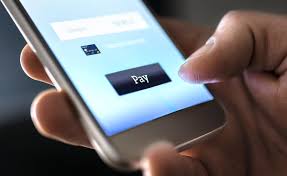
The most important payments happening today are not happening at checkout counters, payment gateways, or even browsers. They are happening inside apps. Invisible. Continuous. Contextual. In-app payments have quietly become the dominant transaction layer of the digital economy, powering everything from ride-hailing and food delivery to gaming, subscriptions, financial services, and embedded commerce. They are not just a payment method.
They are a business model, a control mechanism, and a strategic battleground. To understand how money moves when friction is engineered out of existence.
From Checkout to Continuity
Traditional payments were episodic:
- Browse
- Add to cart
- Checkout
- Pay
In-app payments collapse this entire journey into a single moment of intent.
You don’t “pay” for a ride.
You end a ride.
You don’t “checkout” for content.
You unlock it.
This shift from transactional checkout to continuous monetization is the defining feature.
What Are In-App Payments, Really?
These are transactions initiated and completed within a mobile or web application, without redirecting users to external payment pages.
They support:
- One-click purchases
- Stored credentials
- Subscriptions
- Microtransactions
- Usage-based billing
- Embedded financial services
They rely on:
- Tokenized payment credentials
- Device-level authentication
- Platform APIs
- Background authorization flows
They are designed not to be noticed because attention is the most expensive cost in digital commerce.
Why In-App Payments Became Inevitable
Three forces made this is unavoidable:
- Smartphone-Centric Behavior
Apps became the primary interface for:
- Commerce
- Entertainment
- Mobility
- Banking
- Social interaction
Once users stopped leaving apps, payments had to follow.
- Expectation of Immediacy
Modern users expect:
- Zero re-entry of card details
- No redirects
- No interruptions
Any friction becomes abandonment.
- Monetization at Scale
Apps needed ways to:
- Monetize frequently
- Charge incrementally
- Bill invisibly
It solved all three.
The Architecture Behind In-App Payments
While the user sees a simple tap, the infrastructure is sophisticated.
A typical in-app payment flow includes:
- User action triggers payment intent
- App calls a payment API
- Tokenized credentials are selected
- Device or platform authentication occurs
- Transaction is authorized in the background
- Confirmation is returned instantly
No card numbers are exposed.
No manual input is required.
No session context is lost.
This is payments without ceremony.
Platform Power: Who Controls In-App Payments?
Unlike web payments, they are deeply influenced by platform owners.
Operating systems such as those run by Apple and Google control:
- App distribution
- Payment APIs
- User authentication
- Billing frameworks
This gives platforms:
- Control over monetization models
- Visibility into transaction flows
- Leverage over developers
In-app payments are not neutral infrastructure they are strategic territory.
The App Store Billing Model
In many ecosystems, platforms mandate:
- Use of native in-app billing
- Revenue sharing (often 15–30%)
- Platform-defined user flows
For developers, this creates:
- Predictable infrastructure
- Global reach
- Built-in trust
But also:
- Margin pressure
- Limited pricing flexibility
- Dependency risk
The debate around in-app payment control is not about technology—it is about economic power.
Stored Credentials: The Silent Conversion Booster
One of the most powerful aspects of in-app payments is credential persistence.
Once a user authorizes payment:
- Credentials are stored securely
- Future transactions become frictionless
- Conversion rates increase dramatically
This enables:
- Subscriptions
- Auto-renewals
- On-demand services
- Impulse microtransactions
Stored payment credentials turn apps into always-open cash registers.
Subscriptions: The Natural Habitat of In-App Payments
They are the backbone of the subscription economy.
They support:
- Free trials
- Tiered pricing
- Usage-based billing
- Dynamic upgrades
From streaming platforms to SaaS tools, in-app payments:
- Smooth revenue
- Reduce churn friction
- Increase lifetime value
Without in-app payments, subscription models would collapse under friction.
Microtransactions: Monetizing Moments, Not Products
It enable monetization at the moment of emotional engagement.
Examples include:
- Extra game lives
- Premium filters
- One-time boosts
- Content unlocks
These transactions are:
- Low value
- High frequency
- Emotion-driven
Traditional checkout flows would kill this model. This make it viable.
Security in In-App Payments
These are often more secure than browser-based payments.
- Tokenization
- Device binding
- Biometric authentication
- Encrypted communication
The device becomes:
- The authentication factor
- The risk engine
- The secure container
This significantly reduces:
- Credential theft
- Phishing
- Replay attacks
Security is embedded—not bolted on.
Fraud Dynamics: Where the Risk Moves
While in-app payments reduce classic fraud, risk shifts to:
- Account takeover
- Social engineering
- Subscription abuse
- Friendly fraud
This changes how risk teams operate:
- Less focus on transaction velocity
- More focus on user behavior
- Greater reliance on contextual signals
The Merchant Perspective: Why In-App Payments Win
- Higher conversion rates
- Lower abandonment
- Better customer retention
- Predictable cash flows
They also enable:
- Rapid experimentation
- Dynamic pricing
- Seamless global expansion
For digital-first businesses, not having this is not a limitation it is existential risk.
In-App Payments vs Web Payments
The difference is not cosmetic it is structural.
Web payments:
- Interrupt journeys
- Require re-authentication
- Suffer higher drop-off
In-app payments:
- Preserve context
- Leverage device trust
- Maximize completion
This is why most high-growth platforms aggressively migrate users from web to app environments.
Financial Services Move In-App
Banks and fintechs increasingly embed payments inside apps rather than redirecting users.
Examples include:
- Bill payments
- Investments
- Credit top-ups
- Insurance purchases
In-app payments turn financial apps into transaction ecosystems, not just account dashboards.
Regulatory Complexity Behind the Scenes
Regulators face a unique challenge with in-app payments:
- Platform concentration
- Cross-border transactions
- Consumer transparency
- Pricing disclosure
While consumers see simplicity, regulators see layered responsibility across:
- App developers
- Platforms
- Payment providers
- Issuers
Regulation is slowly adapting—but always behind innovation.
The Global Divide: In-App Payments by Market
Developed Markets
- Card-based in-app payments dominate
- Subscriptions are common
- Platform billing is entrenched
Emerging Markets
- Wallet-based in-app thrive
- Real-time bank payments grow rapidly
- Platform fees face stronger resistance
This divergence shows that in-app payments are rail-agnostic—they adapt to local infrastructure.
In-App Payments and Embedded Finance
In-app payments are the foundation of embedded finance.
They allow apps to:
- Offer credit
- Enable insurance
- Facilitate investments
- Monetize financial actions
Payments become the entry point, not the product.
This is how non-financial brands become financial platforms.
Who Owns the Customer in In-App Payments?
This is the central strategic question.
- Platforms own the interface
- Apps own the experience
- Banks own the accounts
- Networks own the rails
In-app payments sit at the intersection and whoever controls them shapes:
- Pricing power
- Data access
- Customer loyalty
This tension will define the next decade of digital commerce.
The Future of In-App Payments
The future is not about faster payments it is about invisible payments.
Expect:
- Background billing
- Context-aware charging
- AI-driven pricing
- Event-triggered payments
Users will stop “paying.”
They will start experiencing outcomes that happen to be monetized.
Strategic Lessons from In-App Payments
In-app payments teach us that:
- Friction kills revenue faster than price
- Control of interface equals control of economics
- Security works best when users don’t notice it
- Payments are becoming continuous, not discrete
- The best checkout is no checkout
Conclusion: Payments That Disappear Win
In-app payments did not succeed because they were revolutionary. They succeeded because they were respectful of user intent.
They removed:
- Redundancy
- Delay
- Disruption
And replaced them with:
- Flow
- Continuity
- Trust
In the modern economy, the most valuable payment is not the one users remember. It is the one they never had to think about. They are not the future of payments. They are the present reality powering everything else.
Comments
No comments yet. Be the first to share your thoughts.
Leave a comment