
Introduction
As digital payments continue to grow, regulators and financial institutions are placing greater emphasis on protecting customer funds. Consumers and businesses increasingly rely on payment institutions, electronic money providers, and fintech platforms to manage transactions, store balances, and facilitate payments. This shift has made fund protection a critical component of modern financial services.One of the most important mechanisms used to protect customer money is the safeguarding account. These accounts help ensure that customer funds remain secure and separate from a company’s operational finances.
For payment institutions and electronic money institutions, safeguarding accounts are not only a regulatory requirement in many jurisdictions but also a key factor in building trust and maintaining financial stability.
What Is a Safeguarding Account?
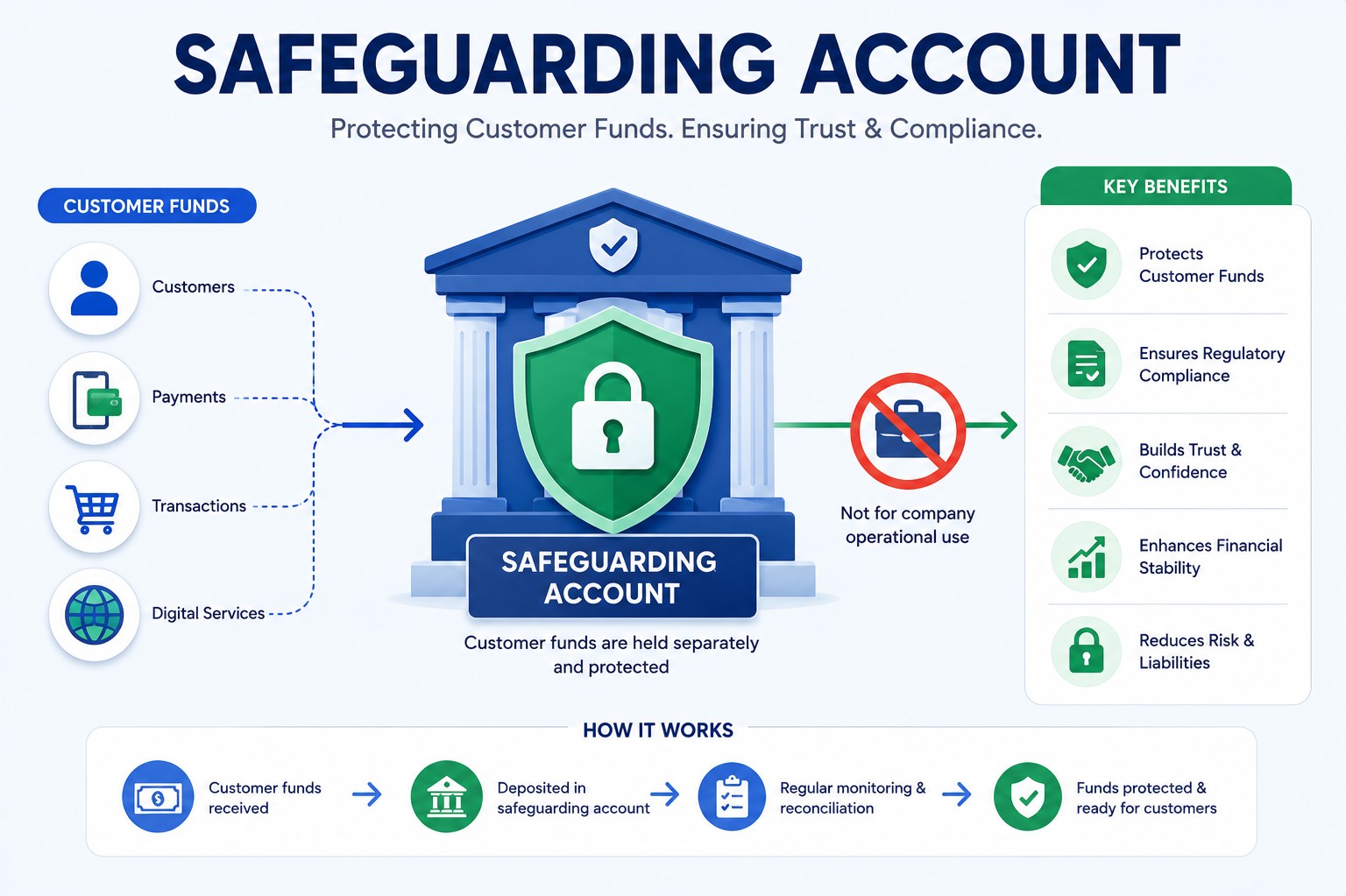
A safeguarding account is a dedicated bank account used to hold customer funds separately from a company’s own operating funds.
The primary purpose of a safeguarding account is to protect customer money in the event that the payment institution or fintech provider experiences financial difficulties.
Funds held in safeguarding accounts cannot typically be used for business expenses, investments, or operational activities. Instead, they remain reserved for customers whose money is being safeguarded.
This separation creates an additional layer of protection and helps reduce financial risk.
Why Safeguarding Accounts Matter
Customer trust is essential in financial services.
When individuals or businesses deposit money with a payment institution, they expect those funds to remain secure and accessible.
Without appropriate safeguards, customers could face significant risks if a provider becomes insolvent or experiences financial challenges.
Safeguarding accounts help:
- Protect customer funds
- Support regulatory compliance
- Strengthen financial stability
- Improve customer confidence
- Reduce operational risk
These benefits make safeguarding accounts a cornerstone of modern payment regulation.
How a Safeguarding Account Works
When customers transfer funds to a payment institution or electronic money provider, those funds are placed into a designated safeguarding account.
The institution must maintain records showing:
- Customer balances
- Fund allocations
- Transaction activity
- Reconciliation reports
Regular monitoring and reconciliation help ensure that customer funds remain fully protected and accurately accounted for.
This process provides transparency and accountability throughout the payment ecosystem.
Regulatory Importance
Many financial regulators require payment institutions and electronic money institutions to maintain safeguarding arrangements.
These regulations are designed to ensure that customer funds remain protected even if a company encounters financial difficulties.
Regulatory frameworks often require:
- Segregation of client funds
- Daily reconciliation processes
- Independent safeguarding arrangements
- Accurate financial reporting
- Ongoing compliance monitoring
Failure to meet safeguarding obligations can result in regulatory penalties and reputational damage.
Benefits of Safeguarding Accounts
Safeguarding accounts provide several important advantages.
Customer Protection
Customer funds remain protected from business liabilities and operational risks.
Regulatory Compliance
Institutions can meet legal requirements more effectively.
Increased Trust
Strong safeguarding practices improve confidence among customers and partners.
Financial Stability
Segregated funds reduce risks associated with financial distress.
Operational Transparency
Proper safeguarding enhances accountability and financial oversight.
These benefits contribute to a stronger and more secure financial ecosystem.
Safeguarding Accounts vs Traditional Business Accounts
A safeguarding account differs significantly from a standard business account.
A regular business account is used to manage operational activities such as payroll, vendor payments, and company expenses.
A safeguarding account, however, exists solely to hold customer funds.
Key differences include:
- Customer funds remain segregated.
- Operational use is restricted.
- Regulatory oversight is stronger.
- Reconciliation requirements are more rigorous.
This distinction is essential for maintaining proper fund protection.
Role in Fintech and Digital Payments
Fintech companies have transformed the payments industry by providing innovative financial services.
However, increased innovation also increases responsibility.
Safeguarding accounts play a critical role in ensuring fintech providers maintain strong customer fund protection standards.
Whether offering digital wallets, payment processing services, or electronic money solutions, fintech firms rely on safeguarding frameworks to maintain compliance and customer trust.
As digital finance continues expanding, safeguarding practices will become even more important.
Common Challenges
While safeguarding accounts provide significant benefits, institutions must manage several operational challenges.
These include:
- Reconciliation complexity
- Regulatory reporting requirements
- Compliance monitoring
- Banking relationship management
- Operational oversight
Organizations must invest in strong governance frameworks to maintain effective safeguarding arrangements.
Technology and automation can help reduce administrative burdens while improving accuracy.
The Future of Safeguarding Accounts
As financial regulations evolve, safeguarding requirements are becoming more sophisticated.
Future developments may include:
- Real-time reconciliation systems
- Enhanced regulatory reporting
- Automated compliance monitoring
- Greater transparency requirements
- Advanced risk management tools
These improvements will help strengthen customer protection while supporting continued innovation across the financial sector.
Conclusion
A safeguarding account is one of the most important tools used to protect customer funds within the modern payments ecosystem. By separating customer money from operational finances, safeguarding accounts enhance security, support regulatory compliance, and build trust between financial institutions and their customers.
As digital payments, fintech services, and electronic money solutions continue to grow, safeguarding accounts will remain a fundamental component of responsible financial management. Organizations that prioritize strong safeguarding practices will be better positioned to maintain compliance, protect customers, and support sustainable long-term growth.
Comments
No comments yet. Be the first to share your thoughts.
Leave a comment