
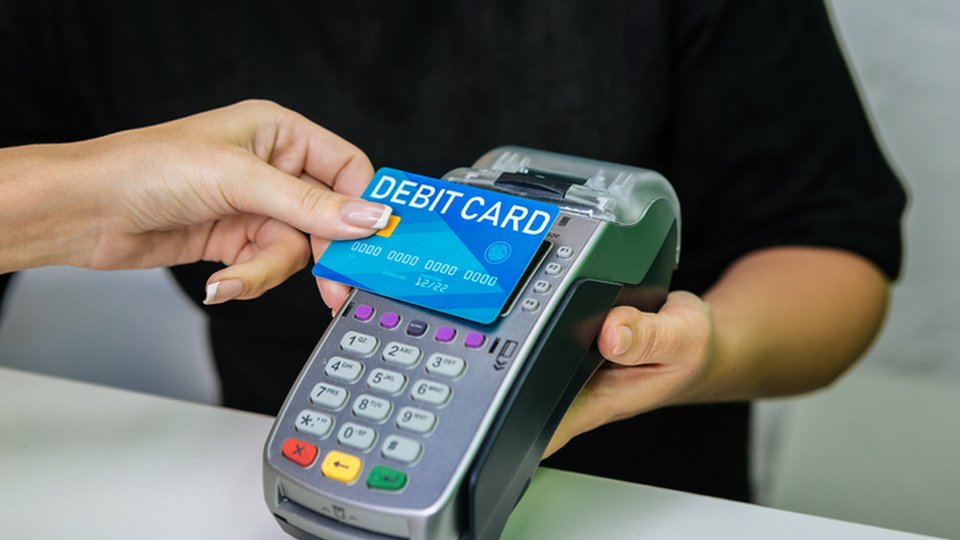
For all the noise surrounding cryptocurrencies, buy-now-pay-later models, embedded finance, and instant account-to-account transfers, one truth of the global payments ecosystem often goes understated: debit card payments remain the most widely used, trusted, and systemically important payment instrument in the world.
Debit cards do not enjoy the glamour of credit cards, nor the novelty of real-time payments. They rarely dominate headlines. Yet, in both developed and emerging economies, debit cards sit quietly at the intersection of financial inclusion, consumer trust, merchant acceptance, and regulatory oversight. They are the workhorse of everyday commerce—fueling grocery purchases, transit fares, e-commerce checkouts, subscription renewals, and cross-border spending.
This article takes a deep, multi-dimensional look at debit card payments—how they evolved, why they continue to dominate volumes, how they differ structurally from credit instruments, the regulatory forces shaping them, and what their future looks like in a rapidly changing payments landscape
From Cash Replacement to Digital Default
Debit cards were originally conceived not as a sophisticated financial product, but as a cash replacement mechanism.
In their earliest form, debit cards allowed consumers to electronically access funds held in their bank accounts, reducing dependence on physical cash and branch visits. The initial promise was simple: spend only what you have, directly from your account.
What followed over the next three decades was transformational.
Banks realized debit cards could:
-
Reduce cash handling costs
-
Encourage account usage
-
Improve transaction traceability
-
Deepen customer relationships
Governments saw debit cards as tools for:
-
Financial inclusion
-
Welfare and subsidy disbursement
-
Formalizing informal economies
Merchants embraced them because:
-
They carried lower risk than cheques
-
They provided faster settlement than invoices
-
They reduced theft and reconciliation issues associated with cash
Today, debit cards have evolved into globally interoperable digital instruments, accepted online and offline, contactless and mobile-enabled, tokenized and secured by advanced authentication frameworks.
Debit vs Credit: A Structural Difference That Matters
While debit and credit cards look identical at the point of sale, their economic and risk structures are fundamentally different.
Source of Funds
Debit card transactions draw directly from the consumer’s bank account. There is no lending component. This makes debit inherently:
-
Lower risk
-
Budget-conscious
-
More aligned with conservative financial behavior
Credit cards, by contrast, involve:
-
A revolving credit facility
-
Interest, fees, and repayment cycles
-
Higher consumer and systemic risk
Consumer Psychology
Debit cards promote immediate financial accountability. Funds leave the account instantly or near-instantly, reinforcing spending discipline.
Credit cards encourage deferred payment behavior—useful for liquidity management, but often linked to:
-
Overleveraging
-
Debt accumulation
-
Financial stress during economic downturns
Regulatory Treatment
Regulators globally impose stricter consumer protection, interest caps, and disclosure requirements on credit products. Debit cards, being non-credit instruments, face:
-
Lower compliance burden
-
Simpler dispute frameworks
-
Fewer conduct-related risks
This structural distinction explains why, in many countries, debit card penetration exceeds credit card ownership by a wide margin.
Why Debit Cards Dominate Transaction Volumes
Despite the rise of alternative payment methods, debit cards continue to lead in transaction volumes for several key reasons.
1. Universal Accessibility
Opening a basic bank account almost always includes a debit card. There are:
-
No income thresholds
-
No credit checks
-
No underwriting processes
This makes debit cards the first digital payment tool for millions of consumers entering the formal financial system.
2. Merchant Acceptance
Debit cards ride on global card networks such as Visa and Mastercard, ensuring near-universal acceptance across:
-
Physical retail
-
E-commerce
-
Travel and hospitality
-
Subscription services
For merchants, debit cards represent:
-
Predictable settlement
-
Lower fraud exposure than credit
-
Familiar infrastructure
3. Cost Sensitivity
In many jurisdictions, debit card interchange fees are:
-
Lower than credit card fees
-
Regulated or capped
-
More transparent
This makes debit cards particularly attractive in price-sensitive markets, especially emerging economies and small-ticket transactions.
4. Trust Factor
Consumers trust debit cards because:
-
Funds are visible in real time
-
Transactions feel tangible
-
Spending aligns with available balances
This trust becomes critical during periods of economic uncertainty, when consumers actively avoid debt.
The Role of Debit Cards in Financial Inclusion
Debit cards are arguably the most powerful financial inclusion instrument ever deployed at scale.
Governments and central banks across Asia, Africa, and Latin America have used debit cards to:
-
Distribute welfare benefits
-
Pay pensions and subsidies
-
Enable digital wage payments
-
Reduce cash leakage and corruption
In India, domestic card schemes like RuPay have played a pivotal role in expanding debit card issuance alongside mass bank account initiatives.
For previously unbanked populations, a debit card is not merely a payment tool—it is:
-
Proof of financial identity
-
A gateway to digital commerce
-
The first step toward broader financial participation
Security Architecture: Safer Than It Appears
A common misconception is that debit cards are inherently riskier than credit cards. In reality, modern debit card systems are built on multi-layered security frameworks.
Key Security Features
-
EMV chip technology reducing counterfeit fraud
-
PIN-based authentication for in-person transactions
-
Two-factor authentication for online payments
-
Tokenization for mobile wallets and e-commerce
-
Real-time transaction alerts
Unlike early magnetic stripe systems, today’s debit cards are part of highly sophisticated risk engines operated by issuing banks and networks.
Moreover, the rise of zero-liability policies has narrowed the perceived protection gap between debit and credit cards in many regions.
The Economics of Debit Card Payments
From a banking perspective, debit cards operate on thin margins but massive scale.
Issuers (Banks)
Banks earn revenue through:
-
Interchange fees
-
Account maintenance fees
-
Cross-selling opportunities
-
Increased account stickiness
While individual debit transactions generate low revenue, their cumulative effect drives:
-
Higher account engagement
-
Lower churn
-
Stronger lifetime customer value
Merchants
Merchants favor debit cards for:
-
Faster settlement
-
Lower chargeback risk
-
Reduced fraud losses
In some markets, merchants actively steer customers toward debit cards to optimize costs.
Networks
Card networks benefit from debit through:
-
Transaction volume growth
-
Data insights
-
Network effects that reinforce market dominance
Debit cards may not be glamorous, but they are commercially indispensable.
Debit Cards in the Age of Real-Time Payments
The rise of instant account-to-account payment systems has sparked debate about the long-term relevance of debit cards.
Real-time payments promise:
-
Immediate settlement
-
Lower transaction costs
-
Direct bank-to-bank transfers
So where does that leave debit cards?
The answer is coexistence, not replacement.
Debit cards offer:
-
Offline acceptance
-
Global interoperability
-
Consumer protection frameworks
-
Familiar user experience
Real-time payments, while powerful domestically, often lack:
-
Cross-border reach
-
Consumer dispute mechanisms
-
Universal merchant acceptance
Rather than being disrupted, debit cards are increasingly being integrated with real-time rails, serving as the user-facing layer while settlement happens faster in the background.
The Rise of Contactless and Mobile Debit
One of the most significant shifts in debit card usage has been the rapid adoption of:
-
Contactless payments
-
Mobile wallet integration
-
Tokenized credentials
Consumers today may not physically touch their debit cards, yet debit powers:
-
Smartphone tap-to-pay
-
Wearables
-
In-app purchases
This evolution has extended the lifespan of debit cards by making them invisible but omnipresent.
Regulatory Pressure and Interchange Debates
Debit card economics remain heavily influenced by regulation.
Many regulators view debit cards as:
-
Essential payment infrastructure
-
Public-interest instruments
-
Tools for economic inclusion
As a result, debit interchange fees are frequently:
-
Capped
-
Monitored
-
Subject to periodic review
While this limits profitability for banks and networks, it also:
-
Protects merchants
-
Encourages acceptance
-
Drives volume growth
The long-term sustainability of debit cards depends on balanced regulation—protecting consumers and merchants without stifling innovation.
Challenges Facing Debit Card Payments
Despite their strengths, debit cards face several challenges:
-
Margin Compression due to regulatory caps
-
Competition from account-to-account payments
-
Fraud migration to online debit transactions
-
Consumer confusion around dispute rights
-
Dependence on legacy infrastructure in some regions
Addressing these challenges requires continuous investment in:
-
Fraud analytics
-
Consumer education
-
Infrastructure modernization
The Future of Debit Card Payments
Debit cards are not disappearing—they are adapting.
The future will likely see:
-
Deeper integration with digital identity
-
Increased tokenization and credential-on-file usage
-
Hybrid models combining cards with instant rails
-
Stronger consumer protection harmonization
-
Greater role in cross-border low-value payments
As long as consumers value control, transparency, and simplicity, debit cards will remain relevant.
Conclusion: The Underrated Champion of Payments
Debit card payments are the silent backbone of the global payments ecosystem. They may lack the prestige of credit or the hype of fintech innovation, but their impact is undeniable.
They enable inclusion, support everyday commerce, balance consumer behavior, and anchor trust in digital transactions.
In a world obsessed with what’s next, debit cards remind us of a fundamental truth in finance: the most powerful systems are often the ones that simply work—quietly, reliably, and at massive scale.
For banks, fintechs, regulators, and merchants alike, ignoring debit cards would not be innovation—it would be strategic blindness.
Comments
No comments yet. Be the first to share your thoughts.
Leave a comment