
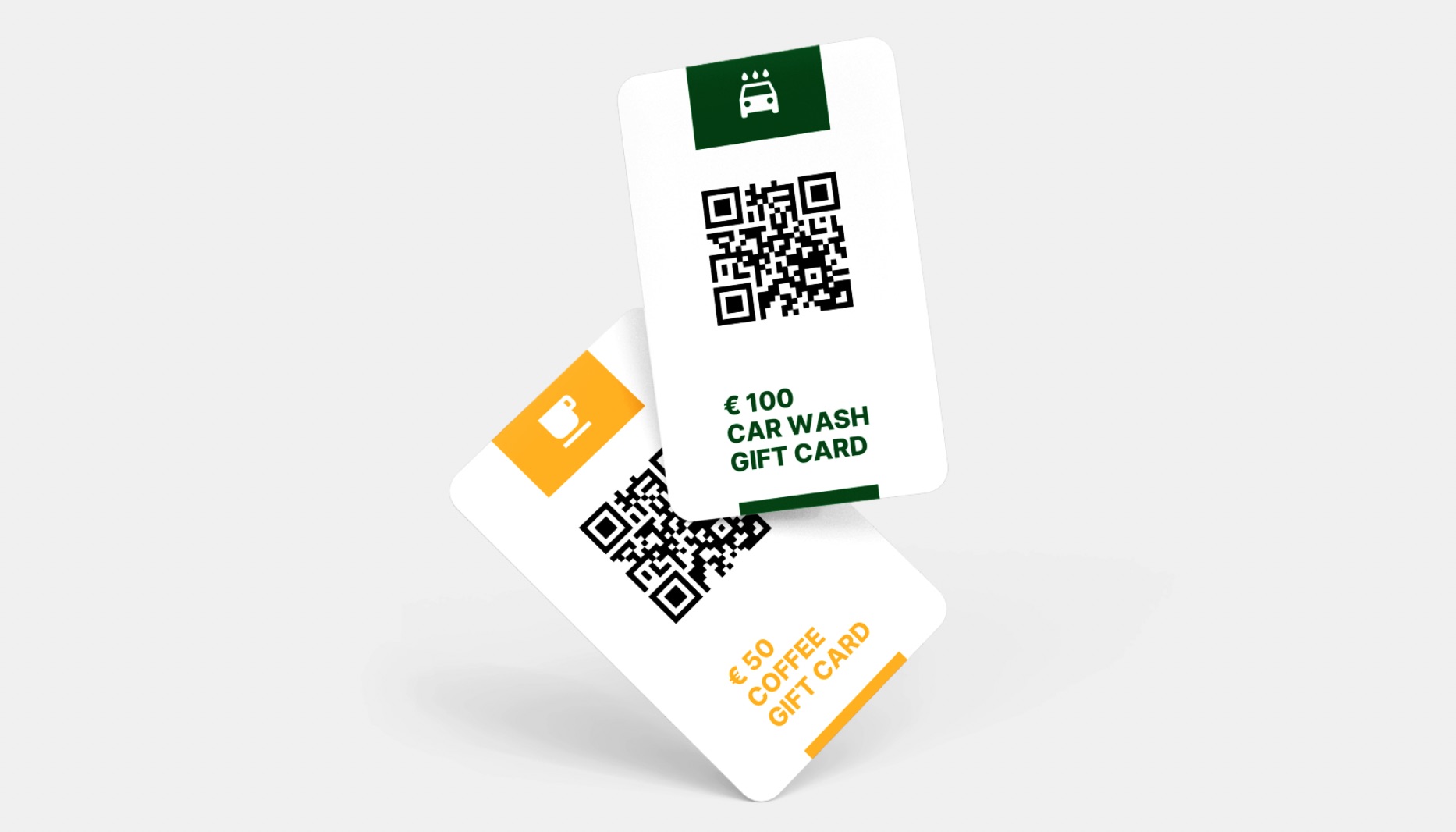
In the global payments conversation, innovation is often framed around speed, sophistication, and scale. Real-time rails, embedded finance, AI-driven fraud prevention, and tokenized credentials dominate industry narratives. Yet some of the most impactful payment innovations are not the most complex they are the most practical. QR vouchers fall squarely into this category. They are simple in appearance, lightweight in infrastructure, and deceptively powerful in application. In many markets, QR vouchers are doing what advanced digital wallets and cards have struggled to achieve: delivering controlled digital value to the widest possible audience with minimal friction.
What Are QR Vouchers?
A QR voucher is a stored-value or entitlement instrument represented by a QR code, which can be scanned to redeem value, validate eligibility, or initiate a controlled transaction.
The QR code itself does not store value in the traditional sense. Instead, it acts as:
-
A secure reference
-
A redemption trigger
-
A gateway to a backend value ledger
The value and rules live in the system.
The QR code is the key.
Why QR Vouchers Exist
It exist because not all payment problems require heavy infrastructure.
Many real-world use cases demand:
-
Low-cost deployment
-
Offline or semi-offline capability
-
Minimal user onboarding
-
Device neutrality
-
Immediate scalability
Cards, wallets, and apps introduce friction:
-
Issuance costs
-
KYC requirements
-
Hardware dependencies
-
Learning curves
It bypass much of this complexity.
QR Vouchers vs Traditional Payment Instruments
To understand their relevance, they must be clearly distinguished from adjacent instruments.
QR Vouchers
-
Purpose-bound
-
Often prepaid or entitlement-based
-
Controlled redemption
-
Can be anonymous or lightly identified
-
Extremely low distribution cost
Cards and Wallets
-
Identity-linked
-
Multi-purpose
-
Higher regulatory overhead
-
Infrastructure-heavy
They are not designed to replace wallets or cards.
They are designed to solve problems those instruments cannot solve efficiently.
The Evolution of QR-Based Value Instruments
Phase 1: Static Paper Coupons
-
No tracking
-
High fraud
-
Limited control
Phase 2: Barcode & POS Coupons
-
Merchant-restricted
-
Partial digitization
-
Operational friction
Phase 3: QR Vouchers
-
Backend-controlled value
-
Real-time validation
-
Dynamic rules
-
Scalable distribution
QR vouchers represent the moment when visual codes met programmable value.
Why QR Codes Became the Ideal Interface
QR codes succeeded where other interfaces failed because they are:
-
Universally readable
-
Camera-native
-
Hardware-independent
-
Language-neutral
-
Printable and digital
They work on:
-
Feature phones (via printed vouchers)
-
Smartphones
-
POS systems
-
Merchant apps
This universality makes QR vouchers uniquely powerful for last-mile payments and benefits delivery.
Core Characteristics of QR Vouchers
Well-designed QR voucher systems share common traits:
-
Single-use or controlled multi-use
-
Time-bound validity
-
Merchant or category restriction
-
Backend reconciliation
-
Real-time redemption status
The QR is just the front door.
The intelligence sits behind it.
Stored-Value vs Entitlement-Based QR Vouchers
It generally fall into two categories:
Stored-Value QR Vouchers
-
Fixed or variable monetary value
-
Partial or full redemption allowed
-
Balance tracked centrally
Entitlement QR Vouchers
-
Right to a specific good or service
-
No explicit monetary balance
-
Usage-based redemption
Examples include:
-
Meal vouchers
-
Transport passes
-
Healthcare services
-
Event access
Both models prioritize control over flexibility.
Government and Public Sector Adoption
Governments worldwide increasingly rely on QR vouchers for:
-
Food distribution
-
Fuel subsidies
-
Healthcare access
-
Education benefits
-
Disaster relief
Why QR vouchers?
-
Low leakage
-
Rapid deployment
-
Clear audit trails
-
Reduced intermediaries
-
Minimal onboarding friction
In crisis scenarios, they can be:
-
Printed overnight
-
Distributed digitally
-
Redeemed instantly
Speed and control matter more than sophistication.
QR Vouchers and Financial Inclusion
Inclusion is not just about access to accounts it is about access to value.
-
Do not require bank accounts
-
Work without apps in many cases
-
Can be shared physically
-
Are intuitive to use
For first-time digital users, it act as:
-
A trust-building instrument
-
A low-risk introduction to digital value
-
A bridge to more advanced products later
They often precede wallets and cards in the inclusion journey.
Enterprise and Corporate Use Cases
Corporates deploy QR vouchers for:
-
Employee benefits
-
Sales incentives
-
Channel partner rewards
-
Event-based distribution
-
Customer goodwill gestures
Why QR vouchers instead of cash or gift cards?
-
Faster distribution
-
Lower cost
-
Controlled usage
-
Reduced misuse
-
Easier reconciliation
For enterprises, they are policy-compliant incentives, not open-ended rewards.
Retail and Merchant Acceptance
Merchants favor QR vouchers because:
-
No card terminals required
-
Simple scanning apps suffice
-
Immediate validation
-
Guaranteed settlement
-
Lower fraud risk
In many ecosystems, QR voucher redemption is:
-
Faster than card authorization
-
Less failure-prone
-
Easier to reconcile
This is particularly relevant for:
-
Small merchants
-
Informal retail
-
Temporary outlets
-
Rural acceptance points
Fraud Risk and Security Design
QR vouchers are often criticized as “easy to copy.”
This criticism misunderstands their architecture.
Security does not rely on the QR image itself—it relies on:
-
Backend validation
-
One-time redemption logic
-
Expiry enforcement
-
Identity or device binding (where required)
A copied QR code is useless once redeemed.
In many systems, QR vouchers are safer than paper coupons and cheaper than cards.
Online-to-Offline (O2O) Commerce
QR vouchers excel in O2O environments:
-
Online issuance
-
Offline redemption
-
Real-world fulfillment
They seamlessly connect:
-
E-commerce platforms
-
Physical merchants
-
Field agents
-
Delivery partners
This makes them ideal for:
-
Marketplace promotions
-
Refund alternatives
-
Compensation credits
-
Partner ecosystems
QR Vouchers vs Digital Gift Cards
While often grouped together, the distinction is critical:
-
Gift cards emphasize consumer choice and brand affinity
-
It emphasize issuer control and program intent
Gift cards are emotional products.
QR vouchers are operational tools.
Regulatory Perspective
Regulators generally view QR vouchers as:
-
Purpose-bound instruments
-
Not equivalent to e-money
-
Lower AML risk due to restrictions
However, focus areas include:
-
Transparency
-
Expiry disclosure
-
Consumer rights
-
Data protection
Their restricted nature often makes they easier to approve than wallets or prepaid cards.
Data, Analytics, and Program Measurement
Every QR voucher redemption generates rich data:
-
Location
-
Time
-
Merchant
-
Category
-
User behavior
This allows issuers to:
-
Measure program effectiveness
-
Optimize distribution
-
Detect anomalies
-
Adjust rules dynamically
QR vouchers are not just delivery tools they are measurement instruments.
Operational Simplicity and Cost Efficiency
From a cost perspective, QR vouchers are unmatched:
-
No plastic
-
No chips
-
No personalization
-
No distribution logistics
They scale digitally at near-zero marginal cost.
This makes them ideal for:
-
Large populations
-
Short-term programs
-
Pilot initiatives
-
Emergency deployment
QR Vouchers in Emerging Markets
In emerging markets, it often outperform:
-
Cards (too expensive)
-
Apps (too complex)
-
Cash (too leaky)
They thrive in environments where:
-
Smartphone penetration exists
-
Banking penetration lags
-
Merchant sophistication varies
This is why QR vouchers are increasingly central to digital public infrastructure strategies.
Interoperability and Backend Intelligence
Modern QR voucher systems increasingly integrate with:
-
POS platforms
-
Merchant apps
-
Wallets
-
Government databases
-
ERP systems
The QR is static or semi-static.
The backend is dynamic and programmable.
Future systems will emphasize:
-
Interoperable redemption
-
Real-time rule updates
-
Cross-platform reporting
Limitations and Design Challenges
QR vouchers are not universal solutions.
Challenges include:
-
Poor design leading to misuse
-
Offline validation complexity
-
Merchant training gaps
-
Over-reliance on expiry
-
Perception as “low-tech”
These are design and execution issues, not structural flaws.
The Future of QR Vouchers
The next evolution will include:
-
Dynamic QR codes
-
One-time token-backed vouchers
-
Identity-linked redemption
-
AI-driven fraud detection
-
Integration with wallets and super apps
Programmable entitlement tokens with visual interfaces
Strategic Takeaway for Banks and Fintechs
Banks often overlook QR vouchers as “non-core.” Fintechs sometimes oversimplify them.
In reality, it offer:
-
Fast go-to-market
-
Low regulatory friction
-
High impact
-
Strong control
-
Scalable inclusion
They are not a downgrade from digital payments. They are a strategic alternative.
Conclusion: Simplicity That Scales
QR vouchers succeed because they respect a fundamental truth of payments:
The best payment instrument is the one that fits the context.
They do not aim to replace money.
They aim to deliver value with intent.
In doing so, its quietly power:
-
Inclusion
-
Efficiency
-
Accountability
-
Scale
They may not look like the future of payments but in many parts of the world, they already are.
Comments
No comments yet. Be the first to share your thoughts.
Leave a comment