Jun 3, 2026
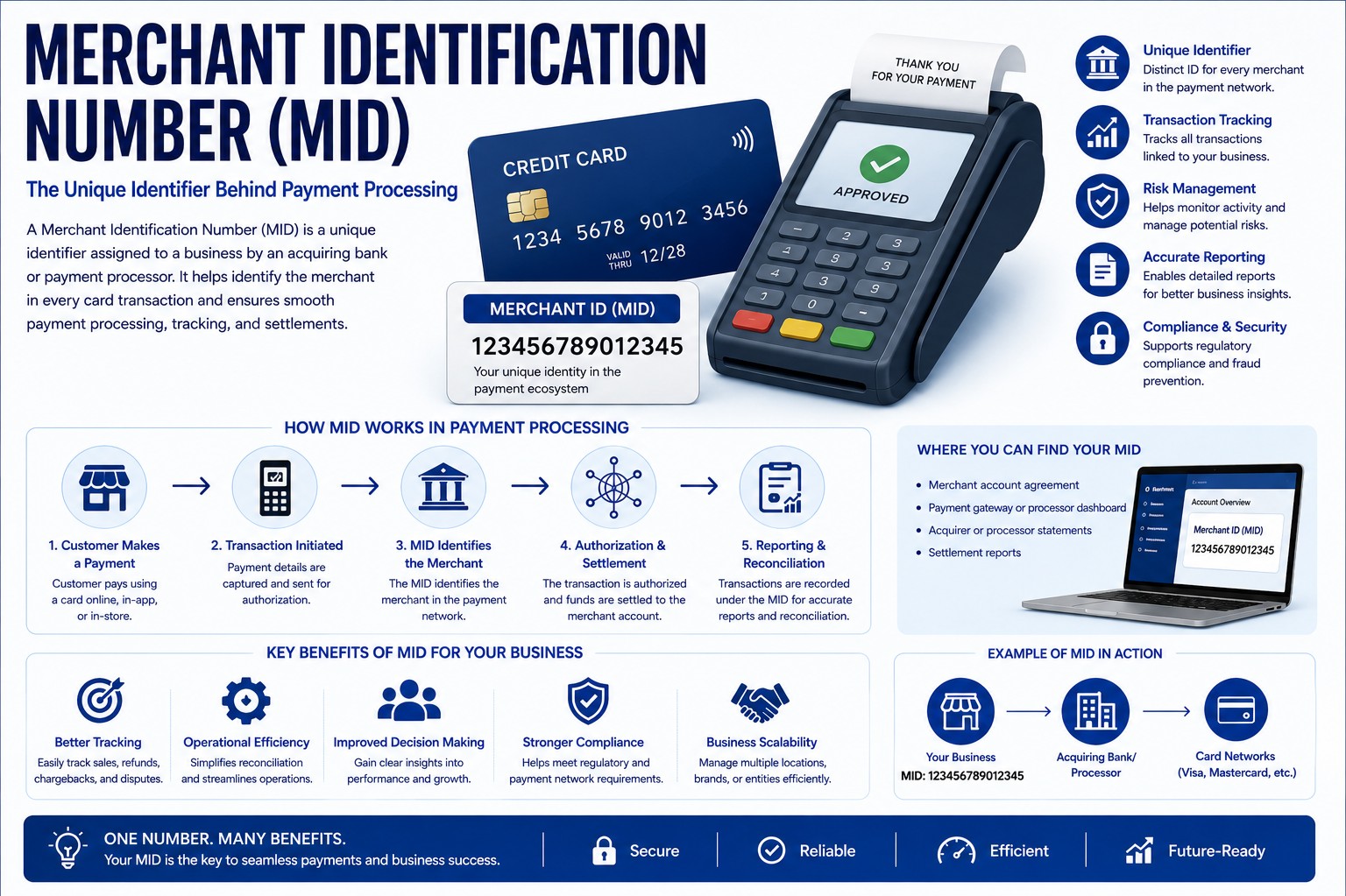
A <strong>Merchant Identification Number (MID)</strong> is a unique code assigned to a business when they set up a <strong>merchant account</strong> to process payments. At <strong>TheFinRate</strong>, we provide a detailed guide on the importance of MID and how it plays a crucial role in processing secure transactions for businesses. Whether you're a small business owner or a large enterprise, understanding how your <strong>Merchant Identification Number</strong> works is vital for maintaining efficient payment operations and ensuring your transactions are processed smoothly. A <strong>merchant identification number</strong> acts as a unique identifier for businesses with <strong>merchant accounts</strong>. It is used by payment processors and banks to track and manage the payments processed through the merchant account. When a customer makes a payment using their <strong>credit card</strong> or <strong>debit card</strong>, the transaction data, including the MID, is sent to the payment processor for verification and processing. The MID helps to ensure that the funds are routed to the correct merchant's account. At <strong>TheFinRate</strong>, we explain the role of MID in detail and how businesses can ensure their transactions are handled correctly and securely. One of the key benefits of having a <strong>merchant identification number</strong> is that it helps businesses track their payment transactions. This can be particularly useful for businesses that process a high volume of transactions daily, as it allows them to identify and monitor each individual transaction. In the event of a dispute or <strong>chargeback</strong>, the MID can be used to locate the transaction in question and resolve the issue efficiently. At <strong>TheFinRate</strong>, we emphasize the importance of having a properly assigned MID to help businesses keep their payment systems running smoothly and avoid transaction errors. <strong>Security</strong> is a critical factor when it comes to payment processing, and the <strong>merchant identification number</strong> plays a role in ensuring that payments are processed securely. Since the MID is tied to the business’s merchant account, it ensures that only authorized payments are accepted and that funds are routed to the correct account. At <strong>TheFinRate</strong>, we provide insights into how businesses can safeguard their MIDs to prevent unauthorized transactions or fraudulent activity. Understanding how the MID works in conjunction with <strong>PCI DSS compliance</strong> and other security measures can help businesses minimize the risk of payment fraud. Another essential aspect of the MID is its role in the <strong>payment reconciliation process</strong>. Each time a transaction is processed, the merchant identification number helps to match the payment with the correct business account during reconciliation. This ensures that payments are properly credited to the business, and any discrepancies can be easily identified and resolved. At <strong>TheFinRate</strong>, we discuss the importance of accurate reconciliation and how businesses can streamline this process by properly managing their MID. For businesses that operate multiple locations or online storefronts, they may be assigned multiple MIDs to track payments for each location or sales channel separately. This helps in organizing payments and managing finances for different branches or divisions of the business. At <strong>TheFinRate</strong>, we provide guidance on how businesses can manage multiple MIDs effectively to ensure smooth operations across all locations. In conclusion, a <strong>Merchant Identification Number (MID)</strong> is a fundamental component of a business's payment processing system. It ensures that payments are routed to the correct merchant account, helps track and monitor transactions, and enhances security by preventing unauthorized payments. At <strong>TheFinRate</strong>, we offer comprehensive guidance on the role of the MID and how businesses can optimize its use to improve their payment processing operations. Whether you're dealing with <strong>chargebacks</strong>, reconciling payments, or managing multiple business locations, having a clear understanding of your MID is essential for smooth and secure transactions.
2 articles