
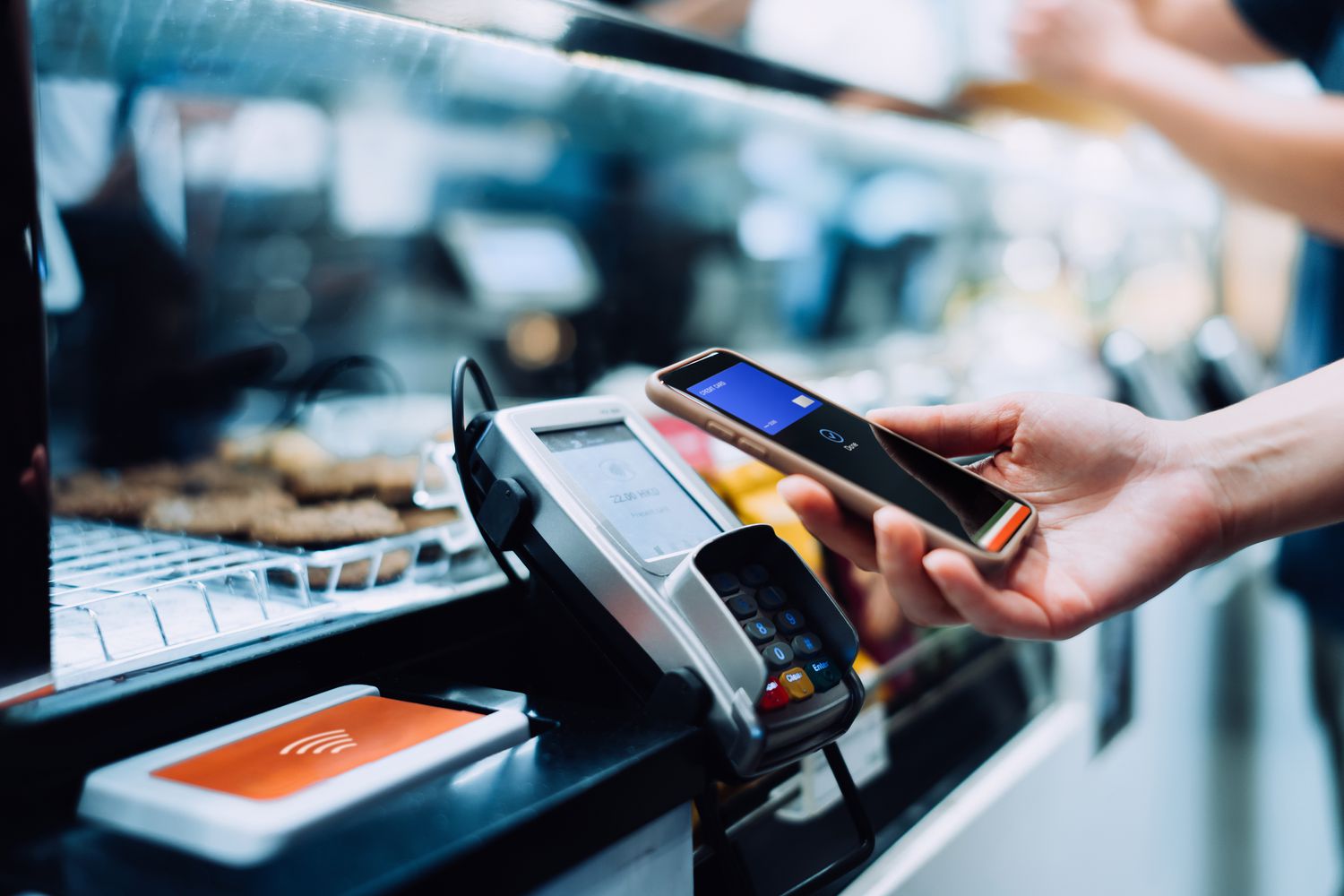
Few innovations in financial services have altered consumer behavior as quietly and as permanently as mobile wallet payments. What began as a digital substitute for plastic cards has evolved into a financial control layer embedded in everyday life. Today, mobile wallets are not merely payment tools; they are identity containers, trust frameworks, data engines, and distribution platforms reshaping how money moves, how risk is managed, and how financial relationships are formed. To understand mobile wallet payments is to understand the future architecture of retail finance.
The Shift from Card to Device
For decades, the payment card was the center of consumer finance. Wallets physical ones held value, identity, and access.
Mobile wallets inverted this model.
Instead of:
A card that connects to an account
We now have:
A device that orchestrates multiple financial relationships
The smartphone became:
- The payment interface
- The authentication device
- The data generator
- The user experience layer
Mobile wallet payments succeeded not because they replaced cards—but because they abstracted them.
What Is a Mobile Wallet Payment?
A mobile wallet payment is a transaction initiated through a software-based wallet stored on a smartphone or connected device, enabling users to pay using:
- Tokenized card credentials
- Bank accounts
- Real-time payment rails
- Stored value balances
Mobile wallets typically integrate:
- Secure hardware elements
- Biometric authentication
- Network tokenization
- Cloud-based credential management
Examples include global wallets like Apple Pay, Google Pay, and Samsung Pay—each acting as an overlay on existing financial infrastructure.
Why Mobile Wallet Payments Took Off
Mobile wallets succeeded where earlier digital payment attempts failed because three conditions converged:
- Hardware Maturity
- Secure elements
- Biometric sensors
- NFC chips
- Trusted execution environments
- Network Readiness
- EMV standards
- Tokenization frameworks
- Global card network support
- Behavioral Readiness
- Smartphones became personal extensions
- Biometric authentication normalized
- Trust shifted from plastic to devices
Together, these forces turned the smartphone into a safer payment instrument than the card itself.
How a Mobile Wallet Payment Works
Behind the simplicity of a tap or scan lies a sophisticated orchestration:
- User authenticates via fingerprint, face, or passcode
- Wallet selects a tokenized credential
- Device generates a transaction-specific cryptogram
- Payment is transmitted via NFC, QR, or in-app flow
- Networks route the transaction to the issuer
- Issuer validates token, cryptogram, and risk signals
At no point is the actual card number exposed.
This architecture dramatically reduces:
- Data breach risk
- Credential reuse
- Large-scale fraud propagation
Tokenization: The Silent Enabler
The true security breakthrough of mobile wallet payments is tokenization.
Instead of transmitting real card data:
- A device-specific token is used
- Tokens are domain-restricted
- Compromised tokens are useless elsewhere
This means:
- A stolen token cannot be reused
- Breaches are isolated, not systemic
- Fraud becomes fragmented and less scalable
Mobile wallets did not just improve UX—they re-architected trust.
Biometrics: Shifting Authentication from Knowledge to Identity
Traditional payments relied on:
- PINs (what you know)
- Signatures (what you scribble)
Mobile wallets rely on:
- Biometrics (who you are)
Fingerprint and facial recognition introduced:
- Frictionless strong customer authentication
- Reduced social engineering risk
- Near-elimination of lost/stolen device misuse
In many ways, mobile wallet payments represent the largest real-world deployment of biometric authentication in history.
Mobile Wallets and Consumer Behavior
Mobile wallet adoption reshaped consumer expectations:
- Payments should be instant
- Authentication should be invisible
- Security should be assumed
- Value-added features should be embedded
Consumers no longer evaluate payments in isolation. They expect:
- Receipts
- Spend analytics
- Loyalty
- Offers
- Dispute management
Mobile wallets transformed payments from a transaction into an experience layer.
The Merchant Perspective: More Than Faster Checkout
For merchants, mobile wallet payments offer:
- Faster transaction times
- Lower fraud rates
- Higher authorization success
- Reduced chargebacks
But the deeper value lies in:
- Token-based risk reduction
- Consistent global acceptance
- Future-proof infrastructure
Mobile wallets reduce operational ambiguity—a key concern in omnichannel commerce.
Mobile Wallets vs Physical Cards
From a security standpoint:
- Mobile wallets outperform cards
- Tokens outperform PANs
- Biometrics outperform signatures
From a data standpoint:
- Wallets generate richer context
- Cards are blind instruments
From a strategic standpoint:
- Cards are static
- Wallets are programmable
This is why mobile wallets are not a threat to card networks—but a distribution upgrade.
The Role of Banks: Disintermediation or Reinvention?
Initially, banks feared mobile wallets would:
- Disintermediate customer relationships
- Reduce brand visibility
- Shift power to Big Tech
In reality, wallets became:
- Another channel
- A risk-reduction layer
- A usage accelerator
Banks that embraced mobile wallets saw:
- Higher transaction volumes
- Lower fraud losses
- Improved customer satisfaction
The threat was never the wallet—it was irrelevance through inaction.
Mobile Wallet Payments in Emerging Markets
In emerging economies, mobile wallets often leapfrogged cards entirely.
Examples include:
- QR-based wallets
- Bank-linked real-time payments
- Stored-value ecosystems
In India, mobile wallets and real-time payments reshaped consumer finance through infrastructure led by NPCI, creating a model where:
- Wallets became bank accounts
- Payments became free or near-free
- Scale was achieved rapidly
This demonstrated that mobile wallets are not dependent on card rails.
QR vs NFC: Two Wallet Philosophies
Mobile wallet payments operate primarily through:
- NFC (tap-to-pay) – card-like, secure, fast
- QR codes – camera-based, low-cost, flexible
Each reflects different market priorities:
- NFC dominates in developed markets
- QR thrives where cost sensitivity is high
Both coexist—and both reinforce wallet adoption.
Regulation and Mobile Wallet Payments
Regulators initially approached mobile wallets cautiously, concerned about:
- Data privacy
- Platform dominance
- Consumer protection
Over time, regulators recognized that wallets:
- Reduce fraud
- Improve auditability
- Strengthen authentication
Today, mobile wallets often exceed regulatory security expectations rather than challenge them.
Fraud Dynamics in Mobile Wallet Payments
Mobile wallets dramatically reduce:
- Counterfeit fraud
- Skimming
- Large-scale credential theft
However, fraud has not disappeared—it has shifted to:
- Account takeover
- Social engineering
- Device compromise
This reinforces a payments truth:
Fraud never vanishes. It relocates to the weakest control point.
Mobile wallets strengthened payments—but also raised the bar for fraud prevention sophistication.
The Platform Effect: Wallets as Financial Operating Systems
The most powerful aspect of mobile wallets is not payments—it is platform control.
Wallets increasingly integrate:
- Buy Now, Pay Later
- Transit access
- Identity credentials
- Event tickets
- Digital IDs
- Crypto and tokenized assets
Payments become the anchor use case—but the wallet becomes financial real estate.
Competition, Control, and Economics
Mobile wallet ecosystems raise strategic questions:
- Who owns the customer?
- Who controls data?
- Who captures value?
Technology platforms control:
- UX
- Credential provisioning
- Default payment selection
Banks and networks retain:
- Licensing
- Settlement
- Risk
The balance of power is still evolving—and fiercely contested.
Mobile Wallet Payments and the Future of Commerce
As commerce becomes:
- Invisible
- Embedded
- Contextual
Mobile wallets will:
- Trigger payments automatically
- Authenticate silently
- Integrate identity and entitlement
The future wallet may not require a “pay” action at all.
Strategic Lessons from Mobile Wallet Payments
Mobile wallets teach the industry that:
- UX drives adoption more than incentives
- Security must be invisible to scale
- Platforms reshape value chains
- Payments are becoming programmable
- Trust now lives at the device level
These lessons extend far beyond payments.
Conclusion: The Wallet Is No Longer Just for Money
Mobile wallet payments represent one of the most profound shifts in modern finance.
They turned:
- Devices into trust anchors
- Payments into experiences
- Security into software
- Identity into infrastructure
The mobile wallet is no longer a container for cards. It is becoming the operating system for personal finance. Those who treat it as just another payment method will fall behind. Those who understand it as a strategic control layer will define the next decade of financial services.
Comments
No comments yet. Be the first to share your thoughts.
Leave a comment