
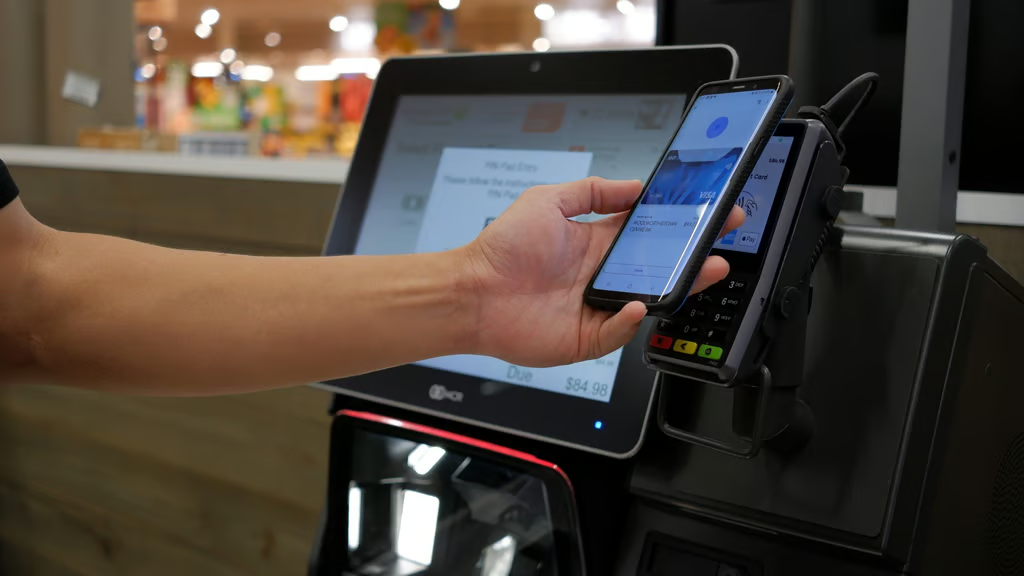
Modern digital payments appear effortless. A tap, a click, a confirmation and value moves instantly. What is rarely visible is the security choreography behind that moment of trust. At the center of this choreography lies one of the most consequential innovations in payments architecture: one-time payment tokens. They do not carry the brand recognition of cards or wallets. They do not generate consumer excitement. Yet without one-time tokens, large-scale digital commerce as we know it would be structurally fragile. One-time payment tokens are not a feature. They are foundational infrastructure.
What Are One-Time Payment Tokens?
A one-time payment token is a single-use, dynamically generated surrogate value that temporarily represents sensitive payment credentials during a transaction.
Instead of exposing:
-
Card numbers
-
Bank account details
-
Wallet identifiers
the system transmits a token that:
-
Is valid for one transaction
-
Has a short lifespan
-
Is useless if intercepted
-
Cannot be reused or reverse-engineered
Once the transaction is completed or the token expires it becomes cryptographically irrelevant.
Why Tokens Exist: The Failure of Static Credentials
Traditional payment credentials were static:
-
Card numbers
-
Expiry dates
-
CVVs
-
Account identifiers
Static data worked in physical environments but failed catastrophically in digital contexts:
-
Easy to copy
-
Easy to store
-
Easy to exploit at scale
Mass data breaches, card-not-present fraud, and credential stuffing attacks exposed a harsh truth:
Static credentials cannot defend dynamic commerce.
One-time tokens emerged as the architectural answer.
Tokenization vs One-Time Tokens
Tokenization is often discussed as a single concept, but it has multiple layers.
Persistent Tokens
-
Replace card numbers long-term
-
Used in wallets and subscriptions
-
Can be reused under controls
One-Time Payment Tokens
-
Generated per transaction
-
Single-use only
-
Time-bound and context-bound
If persistent tokens protect storage, one-time tokens protect execution.
The most secure systems use both.
How One-Time Payment Tokens Work
At a high level, the process involves:
-
Credential Validation
The user’s underlying payment method is authenticated. -
Token Generation
A unique, cryptographically secure token is created for that transaction. -
Context Binding
The token is bound to parameters such as:-
Amount
-
Merchant
-
Device
-
Channel
-
Time window
-
-
Transaction Authorization
The token is submitted instead of real credentials. -
Token Expiry
After use or timeout, the token is invalidated permanently.
Even if intercepted, the token is functionally useless.
Why One-Time Tokens Matter More Than Ever
Digital payments now operate across:
-
Apps
-
Browsers
-
APIs
-
IoT devices
-
Super apps
-
Cross-border platforms
Each new channel increases attack surfaces.
One-time tokens:
-
Reduce credential exposure
-
Limit blast radius
-
Contain fraud events
-
Enable secure scale
They turn payments security from perimeter defense into transaction-level defense.
One-Time Tokens in Card Payments
In card ecosystems, one-time tokens are deeply embedded into:
-
Online checkout
-
Wallet-based payments
-
Card-on-file transactions
-
Contactless mobile payments
Card networks like Visa and Mastercard support token services where:
-
The real PAN never reaches the merchant
-
Each transaction can use a dynamic cryptogram or token
This dramatically reduces:
-
Merchant breach impact
-
Replay attacks
-
Cross-merchant fraud
One-Time Tokens in Mobile and Device Wallets
Every time a user taps a phone or wearable:
-
The device does not transmit the actual card number
-
It transmits a single-use token and cryptographic proof
Device wallets rely on:
-
Secure elements
-
Hardware-backed keys
-
Token lifecycle management
The result:
-
Even compromised POS systems cannot harvest usable credentials
-
Tokens die immediately after use
This is why mobile wallet fraud rates are often significantly lower than physical cards.
E-Commerce and One-Time Tokens
In e-commerce, one-time tokens are critical because:
-
Transactions are remote
-
Credentials traverse multiple systems
-
Breaches have cascading effects
Modern checkout flows increasingly:
-
Generate transaction-specific tokens
-
Use tokens for payment authorization
-
Store only non-sensitive references
This shifts merchants from custodians of sensitive data to handlers of disposable value references.
One-Time Tokens and APIs
As payments move into APIs:
-
Marketplaces
-
SaaS platforms
-
Embedded finance
-
B2B payments
One-time tokens become essential for:
-
Secure payment initiation
-
Preventing credential leakage across services
-
Enabling third-party integrations safely
Tokens allow platforms to expose payment capabilities without exposing payment data.
Fraud Reduction by Design
One-time tokens reduce fraud not by detection but by elimination.
They prevent:
-
Replay attacks
-
Credential harvesting
-
Man-in-the-middle exploitation
-
Database breach monetization
Even if attackers:
-
Intercept tokens
-
Access logs
-
Compromise endpoints
The stolen data has no residual value. This is a rare example of security that improves without increasing friction.
One-Time Tokens vs OTPs
One-time payment tokens are often confused with OTPs (one-time passwords).
They are fundamentally different.
-
OTPs authenticate users
-
Tokens secure payment credentials
OTPs prove who you are.
Tokens protect what you use to pay.
Modern systems use both:
-
OTPs or biometrics for authentication
-
One-time tokens for transaction execution
Regulatory and Compliance Implications
From a regulatory standpoint, one-time tokens:
-
Reduce scope of PCI compliance
-
Lower data protection risk
-
Improve breach containment
-
Support privacy-by-design principles
Regulators increasingly favor architectures that:
-
Minimize sensitive data exposure
-
Limit data retention
-
Reduce systemic risk
Tokenization especially one-time tokens aligns directly with these goals.
One-Time Tokens in Recurring and Subscription Payments
Even recurring payments benefit from one-time tokens.
While subscriptions use persistent tokens for continuity:
-
Individual charges can still be authorized using dynamic, single-use transaction tokens
-
This reduces risk even when stored credentials exist
It’s a layered defense:
-
Persistent token for identity
-
One-time token for execution
B2B and Corporate Payments
In B2B payments, one-time tokens:
-
Prevent misuse of virtual cards
-
Limit employee spending risk
-
Enable transaction-specific controls
-
Reduce reconciliation disputes
Many corporate payment platforms now issue:
-
Virtual cards with one-time tokens
-
Amount-locked and merchant-locked credentials
This turns payments into policy-enforced instruments.
Cross-Border and High-Risk Transactions
Cross-border payments face:
-
Higher fraud risk
-
Lower trust signals
-
Increased regulatory scrutiny
One-time tokens help by:
-
Reducing data exposure across jurisdictions
-
Limiting misuse in transit
-
Supporting secure cross-border authorization flows
They act as neutral security layers independent of geography.
Operational Benefits for Merchants
Merchants benefit from one-time tokens because:
-
Less sensitive data storage
-
Lower breach liability
-
Reduced compliance cost
-
Lower fraud losses
-
Improved customer trust
Security becomes invisible, which is exactly how it should be.
Data, Privacy, and Consumer Trust
Consumers increasingly care about:
-
Data misuse
-
Breaches
-
Identity theft
One-time tokens:
-
Ensure merchants never see real credentials
-
Reduce long-term data exposure
-
Align with privacy expectations
Trust is no longer built through promises it is built through architecture.
One-Time Tokens in Emerging Payment Models
New payment models rely heavily on tokenization:
-
Buy Now, Pay Later
-
Embedded checkout
-
In-app payments
-
Super apps
-
IoT commerce
These models cannot scale safely using static credentials. Tokens are the only viable abstraction layer.
Challenges and Misconceptions
Despite their benefits, one-time tokens face challenges:
-
Integration complexity
-
Legacy system compatibility
-
Merchant education gaps
-
Misunderstanding of token lifecycle
Some organizations mistakenly treat tokens as:
-
Simple masking
-
Cosmetic security
In reality, poorly implemented tokens can provide false confidence.
Tokenization must be:
-
End-to-end
-
Cryptographically strong
-
Properly invalidated
The Economics of Tokenization
Tokenization also makes economic sense:
-
Lower fraud costs
-
Reduced chargebacks
-
Lower compliance spend
-
Fewer breach-related losses
Security investments in tokenization often pay for themselves faster than almost any other control.
The Future of One-Time Payment Tokens
The next evolution will include:
-
AI-driven token risk scoring
-
Context-aware token validity
-
Cross-platform token interoperability
-
Tokenization beyond cards (accounts, wallets, crypto)
Tokens will become:
Dynamic containers of trust, not just substitutes for numbers.
Strategic Takeaway for Banks and Fintechs
For banks and fintechs, one-time tokens are not optional:
-
They are required infrastructure
-
They enable safe innovation
-
They reduce systemic risk
-
They support regulatory alignment
Institutions that treat tokenization as a “feature” will struggle to scale securely. Those that treat it as core architecture will move faster with less risk.
Conclusion: The Power of Disposable Trust
One-time payment tokens represent a profound shift in payments thinking.
Instead of protecting secrets forever, they:
-
Make secrets temporary
-
Make attacks pointless
-
Make trust disposable and renewable
In an era where data breaches are inevitable, one-time tokens embrace a powerful philosophy:
If something must exist, let it exist briefly and then disappear.
That philosophy is why one-time payment tokens are not just securing the future of payments. They are defining it.
Comments
No comments yet. Be the first to share your thoughts.
Leave a comment