
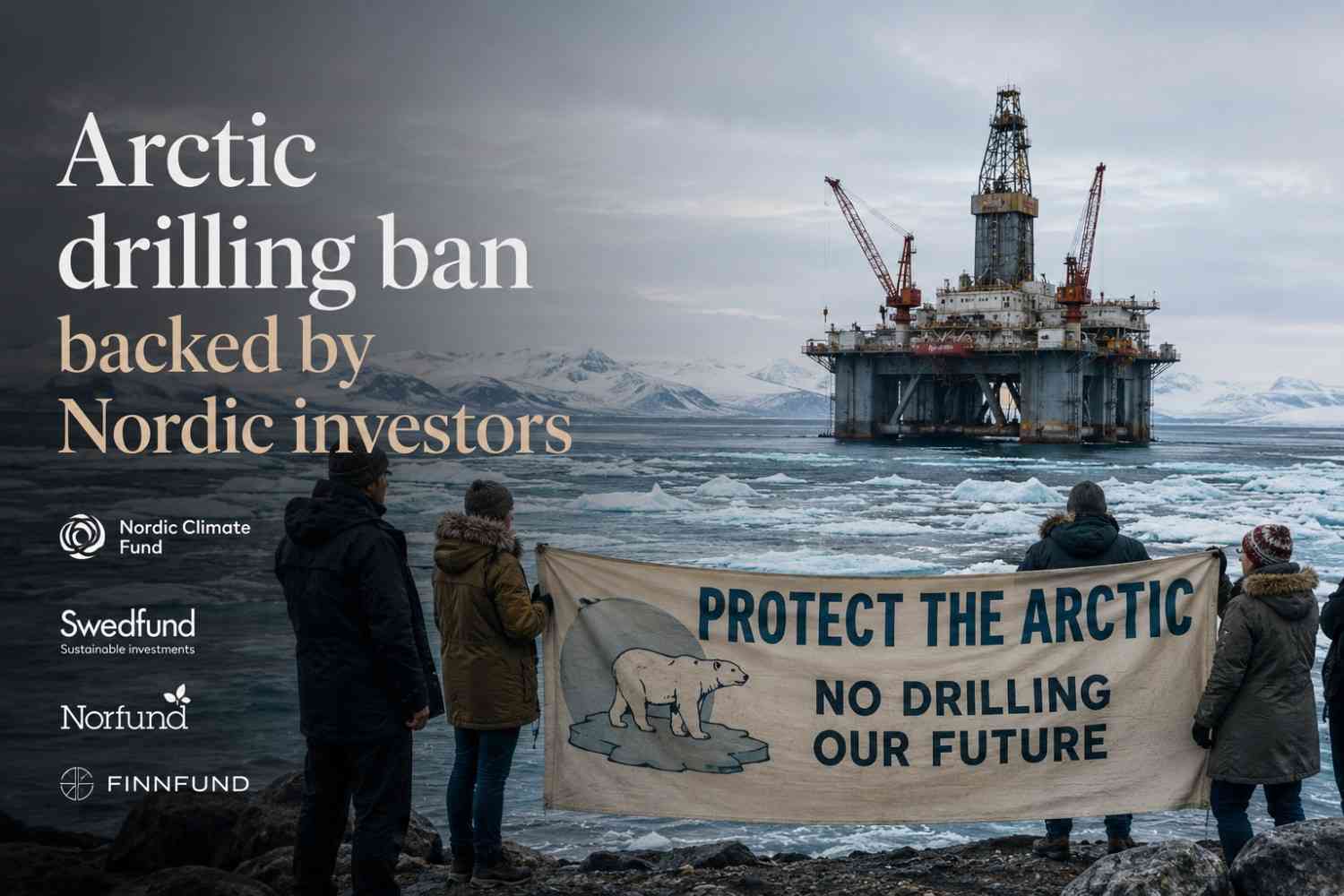
A group of Nordic investors has urged the European Union to maintain the Arctic drilling ban despite growing pressure linked to energy security concerns and supply challenges.
The investors argue that weakening Arctic energy restrictions could undermine Europe’s climate commitments and long-term sustainability goals.
Moreover, the debate comes as Europe continues balancing energy security needs with environmental and climate priorities.
As a result, policymakers face increasing pressure from both industry groups and sustainability-focused investors.
Furthermore, the issue highlights the wider global tension between fossil fuel expansion and climate transition strategies.
Why the Arctic drilling ban matters
The Arctic drilling ban has become a major issue within European energy and environmental policy discussions.
Supporters of the ban argue that Arctic fossil fuel exploration creates:
- Environmental risks
- Climate-related concerns
- Ecosystem damage
- Long-term sustainability challenges
Because Arctic ecosystems are highly sensitive, environmental groups and investors believe stricter protections are necessary.
Consequently, many sustainability-focused investors continue supporting stronger climate regulations.
Moreover, the Arctic region remains central to global climate discussions because of its environmental importance.
Energy crisis increases pressure on EU policy.
Europe’s recent energy challenges have intensified debates around offshore drilling policy and fossil fuel production.
Several factors continue shaping the discussion:
- Energy supply concerns
- Rising fuel prices
- Geopolitical instability
- Dependence on imported energy
Because governments are trying to secure stable energy supplies, some policymakers and industry groups support expanded energy exploration.
As a result, pressure has increased on European regulators to reconsider certain environmental restrictions.
However, Nordic investors argue that long-term climate risks outweigh short-term energy pressures.
Nordic investors push for sustainable energy policy
The investors supporting the Arctic drilling ban believe Europe should remain focused on clean energy transition strategies.
Key priorities highlighted by sustainability-focused investors include:
- Renewable energy investment
- Lower carbon emissions
- Climate risk management
- Environmental protection
Because climate-related financial risks are becoming more important for institutional investors, sustainability policies increasingly influence investment decisions.
Consequently, environmental governance is now closely connected to long-term financial planning.
Moreover, investors are placing greater pressure on governments and corporations to meet climate commitments.
Arctic ecosystems remain environmentally sensitive.
Environmental organisations have repeatedly warned about risks linked to Arctic drilling projects.
Major concerns include:
- Oil spill risks
- Wildlife disruption
- Ice ecosystem damage
- Long-term environmental impact
Because Arctic weather conditions are extreme and difficult to manage, environmental incidents could become harder to contain.
As a result, many investors believe that preventing drilling activity is safer than expanding fossil fuel extraction in the region.
Furthermore, climate activists argue that new fossil fuel projects conflict with global emissions reduction targets.
Comparison between fossil fuel expansion and renewable energy investment
| Feature: Fossil | l Fuel Expansion, Renewable | e Energy Investment |
|---|---|---|
| Carbon emissions | Higher | Lower |
| Environmental impact | Significant | Reduced |
| Long-term sustainability | Limited | Stronger |
| Climate alignment | Weak | Strong |
| Regulatory pressure | Increasing | Supportive |
This comparison explains why many investors continue prioritising sustainable energy policies.
EU climate goals remain under scrutiny.
The European Union has positioned itself as a global leader in climate policy and sustainability regulation.
Several major EU priorities include:
- Net-zero emissions targets
- Renewable energy expansion
- Carbon reduction policies
- Sustainable finance initiatives
Because the EU continues promoting green transition strategies, decisions around Arctic energy restrictions carry significant political and financial implications.
Consequently, policymakers must balance economic stability with climate commitments.
Moreover, investor pressure on sustainability issues continues to increase across Europe.
Energy security concerns remain significant.
Although many investors support the Arctic drilling ban, energy security remains a serious concern for European economies.
Several challenges continue affecting energy markets:
- Supply chain disruptions
- Geopolitical tensions
- Rising energy demand
- Volatile commodity prices
Because reliable energy access remains critical for economic stability, some governments continue exploring multiple energy supply strategies.
As a result, energy policy debates are expected to remain politically sensitive.
Furthermore, balancing climate action with energy affordability remains a major challenge for policymakers.
Sustainable finance becomes more influential.
Institutional investors are increasingly using sustainability standards to guide investment decisions.
Environmental, social, and governance (ESG) priorities now influence:
- Energy sector investments
- Infrastructure funding
- Corporate governance strategies
- Long-term risk assessments
Because climate-related financial risks are receiving greater regulatory attention, sustainable finance continues to expand globally.
Consequently, investor groups are becoming more active in environmental policy discussions.
Moreover, ESG-focused investing is reshaping capital allocation across multiple industries.
Future outlook for the Arctic drilling ban
The future of the Arctic drilling ban will likely depend on energy market conditions, political negotiations, and climate policy developments.
Several trends may shape future discussions:
- Expansion of renewable energy
- Stronger climate regulations
- Continued energy security debates
- Increased ESG investment activity
Additionally, investor influence on environmental policy may continue growing across Europe.
As a result, sustainability considerations are expected to remain central to long-term energy planning.
However, economic pressures and geopolitical risks could still affect future energy policy decisions.
Final Thoughts on the Arctic drilling ban
The debate around the Arctic drilling ban reflects the growing tension between energy security priorities and climate commitments across Europe.
Nordic investors are urging policymakers to maintain environmental protections even as governments face pressure to strengthen energy supplies.
Moreover, the discussion highlights how sustainability, finance, and energy policy are becoming increasingly interconnected.
Ultimately, future decisions on Arctic energy exploration could shape both Europe’s climate strategy and long-term investment landscape.
Comments
No comments yet. Be the first to share your thoughts.
Leave a comment