
Introduction
The global financial ecosystem has evolved dramatically over the past decade. Traditional banking institutions are no longer the only source of financial services for businesses and consumers. Today, a wide range of finance providers offer innovative solutions that support lending, payments, investments, treasury management, digital banking, and cross-border transactions.
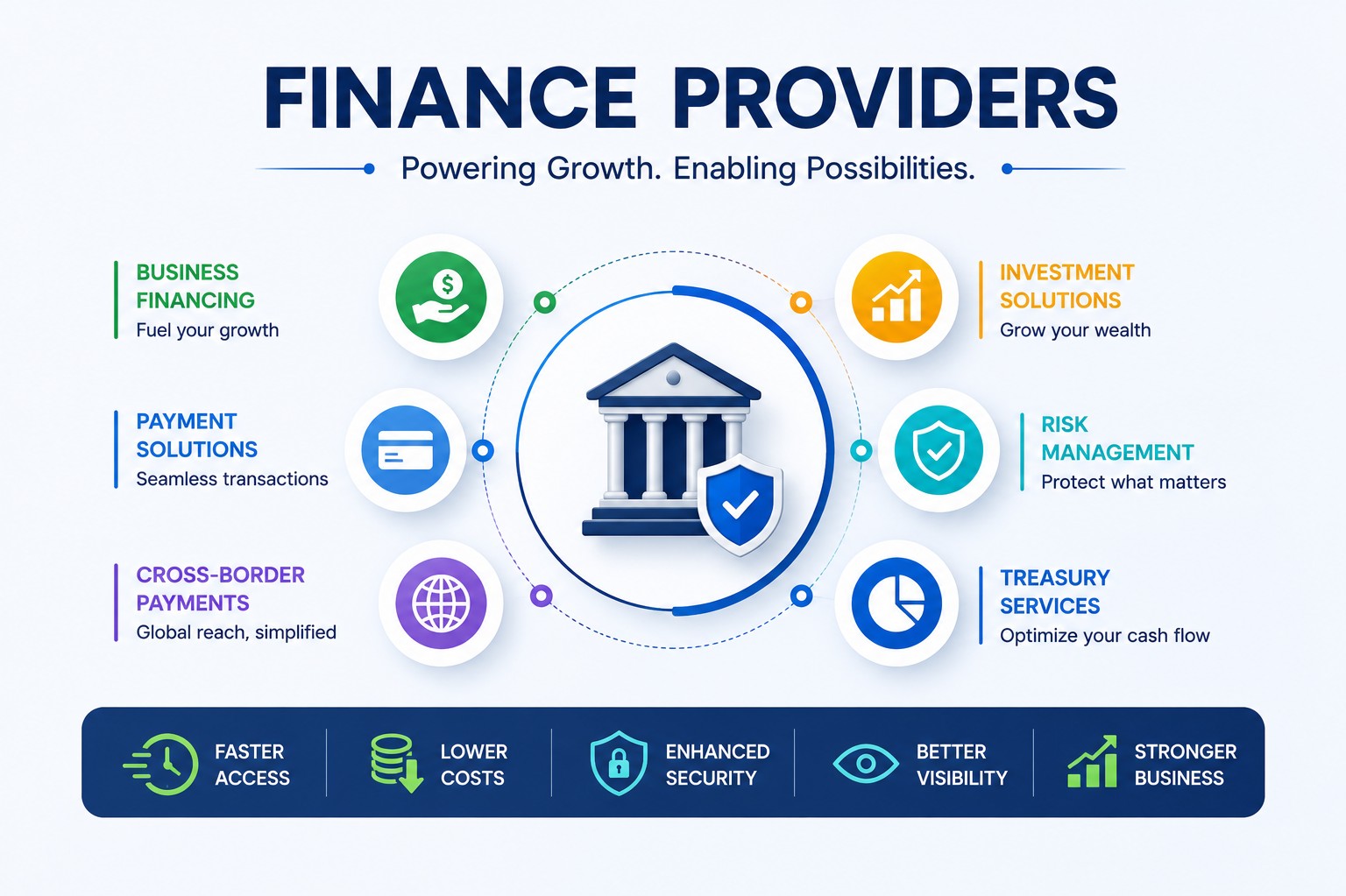
As technology continues to reshape financial services, finance providers are becoming increasingly important in helping businesses access capital, manage risk, optimize cash flow, and support growth. From traditional banks and credit unions to fintech companies and alternative lenders, finance providers play a vital role in keeping the global economy moving.
For businesses operating in an increasingly digital and interconnected world, understanding the role of finance providers is essential for making informed financial decisions and maintaining a competitive advantage.
What Are Finance Providers?
Finance providers are organizations that offer financial products, services, and funding solutions to individuals, businesses, and institutions.
Their primary purpose is to facilitate the movement, management, and allocation of money within the economy.
Finance providers may offer services such as:
- Business loans
- Commercial financing
- Payment processing
- Investment management
- Treasury services
- Foreign exchange solutions
- Trade finance
- Asset financing
- Digital banking services
- Cross-border payment solutions
These providers help businesses access the capital and financial infrastructure needed to operate efficiently and grow sustainably.
Types of Finance Providers
Traditional Banks
Banks remain one of the most recognized finance providers globally.
They offer a broad range of services including:
- Current accounts
- Business loans
- Credit facilities
- Trade finance
- Cash management
- Investment products
Traditional banks continue to play a critical role in supporting businesses and consumers through regulated financial services.
Fintech Companies
Financial technology companies have transformed the financial services industry by offering digital-first solutions.
Fintech providers specialize in areas such as:
- Digital payments
- Online lending
- Virtual banking
- Embedded finance
- Cryptocurrency services
- Financial automation
Their technology-driven approach often enables faster onboarding, improved user experiences, and lower operational costs.
Alternative Lenders
Alternative finance providers offer funding solutions outside traditional banking channels.
Examples include:
- Peer-to-peer lending platforms
- Revenue-based financing providers
- Invoice financing companies
- Merchant cash advance providers
These organizations help businesses access funding when conventional lending options may not be available.
Payment Service Providers
Payment service providers facilitate the acceptance, processing, and settlement of transactions.
They help businesses:
- Accept online payments
- Process card transactions
- Manage international payments
- Support recurring billing
- Enable digital wallet transactions
Payment providers are essential for modern commerce and e-commerce operations.
Investment and Asset Management Firms
These finance providers focus on wealth management and investment solutions.
Their services may include:
- Portfolio management
- Institutional investments
- Retirement planning
- Asset allocation
- Risk management
Businesses often work with investment firms to optimize treasury operations and manage excess capital.
Why Finance Providers Are Important
Finance providers support economic growth by ensuring that businesses and consumers have access to the resources needed to achieve their goals.
Their importance extends across multiple areas.
Access to Capital
Businesses require funding to:
- Launch operations
- Expand into new markets
- Purchase equipment
- Hire employees
- Support innovation
Finance providers help organizations secure the capital necessary for growth.
Payment Infrastructure
Modern commerce relies on efficient payment systems.
Finance providers enable secure and reliable transactions between businesses, consumers, suppliers, and financial institutions.
Risk Management
Financial providers help organizations manage risks through:
- Insurance solutions
- Hedging products
- Treasury services
- Fraud prevention tools
Effective risk management supports long-term business stability.
Global Trade Support
International businesses depend on finance providers for:
- Foreign exchange services
- Trade finance
- Cross-border payments
- Supply chain financing
These services facilitate global commerce and economic connectivity.
Key Services Offered by Finance Providers
Business Financing
Many finance providers offer funding products tailored to business needs.
Examples include:
- Working capital loans
- Equipment financing
- Commercial mortgages
- Trade finance facilities
- Supply chain financing
These solutions help businesses maintain liquidity and pursue growth opportunities.
Payment Solutions
Payment services have become increasingly sophisticated.
Modern providers offer:
- Payment gateways
- Merchant acquiring
- Digital wallets
- Real-time payments
- Virtual IBAN solutions
These technologies improve transaction efficiency and customer experiences.
Foreign Exchange Services
Businesses operating internationally often require currency conversion services.
Finance providers help organizations:
- Manage exchange rate risks
- Reduce transaction costs
- Improve international payment efficiency
Treasury and Cash Management
Effective cash management is essential for business success.
Finance providers offer solutions for:
- Liquidity management
- Cash forecasting
- Account consolidation
- Investment of excess funds
These services improve financial visibility and operational efficiency.
The Impact of Technology on Finance Providers
Technology has transformed the way financial services are delivered.
Several innovations are driving change across the industry.
Artificial Intelligence
AI helps finance providers:
- Detect fraud
- Automate underwriting
- Improve customer support
- Enhance risk assessment
- Personalize financial services
Open Banking
Open banking initiatives allow secure data sharing between financial institutions and third-party providers.
This promotes innovation and improves customer choice.
Blockchain Technology
Blockchain is enabling new financial models through:
- Digital assets
- Smart contracts
- Stablecoin settlements
- Cross-border payment solutions
Embedded Finance
Financial services are increasingly integrated directly into business platforms and applications.
This allows companies to offer banking and payment capabilities without becoming financial institutions themselves.
Challenges Facing Finance Providers
Despite significant growth opportunities, finance providers face several challenges.
Regulatory Compliance
Financial regulations continue to evolve globally.
Providers must comply with:
- AML regulations
- KYC requirements
- Data protection laws
- Consumer protection standards
Cybersecurity Threats
As financial services become more digital, protecting customer data and financial assets remains a top priority.
Competitive Pressure
Traditional banks, fintech firms, and alternative providers compete for customers in an increasingly crowded marketplace.
Economic Uncertainty
Interest rates, inflation, and global economic conditions can impact lending, investment activity, and financial performance.
Choosing the Right Finance Provider
Businesses should evaluate finance providers based on several factors.
Regulatory Status
Working with licensed and regulated providers helps ensure reliability and compliance.
Product Range
The provider should offer services aligned with business objectives.
Technology Capabilities
Modern digital platforms can improve efficiency and customer experiences.
Geographic Reach
For international businesses, global coverage is an important consideration.
Customer Support
Responsive support can be critical when managing complex financial operations.
Security Standards
Strong cybersecurity measures help protect sensitive financial information.
Future Trends in Finance Providers
The financial services industry continues to evolve rapidly.
Key trends include:
Digital-First Banking
Businesses increasingly prefer digital financial services that offer speed and convenience.
AI-Powered Financial Services
Artificial intelligence will continue improving efficiency, security, and customer experiences.
Sustainable Finance
Environmental, social, and governance considerations are becoming more important in financial decision-making.
Real-Time Payments
Demand for instant payment capabilities continues to grow worldwide.
Global Financial Connectivity
Improved cross-border payment infrastructure is helping create a more interconnected financial ecosystem.
Conclusion
Finance providers are at the heart of the global economy, enabling businesses and individuals to access capital, process payments, manage risk, and support growth. From traditional banks and alternative lenders to fintech innovators and payment service providers, these organizations deliver the financial infrastructure that powers modern commerce.
As technology continues to transform the industry, finance providers are becoming faster, smarter, and more customer-focused. Businesses that choose the right financial partners can improve operational efficiency, strengthen cash flow management, and position themselves for long-term success in an increasingly digital and global marketplace.
Comments
No comments yet. Be the first to share your thoughts.
Leave a comment