
Introduction
The digital revolution has transformed how businesses operate and how consumers shop. Today, customers can browse products, compare prices, make purchases, and receive deliveries without ever stepping into a physical store. At the center of this transformation are e-commerce merchants, businesses that sell products or services through online platforms.
Over the past decade, online shopping has grown rapidly due to increased internet access, smartphone usage, and advancements in payment technology. Businesses of all sizes, from startups to multinational corporations, have embraced digital commerce to reach customers beyond traditional geographical boundaries.
As competition continues to increase, e-commerce merchants must focus on customer experience, payment efficiency, security, and innovation to remain successful in an ever-changing marketplace.
What Are E-commerce Merchants?
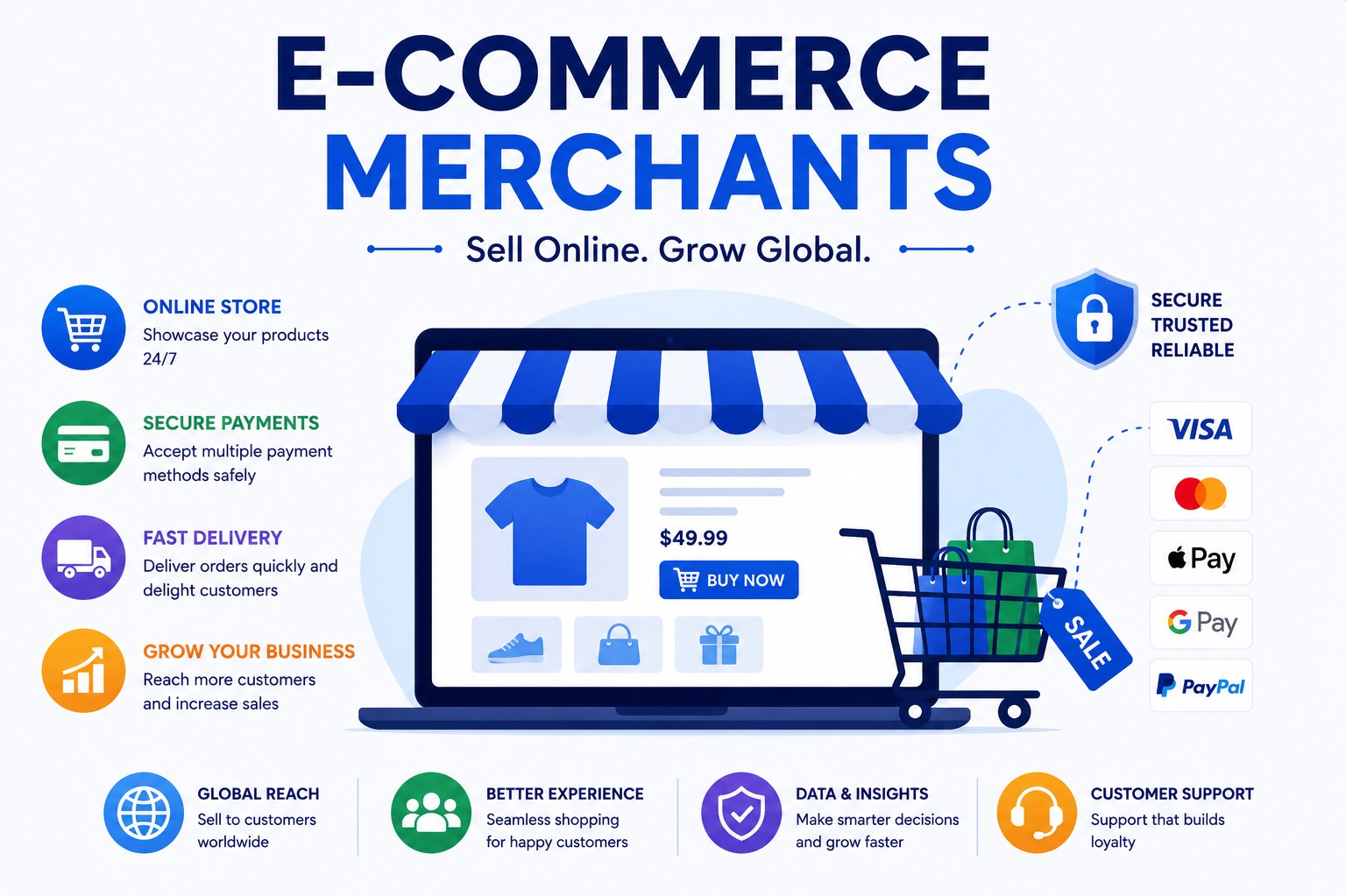
E-commerce merchants are businesses or individuals that sell products and services online through websites, mobile applications, digital marketplaces, or social commerce platforms.
Unlike traditional retailers that rely primarily on physical stores, online merchants use digital channels to connect with customers and process transactions.
Common types of e-commerce merchants include:
- Retail businesses
- Subscription service providers
- Digital product sellers
- Marketplace vendors
- Business-to-business (B2B) suppliers
- Direct-to-consumer brands
Regardless of their size or industry, all online merchants share a common goal: providing customers with a convenient and secure buying experience.
Why E-commerce Merchants Are Important
The rise of digital commerce has changed the global economy. Consumers increasingly prefer the convenience of online shopping, making e-commerce merchants a vital part of modern business.
These businesses contribute by:
- Expanding consumer choice
- Creating new revenue opportunities
- Supporting international trade
- Encouraging innovation
- Driving digital transformation
By operating online, merchants can reach customers across cities, countries, and even continents, opening opportunities that traditional retail models may not offer.
The Growth of Online Commerce
Several factors have contributed to the rapid growth of online retail.
Increased Internet Access
More people have access to the internet than ever before, allowing businesses to reach larger audiences.
Mobile Commerce
Smartphones have made shopping easier and more accessible, enabling customers to purchase products anytime and anywhere.
Digital Payment Solutions
Modern payment technologies have simplified online transactions, making purchases faster and more secure.
Changing Consumer Behavior
Customers increasingly value convenience, flexibility, and personalized experiences.
These trends continue to create new opportunities for e-commerce merchants worldwide.
Key Components of a Successful E-commerce Business
Operating an online business requires more than simply listing products on a website.
User-Friendly Website
A well-designed website helps customers navigate products easily and complete purchases without frustration.
Secure Payment Processing
Customers expect secure and reliable payment methods during checkout.
Product Management
Accurate product descriptions, pricing, and inventory management are essential for maintaining customer trust.
Customer Service
Responsive support helps resolve issues quickly and improves customer satisfaction.
Efficient Logistics
Reliable shipping and delivery services are critical to creating positive customer experiences.
Each of these elements contributes to long-term business success.
The Role of Digital Payments
Payments are the foundation of every e-commerce transaction.
Without efficient payment systems, merchants risk losing sales and damaging customer trust.
Modern online businesses typically support:
- Credit cards
- Debit cards
- Digital wallets
- Bank transfers
- Buy Now, Pay Later services
- Alternative payment methods
Offering multiple payment options improves convenience and can increase conversion rates.
Fast and secure payment processing also reduces cart abandonment and encourages repeat purchases.
Customer Experience Matters
In today’s competitive environment, customer experience often determines whether a business succeeds or struggles.
Online shoppers expect:
- Fast-loading websites
- Simple navigation
- Secure checkout processes
- Transparent pricing
- Quick delivery
- Easy returns
Merchants that consistently meet these expectations build stronger customer relationships and increase loyalty.
Positive experiences often lead to repeat purchases and valuable word-of-mouth recommendations.
Challenges Faced by E-commerce Merchants
Despite numerous opportunities, online businesses face several challenges.
Intense Competition
The digital marketplace is crowded, making it difficult to stand out.
Cybersecurity Threats
Fraud, phishing attacks, and data breaches remain ongoing concerns.
Cart Abandonment
Many customers leave without completing purchases, reducing potential revenue.
Supply Chain Disruptions
Inventory shortages and shipping delays can impact customer satisfaction.
Regulatory Compliance
Businesses must comply with payment regulations, consumer protection laws, and privacy requirements.
Successfully managing these challenges is essential for sustainable growth.
The Impact of Artificial Intelligence
Artificial intelligence is transforming the way online businesses operate.
AI-powered tools help merchants:
- Personalize product recommendations
- Improve customer service
- Detect fraudulent transactions
- Optimize inventory management
- Analyze customer behavior
By leveraging data and automation, businesses can improve efficiency while delivering better customer experiences.
AI is expected to play an even greater role in future e-commerce operations.
Cross-Border E-commerce Opportunities
The internet allows businesses to reach customers worldwide.
International expansion offers significant benefits, including:
- Access to larger markets
- Increased revenue potential
- Brand growth
- Customer diversification
However, cross-border commerce also introduces challenges such as currency conversion, payment processing, taxes, and shipping logistics.
Merchants that successfully navigate these complexities can gain a significant competitive advantage.
The Importance of Security
Trust is one of the most valuable assets for online businesses.
Customers must feel confident that their personal and financial information is protected.
Strong security practices include:
- Data encryption
- Secure payment gateways
- Fraud monitoring
- Multi-factor authentication
- Compliance with industry standards
Investing in security not only protects customers but also safeguards business reputation.
Future Trends for E-commerce Merchants
The future of digital commerce is shaped by continuous innovation.
Emerging trends include:
- AI-powered shopping assistants
- Voice commerce
- Social commerce
- Real-time payments
- Personalized shopping experiences
- Automated fulfillment systems
- Augmented reality shopping
These technologies will continue to reshape how businesses interact with customers and process transactions.
Merchants that embrace innovation early will be better positioned for future success.
Conclusion
E-commerce merchants play a critical role in the modern digital economy. By connecting consumers with products and services through online channels, they create convenience, drive innovation, and support global commerce.
Success in e-commerce requires a combination of secure payment systems, excellent customer experiences, efficient operations, and continuous adaptation to changing market trends. As technology continues to evolve and customer expectations grow, online merchants that prioritize innovation and customer satisfaction will be best positioned to achieve long-term growth and remain competitive in the digital marketplace.
Comments
No comments yet. Be the first to share your thoughts.
Leave a comment