
Introduction
In today’s rapidly evolving financial ecosystem, choosing the right technology partner has become one of the most critical decisions for banks, fintech companies, payment providers, and financial institutions. Whether an organization is looking for a payment gateway, fraud prevention platform, banking software, compliance solution, or embedded finance provider, the selection process can significantly impact operational efficiency, customer experience, and long-term growth.This is where a Request for Proposal (RFP) plays a crucial role.
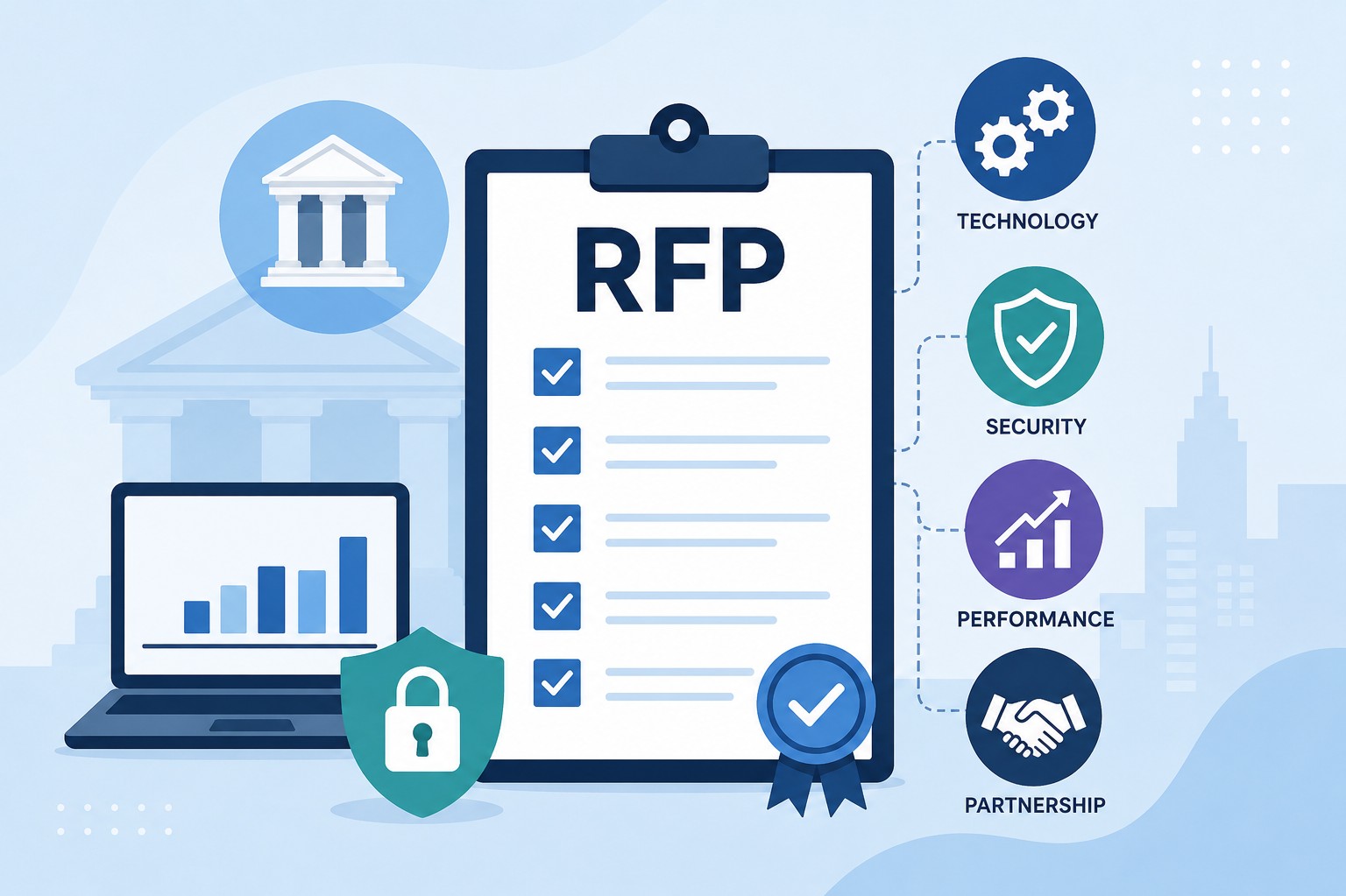
An RFP is more than a procurement document. It serves as a strategic framework that helps organizations evaluate vendors, compare capabilities, assess costs, and identify solutions that align with business objectives. In an industry where technology decisions can influence security, compliance, scalability, and revenue generation, a well-structured RFP helps reduce risk and improve decision-making.
As fintech innovation accelerates and financial services become increasingly digital, RFPs are emerging as an essential tool for organizations seeking transparency, accountability, and long-term value from technology partnerships.
What Is an RFP?
A Request for Proposal (RFP) is a formal document issued by an organization to invite vendors or service providers to submit detailed proposals for a specific project, product, or service requirement.
Unlike a simple request for pricing, an RFP provides comprehensive information about business goals, technical requirements, compliance expectations, project timelines, and evaluation criteria.
Vendors respond by outlining their proposed solutions, implementation strategies, pricing models, support capabilities, and relevant experience. The organization then evaluates these submissions to determine the most suitable partner.
In the banking and fintech sector, RFPs are commonly used for:
- Payment processing platforms
- Banking software solutions
- Fraud detection systems
- Core banking modernization
- Digital onboarding technologies
- KYC and AML solutions
- Open banking platforms
- Merchant acquiring services
- Cross-border payment infrastructure
- Cybersecurity solutions
Why RFPs Matter in Financial Services
The financial sector operates under strict regulatory requirements while managing sensitive customer data and high-value transactions. As a result, selecting the wrong technology provider can lead to operational disruptions, compliance violations, security vulnerabilities, and reputational damage.
An effective RFP process helps organizations:
Improve Vendor Transparency
RFPs require vendors to provide detailed information about their capabilities, pricing structures, implementation methodologies, and support services. This transparency allows decision-makers to make informed comparisons.
Reduce Procurement Risks
A structured evaluation process minimizes the likelihood of selecting a vendor based solely on marketing claims or incomplete information.
Ensure Regulatory Compliance
Financial institutions must comply with various regulations related to data protection, anti-money laundering, cybersecurity, and operational resilience. RFPs help organizations verify whether vendors meet these regulatory standards.
Support Long-Term Scalability
Technology needs evolve over time. RFPs allow organizations to assess whether a solution can support future growth, increased transaction volumes, and changing business requirements.
Strengthen Stakeholder Alignment
By clearly defining objectives and expectations, RFPs help align procurement teams, technology departments, compliance officers, and executive leadership around a common decision-making framework.
Key Components of a Successful Fintech RFP
A well-designed RFP should provide vendors with sufficient information to develop meaningful proposals while enabling organizations to evaluate responses consistently.
Executive Summary
This section introduces the organization, outlines project objectives, and explains why the RFP is being issued.
Business Requirements
Organizations should clearly define their operational challenges, strategic goals, and expected outcomes.
For example, a payment service provider may seek faster transaction processing, enhanced fraud monitoring, or improved merchant onboarding capabilities.
Technical Specifications
Technical requirements should include:
- Integration expectations
- API capabilities
- System architecture preferences
- Security standards
- Data management requirements
- Reporting and analytics features
Providing detailed technical information helps vendors propose realistic and effective solutions.
Compliance and Security Requirements
Given the highly regulated nature of financial services, organizations should specify requirements related to:
- AML compliance
- KYC processes
- GDPR and data privacy standards
- PCI DSS certification
- Cybersecurity frameworks
- Risk management practices
Implementation Expectations
The RFP should outline desired implementation timelines, deployment requirements, training expectations, and project management responsibilities.
Pricing Structure
Organizations should request transparent pricing information, including:
- Licensing fees
- Transaction fees
- Integration costs
- Maintenance charges
- Support costs
- Future upgrade expenses
Evaluation Criteria
Defining evaluation criteria ensures fairness and consistency throughout the vendor selection process.
Criteria often include:
- Technical capabilities
- Industry experience
- Regulatory compliance
- Pricing competitiveness
- Customer support quality
- Scalability
- Innovation potential
Common Challenges in the RFP Process
While RFPs provide structure and transparency, organizations often encounter challenges that can affect outcomes.
Overly Complex Requirements
Some organizations create extensive RFP documents containing hundreds of questions that may overwhelm vendors and delay responses.
The goal should be clarity rather than complexity.
Unclear Business Objectives
Without clearly defined goals, vendors may struggle to propose relevant solutions, resulting in inconsistent submissions.
Focusing Solely on Cost
Selecting the lowest-cost proposal can sometimes lead to higher long-term expenses due to limited functionality, poor support, or scalability constraints.
Insufficient Stakeholder Involvement
Technology procurement decisions affect multiple departments. Excluding key stakeholders can create implementation challenges later.
Lengthy Decision Cycles
In fast-moving fintech environments, prolonged RFP processes can cause organizations to miss market opportunities or delay critical technology upgrades.
The Growing Importance of Digital RFP Platforms
Traditional spreadsheet-based procurement processes are increasingly being replaced by digital RFP management platforms.
These platforms offer:
- Automated workflows
- Centralized vendor communication
- Document management
- Proposal comparison tools
- Analytics and reporting
- Collaboration features
By digitizing the procurement process, organizations can improve efficiency, reduce administrative burdens, and accelerate vendor selection.
As fintech ecosystems become more interconnected, digital procurement solutions are expected to play a larger role in technology acquisition strategies.
How Vendors Can Improve Their RFP Responses
Winning an RFP requires more than simply answering questions.
Successful vendors focus on:
Understanding Client Objectives
Rather than providing generic responses, vendors should demonstrate an understanding of the client’s business challenges and goals.
Providing Real-World Examples
Case studies, implementation success stories, and measurable outcomes help build credibility.
Demonstrating Compliance Expertise
Financial institutions prioritize security and compliance. Vendors that clearly articulate their regulatory capabilities often gain a competitive advantage.
Offering Transparent Pricing
Hidden costs can undermine trust. Clear and comprehensive pricing improves confidence in vendor proposals.
Highlighting Innovation
Organizations increasingly seek partners that can support future growth and innovation, not just current operational needs.
The Future of RFPs in Fintech and Banking
The role of RFPs is evolving alongside digital transformation.
Artificial intelligence is beginning to automate proposal analysis, identify vendor strengths, and streamline evaluation processes. Predictive analytics can help organizations assess vendor performance risks before contracts are signed.
Meanwhile, growing adoption of open banking, embedded finance, Banking-as-a-Service (BaaS), and real-time payment systems is increasing the complexity of technology procurement decisions.
As financial institutions continue investing in modernization initiatives, RFPs will remain a vital mechanism for identifying strategic partners capable of supporting innovation, compliance, and sustainable growth.
Conclusion
In the fintech and banking industry, selecting the right technology partner can influence everything from customer experience and operational efficiency to regulatory compliance and competitive positioning. A well-structured Request for Proposal provides the clarity, transparency, and evaluation framework necessary to make informed procurement decisions.
Far from being a simple purchasing document, an RFP serves as a strategic tool that helps organizations align technology investments with business objectives while minimizing risk. As financial services become increasingly digital and interconnected, effective RFP processes will continue to play a central role in building successful technology partnerships and driving long-term innovation.
Comments
No comments yet. Be the first to share your thoughts.
Leave a comment