
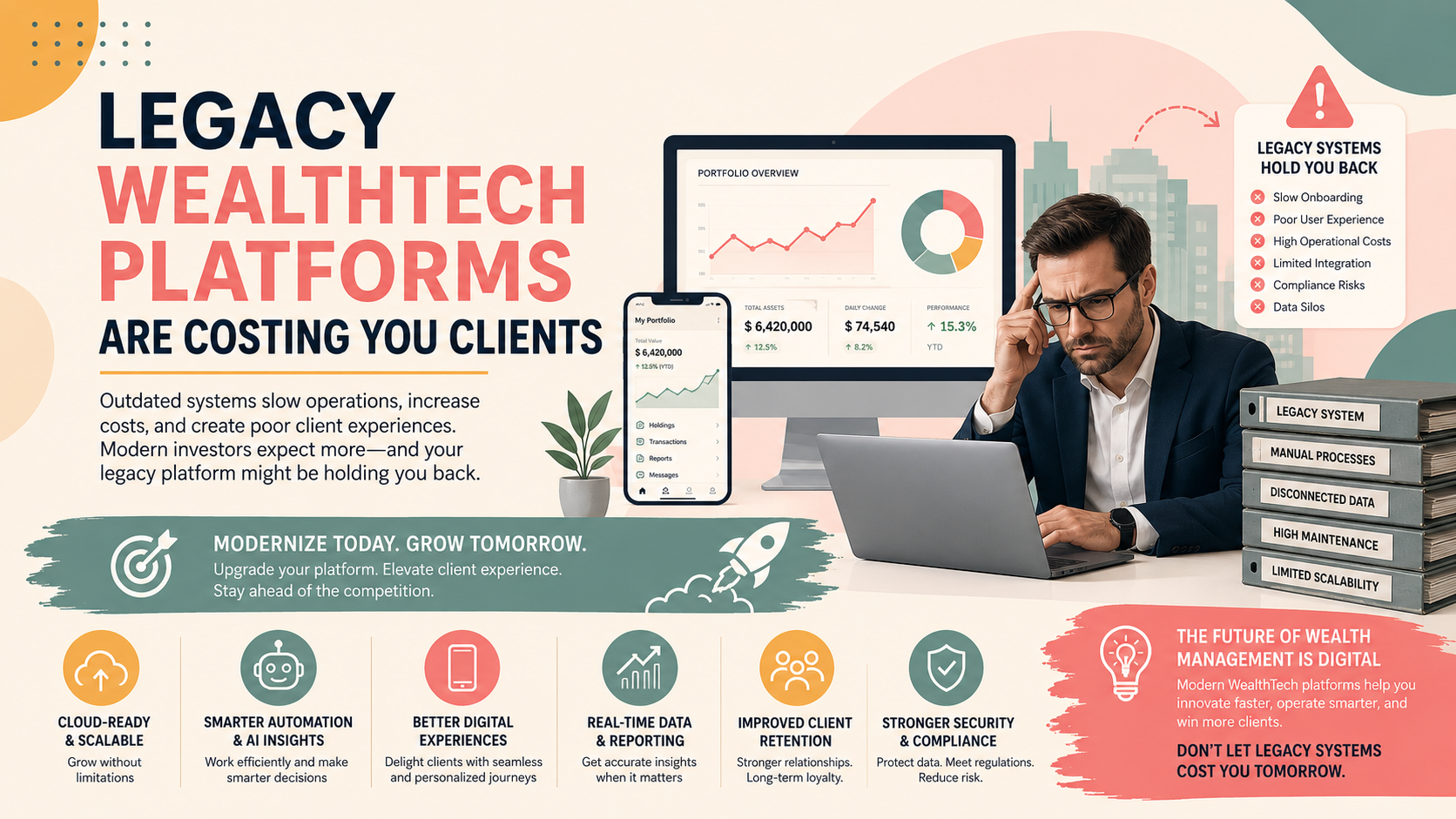
Legacy WealthTech platforms are becoming a major challenge for wealth management firms trying to compete in a digital-first financial market. Today, investors expect faster onboarding, personalised experiences, real-time reporting, and seamless mobile access. However, many firms still rely on outdated systems that slow operations and weaken customer satisfaction.
Many legacy WealthTech platforms and outdated wealth management systems are struggling to meet these expectations in today’s digital-first market
As competition continues to increase, wealth firms must improve both technology and customer experience. Otherwise, clients may move to fintech-driven competitors offering smarter and faster digital services. Because of this, platform modernisation has become a top priority across the wealth management industry.
Moreover, digital transformation is no longer only about improving technology. It is now directly connected to client retention, operational efficiency, and long-term business growth.
Why Legacy WealthTech Platforms Are Losing Clients
How legacy wealth management systems fail modern investor expectations
Why Outdated WealthTech Systems Are Slowing Innovation
Impact of legacy wealth management technology on agility and growth
WealthTech Platform Modernisation Is Now Essential
Why financial firms must upgrade legacy WealthTech platforms
How Legacy WealthTech Systems Limit Digital Transformation
Barriers created by outdated wealth management infrastructure
Modern WealthTech Platforms Improve Client Experience
How digital wealth platforms enhance investor satisfaction
WealthTech Digital Transformation Is Reshaping the Industry
Shift from legacy systems to cloud-based wealth management platforms
Why Wealth Management Technology Needs Better Integration
Challenges caused by disconnected legacy WealthTech platforms
Cloud-Based WealthTech Platforms Enable Faster Growth
Replacing legacy wealth systems with scalable digital infrastructure
How Legacy Wealth Management Systems Increase Operational Costs
Hidden inefficiencies in outdated WealthTech platforms
Modern WealthTech Platforms Improve Client Retention
Role of digital wealth platforms in reducing client churn
Financial Platform Modernisation Reduces Compliance Risks
Security challenges in legacy WealthTech systems
WealthTech Infrastructure Must Support Digital Growth
Why outdated wealth platforms block scalability
Digital Wealth Management Platforms Are Driving Industry Change
Evolution beyond legacy WealthTech platforms
Next-Generation WealthTech Solutions Improve Scalability
From legacy systems to AI-powered wealth platforms
WealthTech Transformation Strategy for Competitive Advantage
How firms replace outdated wealth management systems
Final Thoughts on Legacy WealthTech Platforms Modernisation
Future of digital wealth management platforms
Investor expectations have changed dramatically over the past few years. Previously, wealth management firms focused mainly on investment performance and relationship management. Today, clients also judge firms by their digital experience.
Modern investors expect:
- Fast account opening
- Real-time portfolio tracking
- Mobile-first experiences
- Personalised dashboards
- Secure communication tools
- Instant access to financial data
Unfortunately, many older systems cannot support these growing expectations. As a result, clients often experience delays, frustration, and poor service quality.
Additionally, younger investors entering the market expect digital experiences similar to fintech apps and online banking platforms. Therefore, firms using outdated infrastructure may struggle to attract next-generation clients.
Innovation Is Becoming Slower
Many wealth management firms still depend on systems built years ago. While these platforms may still function, they often limit innovation and reduce flexibility.
In many cases, outdated infrastructure creates problems such as:
- Slow onboarding processes
- Manual workflows
- Weak system integrations
- Limited automation
- Delayed reporting
- Poor mobile performance
Because of these limitations, firms may struggle to launch new services or respond quickly to market changes.
At the same time, fintech companies continue improving customer experiences through automation, artificial intelligence, and cloud-based technology. Consequently, traditional firms using legacy systems risk falling behind competitors.
Investors Expect Better Digital Experiences
These rising expectations are putting pressure on firms still relying on legacy wealth management systems that were not designed for real-time digital experiences.
Client experience has become one of the biggest competitive advantages in wealth management. Investors now expect wealth platforms to provide smooth and convenient digital interactions.
For example, customers want platforms that offer:
- Quick transaction processing
- Real-time notifications
- Digital onboarding
- Personalised financial insights
- AI-powered recommendations
- Mobile accessibility
However, older systems often create complicated and slow user experiences. Consequently, customer satisfaction may decline over time.
Furthermore, poor digital experiences can directly impact client retention. Investors who experience delays or technical issues may move assets to firms offering better technology and faster support.
Operational Costs Continue Rising
Many organisations underestimate how legacy financial infrastructure increases long-term operational costs through manual processes and inefficiencies.
Outdated systems not only affect customer experience. They also increase operational costs for financial firms.
Legacy infrastructure often requires expensive maintenance and manual support. Additionally, disconnected systems create inefficiencies across departments.
Because of this, many firms face:
- Higher IT costs
- Increased downtime
- Complex maintenance requirements
- Data silos
- Slow workflows
- Compliance challenges
Moreover, maintaining old systems can become more expensive than investing in modern cloud-based platforms.
As financial markets continue evolving, firms need scalable and flexible systems that support future growth. Therefore, technology modernisation is becoming essential for long-term efficiency.
Platform Modernisation Supports Growth
Upgrading from legacy WealthTech platforms to cloud-based digital wealth platforms allows firms to scale faster and operate more efficiently.
Modern WealthTech platforms help firms improve scalability, efficiency, and customer engagement. In addition, cloud-based systems provide greater flexibility and stronger integration capabilities.
Today, many firms are investing in:
- Cloud migration
- Workflow automation
- AI-powered analytics
- Better reporting systems
- Integrated client dashboards
- Digital onboarding platforms
As a result, businesses can improve operations while delivering better customer experiences.
Furthermore, modern infrastructure helps firms reduce delays and improve internal collaboration. Consequently, wealth firms can respond faster to changing customer expectations and market demands.
Digital Transformation Is Reshaping Financial Services
Digital transformation initiatives are often driven by the need to replace outdated WealthTech systems with more flexible and automated solutions.
Digital transformation is now reshaping the entire wealth management industry. A few years ago, modernisation projects were considered optional long-term investments. Today, they are business necessities.
Investors increasingly expect firms to deliver digital-first services with speed and convenience. Because of this, wealth firms are accelerating technology investment and platform upgrades.
Several trends are driving this shift, including:
- Artificial intelligence adoption
- Cloud-based infrastructure
- Automated compliance systems
- Digital client engagement
- Real-time analytics
- Personalised investing tools
Moreover, firms that modernise operations can improve both customer retention and operational performance.
Meanwhile, businesses that delay transformation may struggle with slower growth and declining competitiveness.
Security and Compliance Challenges Are Growing
Security risks are significantly higher in legacy wealth management systems, which often lack modern encryption and monitoring tools.
Cybersecurity and compliance remain major concerns for financial institutions. Unfortunately, older systems often create greater security risks because they lack modern architecture and advanced protection tools.
At the same time, financial firms handle large amounts of sensitive customer data. Therefore, security vulnerabilities can create serious operational and reputational risks.
Legacy systems may increase exposure to:
- Data breaches
- Fraud attacks
- System failures
- Compliance violations
- Operational disruptions
Additionally, regulators continue to increase expectations around cybersecurity and data management.
Because of this, firms using outdated technology may face growing compliance pressure and operational challenges.
Better Technology Improves Client Retention
Client retention has become one of the most important goals for wealth management firms. Today, investors can easily compare providers and switch platforms if they experience poor service.
Modern WealthTech platforms help firms improve retention by offering:
- Faster onboarding
- Better personalisation
- Improved communication
- Real-time reporting
- Mobile-friendly experiences
- Automated support systems
Furthermore, modern systems allow firms to scale operations more efficiently while improving customer engagement.
As competition continues to grow, firms with strong digital experiences are more likely to attract and retain long-term clients.
Cloud Adoption Continues to Accelerate
Cloud technology is becoming a key part of modernisation strategies. Many firms are now replacing traditional infrastructure with cloud-based platforms to improve flexibility and reduce costs.
Cloud platforms help firms:
- Improve scalability
- Reduce maintenance costs
- Increase system reliability
- Improve integration capabilities
- Support remote operations
- Deliver faster updates
Additionally, cloud-based systems support faster innovation and better disaster recovery capabilities.
Consequently, cloud adoption is expected to continue growing across the wealth management sector over the next several years.
Final Thoughts
Overall, legacy WealthTech platforms are limiting growth for many financial firms by increasing costs, reducing flexibility, and weakening customer experience. While older systems may still operate, they often slow innovation and create operational inefficiencies.
At the same time, investor expectations continue evolving rapidly. Clients now expect personalised, secure, and highly digital wealth management services.
Because of this, firms that continue relying on outdated infrastructure may risk losing clients to fintech-driven competitors with stronger digital capabilities.
Ultimately, WealthTech modernisation is no longer optional. Instead, it has become a critical investment for firms that want to improve operational efficiency, strengthen customer relationships, and compete successfully in the future of digital wealth management.
Comments
No comments yet. Be the first to share your thoughts.
Leave a comment