
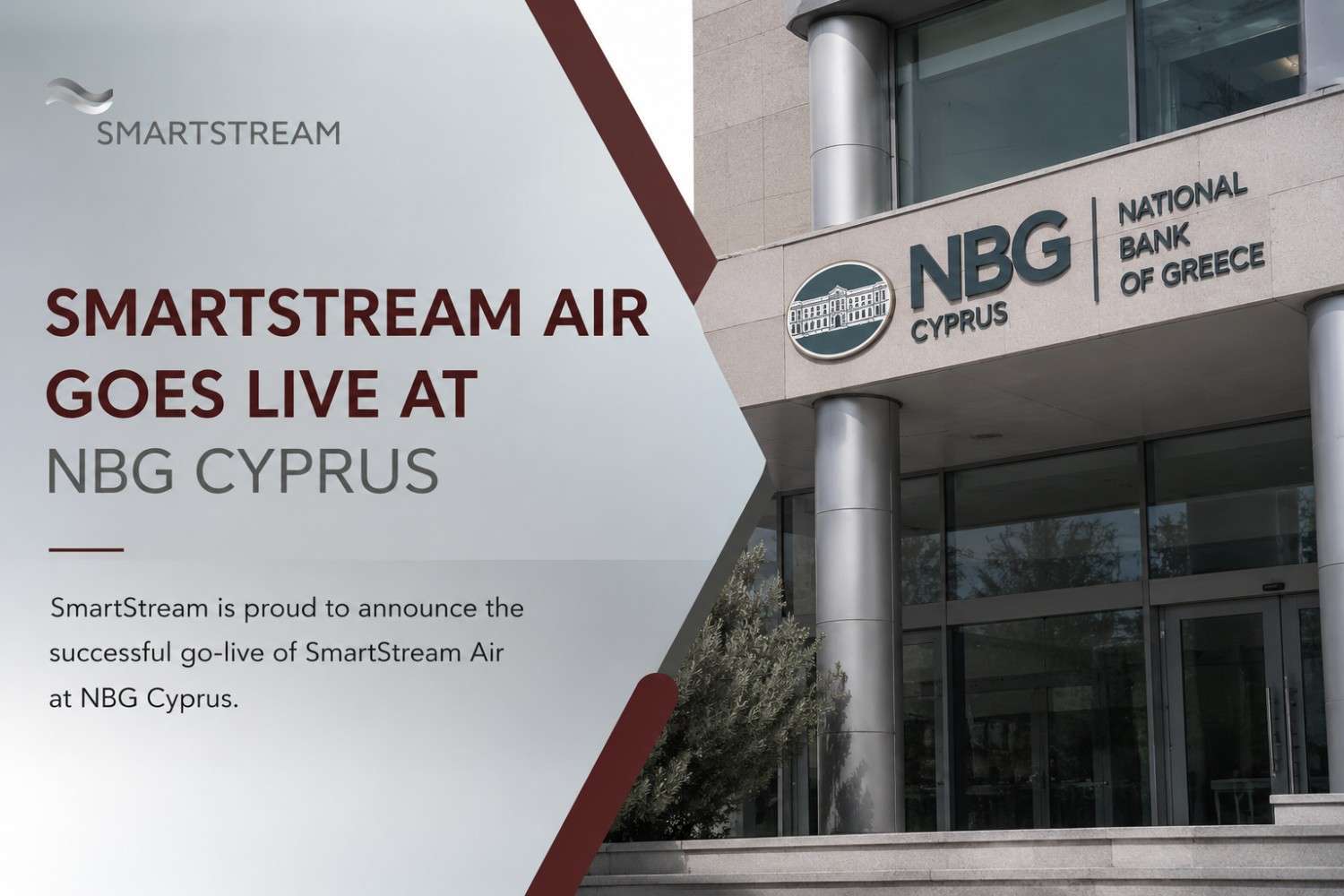
NBG Cyprus has launched SmartStream Air to improve reconciliation operations and simplify banking workflows. The new platform replaces four older systems and helps the bank process financial data more quickly and accurately.
Moreover, the upgrade supports the bank’s wider digital transformation strategy. At the same time, it helps reduce manual work and improves operational efficiency across multiple departments.
As a result, NBG Cyprus expects smoother reconciliation handling, faster processing times, and better data visibility.
Furthermore, the launch reflects how banks are increasingly adopting automation tools to modernise daily operations and reduce operational pressure.
Why NBG Cyprus selected SmartStream Air
NBG Cyprus selected SmartStream Air because the platform offers automation, flexibility, and easier reconciliation management.
Previously, the bank used several separate reconciliation systems. However, managing multiple tools created operational complexity and increased manual workloads.
Therefore, the bank decided to move toward a single platform capable of handling different reconciliation functions together.
Key reasons behind the decision include:
- Faster reconciliation processing
- Reduced manual effort
- Better transaction visibility
- Easier workflow management
- Improved operational efficiency
In addition, SmartStream Air allows the bank to monitor reconciliation tasks from one central environment.
Because reconciliation operations are critical for financial institutions, banks are increasingly looking for faster and simpler solutions.
Consequently, platforms like SmartStream Air are becoming more important across the banking sector.
SmartStream Air improves reconciliation automation
The deployment of SmartStream Air is expected to improve reconciliation automation across several banking operations.
Traditionally, reconciliation tasks often required large amounts of manual checking and data matching. However, automation now allows banks to process data much faster while reducing human error.
As a result, operations teams can spend more time handling complex issues instead of repetitive daily tasks.
Moreover, the platform helps improve consistency and operational accuracy.
Several automation benefits include:
- Faster transaction matching
- Better error detection
- Reduced processing delays
- Improved operational monitoring
- More accurate reconciliation handling
Because banks process huge transaction volumes every day, automation tools are becoming essential for operational efficiency.
Therefore, financial institutions continue increasing investment in AI-driven operational technology.
Banking reconciliation platform combines four systems
The new banking reconciliation platform combines four separate reconciliation systems into one modern setup.
The platform now supports:
- Instant payment reconciliations
- Cash reconciliations
- SEPA reconciliations
- Nostro account reconciliations
Previously, managing separate systems often slowed operations and created additional operational pressure. However, combining these functions into one environment makes processes simpler and easier to manage.
As a result, NBG Cyprus can now monitor reconciliation activity through one central system.
Furthermore, system consolidation may improve reporting, transparency, and workflow coordination across departments.
Because many banks still rely on fragmented systems, consolidation projects are becoming increasingly common within financial services.
Consequently, banks are prioritising infrastructure simplification and operational modernisation.
AI reconciliation solution improves data handling
The AI reconciliation solution also helps improve data quality and transaction monitoring.
For example, the platform can automatically identify missing records, mismatched transactions, and operational inconsistencies.
In addition, automation allows teams to detect issues earlier before they create larger operational problems.
Several important features include:
- Automatic transaction matching
- Data quality monitoring
- Error identification
- Workflow tracking
- Operational alerts
Because accurate financial data remains essential for banks, intelligent monitoring tools are becoming more valuable.
As a result, banks are increasingly adopting AI-powered banking infrastructure.
Moreover, better data handling helps improve customer service, operational control, and reporting efficiency.
Comparison between old and modern reconciliation systems
| Feature | Older Reconciliation Systems | SmartStream Air Platform |
|---|---|---|
| Processing style | Mostly manual | Mostly automated |
| System structure | Multiple separate tools | Single unified platform |
| Error handling | Slower detection | Faster detection |
| Workflow management | Complex | Simpler |
| Operational efficiency | Lower | Higher |
This comparison clearly shows why banks are modernising reconciliation infrastructure.
Furthermore, modern systems provide stronger flexibility and scalability for growing financial institutions.
Banking operations technology continues growing
Investment in banking operations technology continues increasing across the financial sector.
Today, banks are focusing heavily on automation, digital infrastructure, and operational efficiency. At the same time, customer expectations for faster services are also increasing.
Because of this, financial institutions are upgrading legacy systems and modernising internal operations.
Several growing technology trends include:
- AI-powered banking tools
- Cloud-based systems
- Workflow automation
- Real-time transaction monitoring
- Digital banking infrastructure
Moreover, banks are looking for platforms that reduce operational costs while improving performance.
Consequently, automation projects are becoming long-term strategic priorities across the banking industry.
SmartStream Air project completed quickly
The deployment of SmartStream Air was completed in around three months.
Importantly, the implementation was completed without major disruption to existing operations.
Several project highlights included:
- Secure encrypted data transfer
- Fast deployment timelines
- Workflow integration
- Minimal operational disruption
Because banks handle sensitive financial data, security and stability remain major priorities during technology upgrades.
Therefore, quick and secure implementation is essential for banking infrastructure projects.
Furthermore, faster deployments help reduce downtime and operational risk.
Financial data automation supports banking efficiency
The growth of financial data automation is helping banks improve transaction management and operational efficiency.
Previously, many banking tasks depended heavily on manual reviews and spreadsheet-based processes. However, automation now allows operations teams to process information much faster.
As a result, banks can improve productivity while reducing operational costs.
Several important automation areas include:
- Payment processing
- Reconciliation management
- Compliance monitoring
- Data tracking
- Reporting operations
Because financial institutions process huge amounts of transaction data daily, automation helps improve scalability and operational control.
Consequently, investment in digital banking operations continues rising globally.
Moreover, automation technology is becoming a core part of long-term banking strategies.
SmartStream Air reflects wider banking trends
The launch of SmartStream Air also reflects broader digital transformation trends across banking.
Today, banks are increasingly adopting:
- AI operational systems
- Cloud-native infrastructure
- Automated workflows
- Intelligent data platforms
Because operational efficiency directly affects profitability and customer experience, banks are accelerating infrastructure modernisation programs.
As a result, reconciliation automation projects are becoming more common worldwide.
Furthermore, banks are focusing on systems that improve flexibility, scalability, and operational resilience.
Future outlook for SmartStream Air
The future outlook for SmartStream Air appears positive as more banks continue upgrading operational infrastructure.
Several trends are expected to shape future growth:
- AI banking expansion
- Automated financial operations
- Digital banking transformation
- Real-time transaction management
Additionally, regulators are placing greater attention on operational resilience and data quality management.
Because operational efficiency remains critical for modern banking, demand for intelligent automation platforms may continue increasing.
Consequently, reconciliation automation is likely to become even more important across global banking systems.
Final Thoughts on SmartStream Air
The deployment of SmartStream Air at NBG Cyprus highlights how banks are modernising reconciliation operations through automation and smarter technology.
By replacing several older systems with one platform, the bank aims to improve efficiency, reduce manual work, and simplify operational workflows.
Moreover, the project demonstrates how reconciliation automation is becoming a key part of digital banking transformation strategies.
As banks continue investing in AI-powered infrastructure, platforms like SmartStream Air are expected to play an increasingly important role within financial operations.
Ultimately, the project reflects the banking industry’s wider shift toward faster, simpler, and more automated operational systems.
Comments
No comments yet. Be the first to share your thoughts.
Leave a comment