
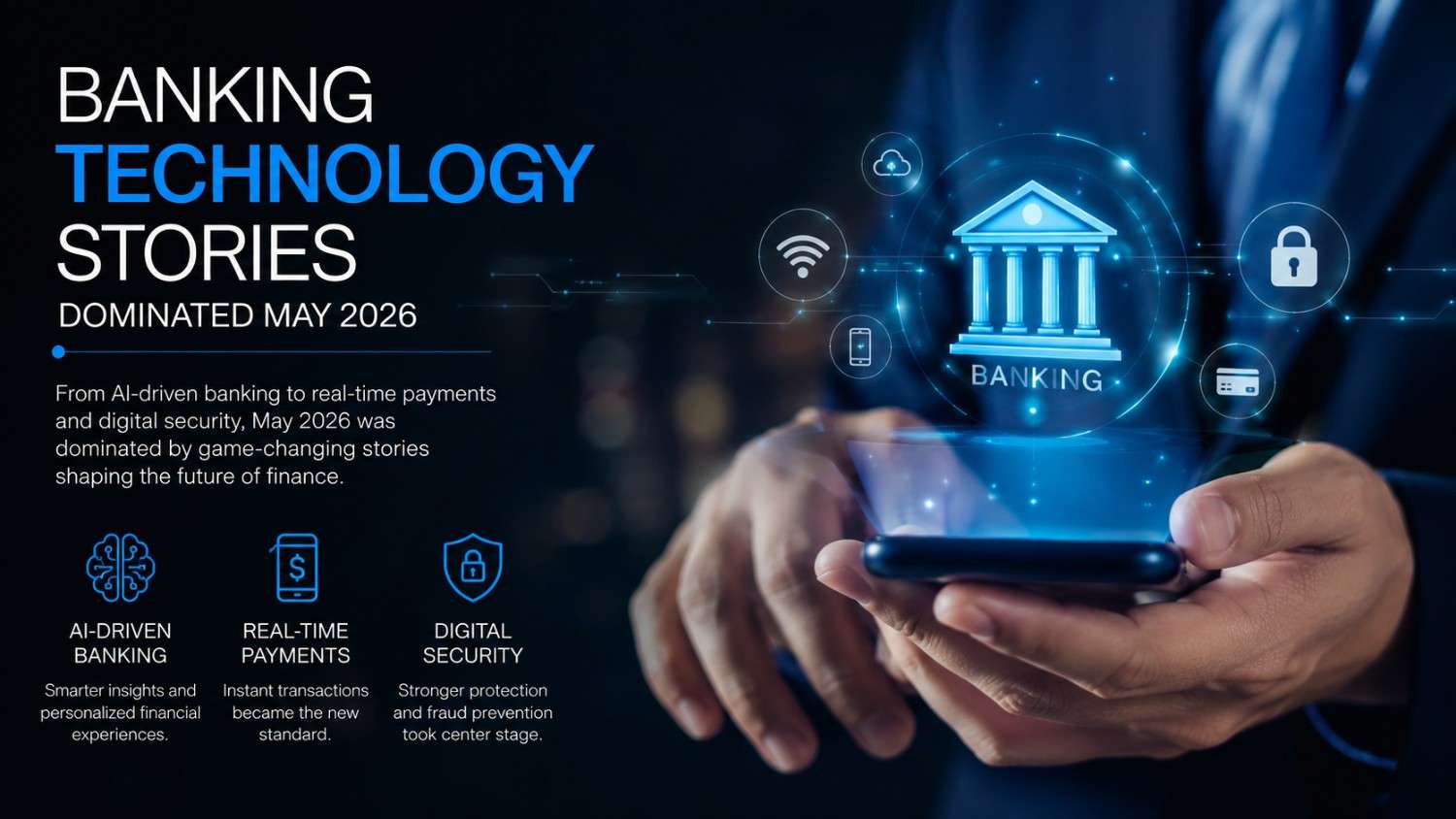
The latest banking technology stories from May 2026 highlighted how banks and fintech firms are accelerating digital transformation, AI adoption, and infrastructure modernisation across the global financial sector. Financial institutions are increasingly focused on operational efficiency, cybersecurity, and customer experience as competition within digital banking continues to intensify.
Moreover, banks worldwide expanded investments in artificial intelligence, embedded finance, and cloud-based infrastructure to improve scalability and automation.
As a result, banking technology stories throughout May reflected growing pressure on financial institutions to modernise quickly.
Furthermore, fintech companies continued partnering with traditional banks to strengthen digital capabilities and payment systems.
AI became central in banking technology stories.
Artificial intelligence remained one of the biggest themes across recent banking technology stories.
Several major developments gained attention:
- AI-powered banking automation
- Fraud detection systems
- Generative AI deployment
- Intelligent compliance tools
BNP Paribas extended its partnership with Mistral AI to expand generative AI deployment across banking operations, reflecting broader industry momentum toward AI-driven services.
Because banks are seeking efficiency improvements and cost reductions, AI investment continues to rise rapidly.
Consequently, financial institutions are increasingly integrating AI into customer support, compliance, and operational workflows.
Moreover, cybersecurity concerns linked to advanced AI systems are also increasing regulatory scrutiny.
Core banking technology remained a major focus.
Core modernisation was another dominant theme within banking technology stories during May 2026.
Several institutions focused on:
- Cloud migration
- Embedded banking systems
- Infrastructure modernisation
- API-driven banking platforms
FinTech Futures highlighted Temenos’ focus on embedded AI and progressive modernization during TCF 2026 as banks continue upgrading legacy systems.
Because traditional banking infrastructure often limits innovation speed, financial institutions are investing heavily in modern core systems.
As a result, core banking technology projects are becoming long-term strategic priorities.
Furthermore, embedded finance capabilities are reshaping how banks connect with third-party platforms and fintech ecosystems.
Fintech partnerships shaped banking innovation trends.
Recent banking innovation trends showed stronger collaboration between banks and fintech firms.
Several important partnerships emerged:
- Open banking integrations
- Embedded finance services
- Payment infrastructure upgrades
- AI technology alliances
Industry discussions increasingly suggest that fintech firms and traditional banks are now collaborating rather than competing directly.
Because fintech companies provide faster innovation cycles, banks are using partnerships to accelerate digital transformation.
Consequently, collaboration models are becoming more common across payments, lending, and customer engagement services.
Moreover, Banking-as-a-Service platforms continue expanding globally.
Digital banking developments accelerated globally
The pace of digital banking developments increased significantly during May 2026.
Several major trends continued growing:
- Mobile-first banking
- Digital onboarding
- AI customer assistants
- Cross-border banking expansion
Revolut continued positioning itself as a global digital banking leader while expanding infrastructure and customer acquisition strategies worldwide.
Because consumers increasingly prefer digital financial services, banks are investing heavily in app experiences and automation.
As a result, digital banking competition is intensifying across global markets.
Furthermore, financial institutions are prioritising customer personalisation and seamless user experiences.
Comparison between traditional and modern banking technology
| Feature: Traditional | l Banking Systems, Modern | n Banking Technology |
|---|---|---|
| Infrastructure | Legacy systems | Cloud-native platforms |
| Customer experience | Slower | Real-time digital services |
| Innovation speed | Limited | Faster deployment |
| AI integration | Minimal | Extensive |
| Scalability | Restricted | Highly scalable |
This comparison explains why modernisation remains central to current banking technology stories.
Cybersecurity concerns grew across banking technology stories
Cybersecurity became another major focus in global banking technology stories.
Several emerging risks gained attention:
- AI-driven cyber threats
- Data protection concerns
- Infrastructure vulnerabilities
- Operational resilience risks
The ECB recently urged banks to strengthen cybersecurity protections after advanced AI systems exposed potential software vulnerabilities.
Because digital banking systems continue expanding, financial institutions face increasing cyber risk exposure.
Consequently, banks are increasing investment in security infrastructure and resilience planning.
Moreover, regulators are strengthening expectations around operational continuity and cyber preparedness.
Financial technology updates highlight funding activity
Recent financial technology updates also reflected strong investor interest in fintech growth.
Several developments stood out:
- Fintech funding rounds
- Digital banking expansion
- Embedded finance growth
- AI infrastructure investment
Fintech companies continued attracting capital for payments, AI banking, fraud prevention, and digital banking infrastructure projects.
Because financial technology remains a high-growth sector, investors continue backing scalable digital finance platforms.
As a result, competition within fintech markets remains intense.
Furthermore, AI-driven financial services are becoming one of the fastest-growing investment areas.
Banking technology stories show rise of embedded finance
Embedded finance continued to reshape global banking strategies throughout May.
Key embedded finance trends included:
- API banking growth
- Platform-based financial services
- Integrated payment systems
- Banking-as-a-Service expansion
Industry experts increasingly view embedded finance as a long-term transformation within financial services ecosystems.
Because customers expect financial services within digital platforms, banks are adapting their infrastructure to support integrated experiences.
Consequently, embedded finance partnerships are expanding rapidly across industries.
Moreover, API connectivity remains critical for modern financial ecosystems.
Future outlook for banking technology stories
The future of banking technology stories will likely remain focused on AI, cloud infrastructure, cybersecurity, and digital banking expansion.
Several trends may continue shaping the sector:
- AI banking automation
- Real-time financial services
- Embedded finance growth
- Digital compliance systems
Additionally, regulatory oversight around AI and cybersecurity may continue increasing globally.
As a result, financial institutions are expected to prioritise resilience, modernisation, and operational efficiency.
However, competition between banks and fintech firms will likely continue driving rapid innovation.
Final Thoughts on Banking Technology Stories
The top banking technology stories of May 2026 highlighted how quickly the global financial industry is evolving through AI adoption, infrastructure modernisation, and digital banking innovation.
As banks face growing pressure to improve efficiency, cybersecurity, and customer experience, technology investment is becoming central to long-term competitiveness.
Moreover, fintech partnerships and embedded finance models are reshaping how financial services are delivered worldwide.
Ultimately, banking technology stories throughout 2026 are expected to remain heavily focused on AI, digital transformation, and financial infrastructure modernisation.
Comments
No comments yet. Be the first to share your thoughts.
Leave a comment