
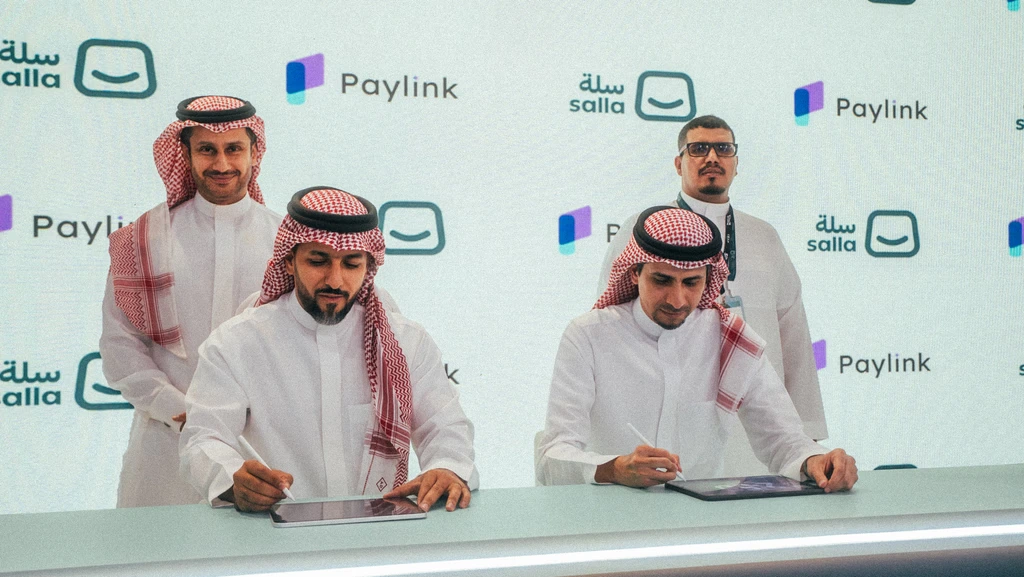
Saudi e-commerce platform Salla has acquired fintech company Paylink as it moves deeper into payments and financial services, giving merchants a more integrated way to accept payments across online and physical channels in Saudi Arabia and international markets.
The acquisition brings together Salla’s e-commerce platform and Paylink’s regulated payment infrastructure, strengthening Salla’s ambition to offer merchants more of the financial tools they need as their businesses grow.
Financial terms of the transaction were not disclosed.
Salla Moves Deeper Into Financial Services
Salla has built its business around helping merchants launch and operate online stores. The platform says it now supports more than 65,000 active subscriber stores, with total sales volume exceeding SAR 45 billion.
The Paylink acquisition takes that proposition a step further.
Paylink is a Saudi fintech specializing in electronic payment solutions and is licensed by the Saudi Central Bank (SAMA) to provide e-commerce payment services.
Its infrastructure supports merchants with multiple payment methods and currencies, including transactions involving international customers.
That gives Salla an opportunity to connect commerce and payments more tightly within the same ecosystem.
From Online Checkout to Omnichannel Payments
One of the most important aspects of the deal is Salla’s plan to expand merchant payment capabilities beyond online stores.
The company says the combined platform could support payment acceptance across both digital and physical commerce channels.
That includes potential development of SoftPOS capabilities, allowing compatible mobile devices to function as payment acceptance points.
For merchants, that could mean fewer separate systems to manage.
An online seller could potentially operate its e-commerce store, manage payments, and accept transactions at physical locations through a more unified infrastructure.
The shift reflects a broader change in commerce technology.
The distinction between online and offline commerce is becoming less important to merchants.
Customers move between websites, social channels, mobile devices, and physical stores. Payment infrastructure needs to follow them.
Paylink Adds Regulated Payment Infrastructure
Paylink’s regulatory position is particularly important to the transaction.
The fintech carries the Saudi Tech label and has developed payment technology for businesses and merchants in the Kingdom.
Its infrastructure supports:
- Multiple payment methods
- Multiple currencies
- Local transactions
- International sales
- Electronic payment management
- E-commerce payment acceptance
For Salla, acquiring those capabilities could allow it to develop financial services more directly around the needs of its merchant base.
Rather than treating payments as a separate service attached to commerce, Salla is positioning them as part of the core merchant experience.
Saudi Merchants Could Get an Easier Route to Global Customers
The acquisition also has an international angle.
Paylink’s infrastructure supports international transactions, giving Salla a stronger foundation for helping Saudi brands accept payments from customers outside the Kingdom.
That matters as Saudi merchants increasingly look beyond domestic demand.
A merchant expanding into another market has to solve several problems at once:
payments, currencies, checkout methods, settlement, and operational complexity.
Bringing more of that infrastructure into one ecosystem could make international expansion easier.
Salla says the combined capabilities are intended to help merchants reach customers regionally and globally while accepting payments through different methods and currencies.
Building a Full Merchant Ecosystem
The Paylink acquisition fits Salla’s broader strategy of becoming more than an e-commerce storefront provider.
Its existing ecosystem covers areas such as
- Payments
- Shipping
- Inventory
- Marketing
- Online-store management
Adding deeper payment infrastructure strengthens the financial layer underneath that ecosystem.
That could eventually create opportunities for other merchant financial services as well.
The company has not announced all the products that could emerge from the acquisition, so it would be premature to assume a specific lending or banking offering is coming.
But the direction is clear: Salla wants to build financial capabilities around merchants rather than simply provide the technology to sell products online.
Why the Deal Matters for Saudi Fintech
Saudi Arabia’s digital economy has been developing rapidly, with payments playing a central role in the Kingdom’s broader technology transformation.
For fintech companies, merchants represent an attractive entry point into financial services because payments generate frequent transactions and provide insight into business activity.
For commerce platforms, meanwhile, payments can become an important source of deeper customer engagement.
That creates a natural convergence.
Commerce platforms want payments. Payment companies want distribution. Merchants want fewer systems.
Salla’s acquisition of Paylink brings those three interests closer together.
What Comes Next for Salla and Paylink?
Salla CEO and founder Nawaf Hariri said financial services are a natural extension of the company’s original mission to reduce complexity for merchants.
The immediate opportunity is to combine Salla’s understanding of merchant needs with Paylink’s payment technology and regulatory expertise.
The longer-term opportunity could be much larger.
If Salla successfully integrates payments across e-commerce and physical commerce, it could give Saudi merchants a more unified financial and commerce infrastructure as they expand into new markets.
The acquisition, therefore, isn’t simply about adding another payment option.
It is about moving the merchant relationship closer to the financial infrastructure itself.
And as commerce becomes increasingly omnichannel, that could become one of the most valuable positions for a platform like Salla to occupy.
Comments
No comments yet. Be the first to share your thoughts.
Leave a comment