
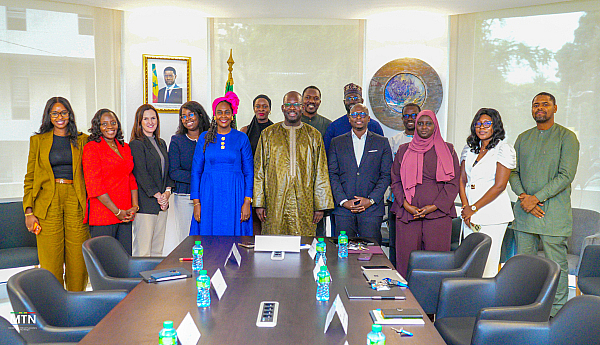
Visa and Senegal’s Ministry of Telecommunications and Digital Affairs have signed a two-year memorandum of understanding to explore digital payments, financial innovation, and cybersecurity initiatives. The partnership aims to support Senegal’s digital transformation agenda and identify practical ways to expand access to digital financial services.
Visa and Senegal’s Ministry of Telecommunications and Digital Affairs have agreed to establish a two-year framework for strategic collaboration aimed at advancing the country’s digital transformation.
The memorandum of understanding (MoU) will bring together the government’s national priorities and Visa’s expertise in payments and financial technology. The collaboration will focus on digital payments, financial innovation, cybersecurity, and regulatory matters.
The parties will also explore use cases that could help modernize public services and improve access to digital financial services for citizens.
According to the announcement, this is the first partnership of its kind between Visa and a government institution in Senegal. It is designed to create a structured public-private dialogue through which both sides can identify opportunities aligned with the country’s development priorities.
The agreement establishes a framework for cooperation. It does not, however, confirm the launch of specific payment services or provide a timetable for individual projects.
Digital payments for government services are a key focus.
A central area of the collaboration will be the exploration of digital payments between citizens and government institutions.
The parties will examine two types of payment flows:
- Person-to-Government (P2G): Digital payments made by individuals to public institutions, such as payments for government services.
- Government-to-Person (G2P): Digital payments made by government institutions to individuals, including potential disbursements to citizens.
These use cases could help make interactions with public services more convenient and accessible. However, the MoU does not identify specific government departments, payment programs, or services that will be digitized.
The next stage will involve identifying opportunities that match Senegal’s priorities and local needs. This could help the parties assess where digital payment solutions may deliver practical benefits for citizens and public institutions.
The focus on both P2G and G2P is significant because digital transformation involves more than enabling consumers to pay merchants electronically. Government payment flows can also shape how citizens access services and receive funds.
Partnership supports Senegal’s New Deal Technologique.
The agreement is aligned with Senegal’s New Deal Technologique, the country’s wider digital transformation agenda.
Minister of Telecommunications and Digital Affairs Samba Diouf described the partnership as a step toward turning the country’s ambitions into practical action. He emphasized the need for secure, inclusive solutions that address citizens’ everyday needs.
The statement signals a focus on implementation rather than technology adoption for its own sake. The framework is intended to identify initiatives that respond to local requirements and support the development of Senegal’s digital ecosystem.
The MoU also creates a channel for cooperation between the government and a major international payments company. Through structured dialogue and knowledge sharing, the parties can assess potential projects and determine where Visa’s expertise may support national priorities.
No investment amount, funding commitment, or specific technology deployment was disclosed in the announcement.
Cybersecurity and financial innovation included in the framework
Beyond payment use cases, Visa and the ministry will exchange knowledge on cybersecurity and financial innovation.
Cybersecurity is an important consideration as public services and financial transactions become more digital. Expanding digital payment access also requires attention to the security and resilience of the systems supporting those transactions.
The parties say their cooperation aims to promote broader access to digital financial services in a secure and resilient environment.
The MoU also includes regulatory matters. However, the announcement does not specify proposed regulatory changes, new rules, or formal commitments by either party to alter existing policy.
Instead, the agreement provides a framework for dialogue and the sharing of expertise. Further details will be needed to determine how that cooperation translates into specific programs or policy initiatives.
Visa sees opportunities to support Senegal’s payments ecosystem.
Aminata Kane, Visa’s Senior Vice President and Group Country Manager for Western and Central Africa, said the company aims to work with the ministry to identify tangible opportunities that facilitate access to digital services.
The collaboration is intended to support the long-term development of Senegal’s payments ecosystem. That includes identifying digital payment use cases grounded in local realities and designed to simplify everyday interactions.
For Visa, the agreement creates an opportunity to contribute its payments expertise to a government-led digital transformation agenda. For Senegal, the framework offers a route to explore potential solutions with an established international payments provider.
The announcement does not confirm whether Visa will provide particular products, platforms, or payment infrastructure under the MoU. Those details may emerge as the parties identify and develop initiatives.
The FinRate view: implementation will determine the partnership’s impact.
The Visa-Senegal agreement reflects a broader approach to digital transformation: governments are increasingly looking to work with private-sector payment providers to explore ways of modernizing public services and expanding financial access.
The focus on P2G and G2P payments gives the partnership a practical direction. If the framework leads to suitable projects, digital payment solutions could make certain public-service interactions more accessible and efficient.
Yet the MoU is an initial cooperation framework, not evidence that specific services have already launched. Its impact will depend on which use cases the parties select, how they are implemented, and whether they deliver measurable benefits for citizens.
Cybersecurity, regulatory coordination, and local payment needs will also matter. Digital services must be designed around the systems and requirements of the communities they serve.
The takeaway: Visa and Senegal have established a two-year framework to explore digital payments, financial innovation, and cybersecurity. The agreement supports Senegal’s New Deal Technologique, while its practical impact will depend on the projects and services developed during the collaboration.
Comments
No comments yet. Be the first to share your thoughts.
Leave a comment