
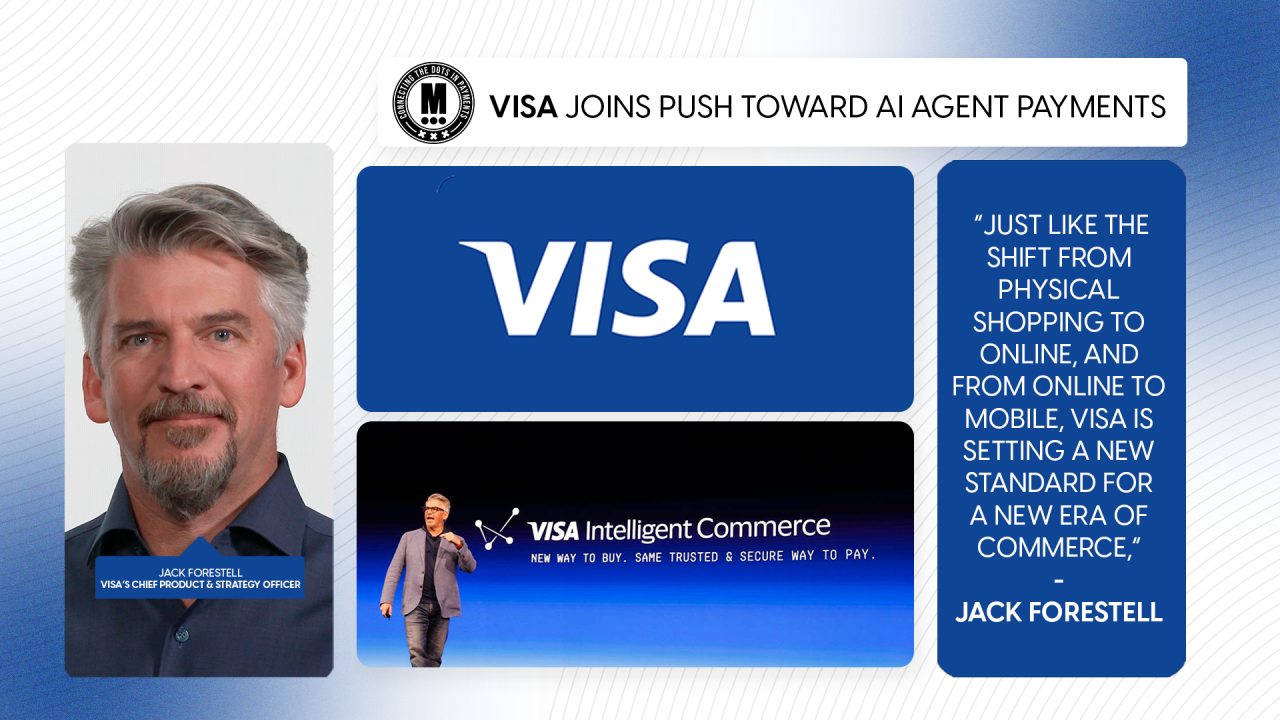
Visa, Bill, and BillTrust are testing a new way for AI agents to complete approved business invoice payments, tackling a manual step that has slowed accounts payable automation.
AI agents are moving beyond answering questions and assisting finance teams. They are beginning to execute real financial transactions under defined permissions and controls.
Visa, BILL, and Billtrust have taken a practical step in that direction with a live pilot that allows authorized AI agents to initiate and complete approved invoice payments through supplier portals. Announced on October 20, 2026, the initiative connects BILL’s buyer-side payment technology with Billtrust’s supplier-side infrastructure, using capabilities from Visa Intelligent Commerce to authenticate the agent.
The problem is familiar to many finance teams. A business may automate invoice processing and approvals, yet still need an employee to log in to a supplier’s website and manually enter payment details. Human authentication requirements and anti-bot protections can prevent automated systems from completing this final step.
The new pilot aims to remove that friction without asking businesses to abandon their existing payment workflows. It is already processing end-to-end transactions with participating buyers using BILL and suppliers using Billtrust. However, the companies have not disclosed transaction volumes, measured efficiency gains, or a date for wider commercial availability.
How the AI Agent Payment Pilot Works
The pilot brings together three capabilities: payment initiation, trusted agent authentication, and supplier-side acceptance.
BILL initiates the payment. Its authorized payment agent acts on behalf of a customer using tokenized payment credentials and controls aligned with the buyer’s approved payment instructions. The transaction is designed to remain connected to the specific invoice, rather than giving the agent unrestricted payment authority.
Visa helps verify the agent. Visa’s Trusted Agent Protocol and Agentic Directory support the registration and authentication of the authorized agent. This helps establish that the agent is acting for an identified buyer and has permission to perform the relevant action.
Billtrust enables supplier-portal access. On the supplier side, Billtrust uses Visa’s Trusted Agent Protocol to recognize and authenticate the agent. The system can then grant access so the payment can be completed according to the supplier’s acceptance policy.
This matters because supplier portals often use CAPTCHA challenges, login requirements, and other protections designed to block unauthorized automated activity. The pilot introduces an agent-authentication approach intended to address those barriers without requiring an additional agent login.
The companies also highlight visibility into payment authorization and completion. That visibility is essential in business payments, where finance teams need to know which invoice was paid, what instructions governed the transaction, and whether the payment was successfully processed.
The arrangement does not mean that every supplier portal will automatically accept AI agents. The pilot currently covers participating buyers and suppliers, and wider adoption will depend on compatible systems and each supplier’s payment acceptance rules.
Why This Matters for B2B Payments
Accounts payable automation has already reduced manual work in invoice capture, approval routing, and payment administration. Yet the final payment step can still depend on employees interacting with separate supplier systems.
That creates unnecessary friction. Finance teams may have to repeat work after an invoice has already passed the required approval process. Suppliers, meanwhile, may wait longer to receive funds when buyers cannot complete payments efficiently.
By automating this last step, Visa, BILL, and Billtrust aim to reduce manual portal work for buyers and help suppliers receive payments faster. The approach could also free finance employees to focus on exceptions, cash-flow planning, and other higher-value tasks.
For BILL, the initiative extends AI-powered financial operations into payment execution. The company says nearly 500,000 businesses trust its platform to manage and move money. Those figures describe BILL’s broader customer base, not participation in the new pilot.
For Billtrust, the potential benefit lies in helping suppliers accept agent-initiated payments while retaining control over their existing payment policies and reconciliation processes. Billtrust says its network includes more than 20 million buyers and supports $1 trillion in annual trade credit volume; these are company-reported platform figures, not pilot transaction totals.
Visa brings the authentication and payment capabilities intended to help the buyer’s authorized agent interact with the supplier’s portal. Together, the companies are testing whether trusted agents can connect financial workflows across separate business platforms.
Trust and Control Will Be Critical
Automating payments creates a different set of risks from automating routine administrative tasks. An agent that can initiate a financial transaction must operate within clearly defined boundaries.
Visa’s Trusted Agent Protocol is intended to help establish the agent’s identity and authorization. Tokenized credentials can reduce direct exposure of underlying payment information, while controls tied to approved payment instructions help limit what the agent is permitted to do.
These safeguards address important parts of the problem, but they do not eliminate every risk. An agent could still act on incorrect invoice information, misunderstand an instruction, or encounter a fraudulent payment request. Authentication alone cannot guarantee that the underlying transaction is accurate or legitimate.
Businesses adopting agentic payments will therefore need reliable invoice validation, supplier verification, transaction limits, approval policies, audit records, and exception-handling procedures. They must also be able to investigate failed or disputed payments and determine exactly what the agent was authorized to do.
The companies say their pilot includes payment-specific controls and visibility into authorization and completion. However, they have not published detailed security test results, fraud outcomes, or independent assessments of the system. Those details will matter as the initiative develops.
From AI Assistance to Financial Execution
The wider significance of this pilot extends beyond one invoice payment workflow.
Many AI applications in finance currently help employees analyze information, summarize documents, prepare recommendations, or organize tasks. Agentic systems aim to go further by taking authorized actions across software platforms.
For B2B payments, that shift requires more than a capable AI model. The agent must be recognized by the systems it interacts with, use appropriate payment credentials, and remain within the buyer’s permissions. Suppliers must also be able to accept the resulting transaction without losing control over payment policies.
That makes authentication and interoperability central to the development of agentic commerce. If the model proves reliable, similar approaches could eventually support additional business payment workflows. But Visa, BILL, and Billtrust have not announced a broader rollout or confirmed which other use cases may follow.
For now, the live pilot provides evidence that the companies are testing trusted AI agents in real commercial payment flows, rather than limiting the concept to demonstrations.
What Happens Next?
The next test is whether the model can operate reliably across a wider range of businesses, invoices, and supplier portals.
Useful indicators will include the number of participating companies, payment completion rates, exception frequency, time saved by finance teams, and measurable improvements in supplier cash flow. Broader adoption will also depend on how easily the approach fits existing financial systems and whether businesses are comfortable delegating specific payment actions to software agents.
The announcement does not yet provide those performance figures or a general availability timeline. It is therefore too early to quantify the pilot’s commercial impact.
TheFinRate analysis: Visa, BILL, and Billtrust are addressing one of the less visible barriers to agentic finance: the gap between an approved payment and its completion on a supplier’s platform. Their pilot combines agent authentication, tokenized credentials, and payment controls to help bridge that gap.
If the approach scales successfully, it could reduce repetitive work and help businesses move money more efficiently. But adoption will depend on more than speed. Businesses need confidence that every agent-initiated payment is authorised, traceable, and processed according to their rules.
The central question for agentic payments is no longer just whether AI can initiate a transaction. It is whether businesses can delegate that action while retaining meaningful control.
Comments
No comments yet. Be the first to share your thoughts.
Leave a comment