
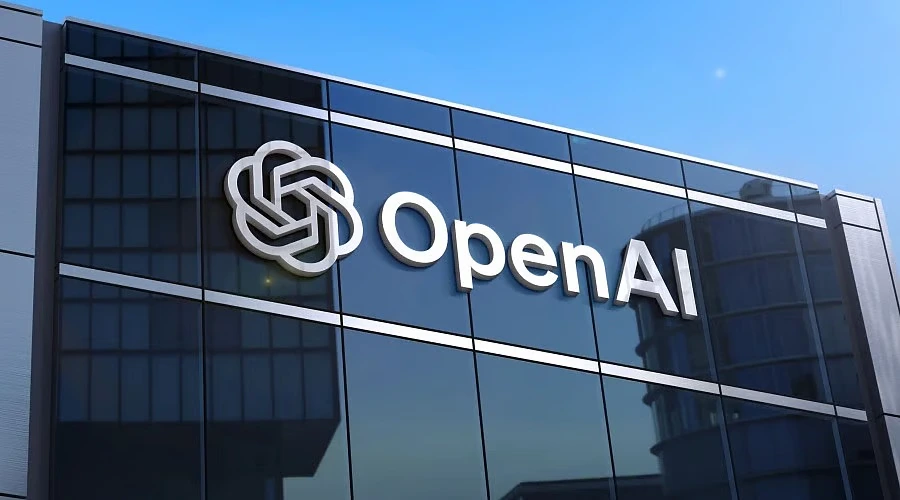
OpenAI is reportedly negotiating a new private funding round of up to $30 billion, with Coatue and investors from the United Arab Emirates linked to discussions as AI infrastructure costs and IPO expectations rise.
October 26, 2026 — OpenAI, the company behind ChatGPT, is reportedly seeking to raise up to $30 billion in a new private financing round at a pre-money valuation of approximately $1.25 trillion.
According to CNBC reporting published on October 22, the discussions involve investment firm Coatue and potential investors from the United Arab Emirates.
The proposed transaction would represent another major financing effort for OpenAI as it expands its artificial intelligence products, computing infrastructure and global operations.
However, the funding terms remain under negotiation. OpenAI has not publicly confirmed the proposed financing, and the company declined to comment on the reports.
The discussions also come amid growing attention on the potential public listings of leading artificial intelligence developers.
OpenAI $30 Billion Funding Round: What Is Being Discussed?
The reported financing would involve a private capital raise of up to $30 billion.
CNBC placed the company's proposed pre-money valuation at approximately $1.25 trillion.
A pre-money valuation represents the estimated value of a company before new investment capital is added.
If OpenAI raised the full $30 billion at that valuation, its implied post-money valuation would reach approximately $1.28 trillion.
That calculation assumes the reported valuation and funding amount remain unchanged.
It does not mean that investors have already committed the full amount.
The proposed transaction is still being negotiated, and the final structure could differ from the reported terms.
The potential involvement of Coatue and UAE investors is also significant.
It suggests that OpenAI continues to attract interest from large institutional investors and capital providers seeking exposure to advanced artificial intelligence.
However, the precise investment commitments, ownership arrangements and governance terms have not been disclosed.
Why the Reported Valuation Matters
A valuation above $1 trillion would place OpenAI among the most highly valued privately held companies.
The reported figure also represents a substantial increase from the company's earlier financing valuation.
According to the supplied report, OpenAI completed a $122 billion funding round in March 2026 at a post-money valuation of $852 billion.
Comparing that figure with the new reported $1.25 trillion pre-money valuation implies an increase of approximately 47%.
However, the comparison involves two different valuation measures.
The March figure represents a post-money valuation, while the latest reported figure is pre-money.
Therefore, the percentage should be understood as a comparison of reported headline valuations rather than a precise measure of investor returns.
The increase would nevertheless reflect significant expectations for OpenAI's future commercial growth.
Investors would be assigning substantial value to its AI models, enterprise products, developer ecosystem and broader technology infrastructure.
Yet a higher valuation also increases expectations for future revenue, profitability and market leadership.
Bloomberg and CNBC Report Different Valuations
The latest CNBC figures differ from an earlier Bloomberg report.
In September 2026, Bloomberg reportedly said OpenAI was seeking approximately $30 billion at a valuation of $1.4 trillion.
CNBC's October reporting placed the proposed valuation at $1.25 trillion.
That represents a difference of $150 billion.
However, the difference does not necessarily establish that OpenAI has formally reduced an agreed valuation.
Both figures concern reported discussions rather than completed financing transactions.
The discrepancy may reflect changing negotiations, different investor expectations or the timing of the reports.
Without confirmed transaction documents, the final valuation remains uncertain.
For investors and industry observers, the difference illustrates how sensitive major private financing discussions can be to market conditions and commercial assumptions.
Even at the lower reported valuation, the proposed transaction would be unusually large.
UAE Investment Could Be Linked to AI Computing Capacity
One of the most interesting elements of the reported financing is the potential connection between UAE investment and computing infrastructure.
According to CNBC, an investment arrangement involving UAE investors could be paired with an agreement to provide additional computing capacity for OpenAI.
This would make the transaction more than a conventional equity financing deal.
Advanced AI systems require significant computing resources for model training, inference and product delivery.
Those resources depend on specialised chips, data centres, electricity, networking equipment and technical infrastructure.
As AI products become more widely used, the cost of operating large-scale systems can increase.
Access to computing capacity is therefore an important strategic consideration.
If investment capital were combined with infrastructure access, OpenAI could potentially strengthen both its financial resources and its ability to expand AI services.
However, no final UAE computing agreement has been confirmed in the supplied reporting.
The proposed arrangement should not be described as a completed infrastructure partnership.
Why OpenAI May Prefer Another Private Funding Round
The reported discussions raise an important question.
Why would a company preparing for a potential initial public offering continue to seek private financing?
Private capital can provide substantial funding without immediately requiring a public stock market listing.
For an AI developer, this may create flexibility while the business expands and its infrastructure requirements evolve.
It may also allow management to negotiate investment terms with a smaller group of institutional investors.
However, private financing is not automatically less demanding.
Large investors may seek specific economic rights, governance protections or other contractual terms.
The details of any such arrangements have not been disclosed.
For OpenAI, another major private raise could provide additional capital before a possible IPO.
It could also establish a new valuation reference for future public market investors.
Nevertheless, raising capital privately does not guarantee a successful public listing at the same or a higher valuation.
OpenAI IPO Expectations Remain in Focus
The supplied report states that OpenAI filed confidential IPO paperwork in June 2026.
A confidential filing allows an eligible company to begin regulatory review without immediately making its full registration documents public.
However, such a filing does not guarantee that an IPO will proceed.
The company would still need to satisfy applicable requirements, determine the offering structure and assess market conditions.
A future public listing would expose OpenAI to broader investor scrutiny.
Public market investors would examine revenue growth, operating expenses, cash requirements and the long-term economics of AI development.
They would also consider competitive risks and the sustainability of OpenAI's commercial strategy.
A $1.25 trillion private valuation would create a demanding reference point for those assessments.
However, private and public market valuations do not always match.
The final IPO price, if a listing occurs, would depend on investor demand and the company's financial outlook at that time.
The AI Infrastructure Challenge Behind the Funding
The proposed financing reflects the scale of investment required to compete in advanced artificial intelligence.
Developing sophisticated AI models involves significant expenditure on computing, research and engineering.
Operating those models for large numbers of users creates additional infrastructure costs.
Companies must also invest in security, reliability, product development and enterprise support.
These expenses can make access to capital strategically important.
However, large financing rounds do not automatically establish that a business has achieved sustainable profitability.
Investors must assess whether future revenue growth can justify the cost of developing and operating AI systems.
The potential UAE computing arrangement is particularly relevant in this context.
It suggests that access to physical infrastructure may be becoming as important as access to financial capital.
For the wider technology sector, this could influence how future AI investment deals are structured.
Anthropic's Potential IPO Adds Competitive Pressure
OpenAI is not the only AI developer attracting attention from investors.
The supplied report also describes growing expectations surrounding a possible public listing by Anthropic.
According to the report, Anthropic raised $65 billion in May 2026 at a valuation of approximately $965 billion.
It also reportedly filed confidential IPO paperwork in June.
CNBC's reporting, as summarised in the supplied article, suggests that Anthropic could seek a public market valuation between $1.5 trillion and $2 trillion.
However, those figures remain reported expectations rather than confirmed IPO pricing.
The timing of either company's public listing has not been established.
If both companies pursue public offerings, investors may compare their growth, operating costs, commercial products and infrastructure requirements.
The companies' valuations could also influence expectations across the broader AI industry.
Nevertheless, the valuation achieved by one company would not automatically determine the valuation of the other.
Their financial profiles, business models and investor demand may differ significantly.
What a $1.25 Trillion Valuation Means for Investors
The reported valuation highlights both the opportunity and uncertainty surrounding large AI companies.
On one hand, investors may see advanced AI as a technology capable of transforming software, professional services, research and enterprise operations.
That expectation can support substantial investment.
On the other hand, high valuations leave less room for disappointment.
If commercial growth slows or infrastructure costs exceed expectations, investors may reassess the value of the business.
Competition is another important factor.
AI developers face pressure to improve model performance, reduce costs and attract paying customers.
The long-term winners may be those that combine technical
Comments
No comments yet. Be the first to share your thoughts.
Leave a comment