
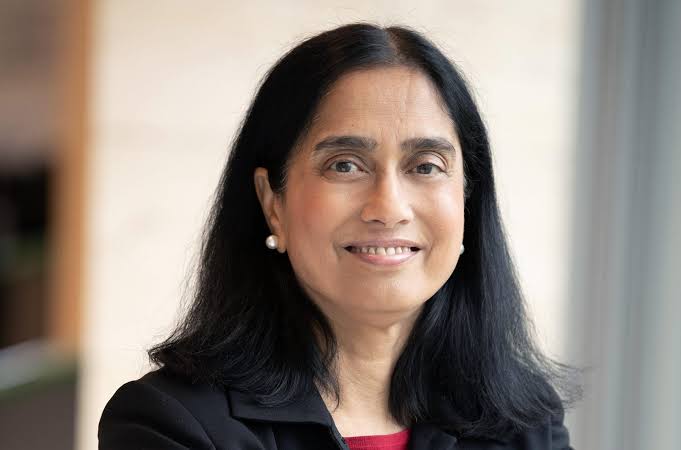
Fiserv has appointed former Mastercard Chief Commercial Payments Officer Raj Seshadri to its board, effective November 30, 2026, strengthening its expertise in commercial payments, banking and data-driven financial services.
MILWAUKEE, October 23, 2026 — Global payments and financial technology provider Fiserv (NASDAQ: FISV) has announced the appointment of Raj Seshadri to its Board of Directors, effective November 30, 2026.
The appointment brings an experienced payments executive into Fiserv's boardroom as the company focuses on connecting banking, commerce and financial technology.
Seshadri currently serves as Senior Strategic Advisor to the Chief Executive Officer of Mastercard. She previously led several major businesses at the global payments network, including commercial payments, data and services, and US issuer relationships.
Fiserv also confirmed that existing director Henrique De Castro will not seek reelection at the company's 2027 annual shareholder meeting.
The announcement represents a board-level leadership change rather than an executive management appointment. Seshadri will join the board as a director, not as Fiserv's CEO or a member of its operating management team.
Fiserv Board Appointment Brings Mastercard Payments Expertise
Seshadri's experience covers several areas that are increasingly important to the payments industry.
At Mastercard, she served as Chief Commercial Payments Officer from 2024 to 2026. Her responsibilities covered commercial cards, business-to-business payment solutions, accounts payable and receivable, bill payments, remittances and disbursements.
These activities form an important part of modern financial infrastructure.
Businesses increasingly need payment systems that support more than consumer card transactions. They also need tools to manage supplier payments, corporate spending, financial workflows and the movement of money across different markets.
As a result, commercial payments have become an important area of product development for banks, payment networks and financial technology providers.
Seshadri's experience in these fields gives Fiserv access to additional board-level knowledge of commercial payment operations and market requirements.
However, Fiserv has not announced any specific product launch, acquisition or commercial partnership connected to her appointment.
Raj Seshadri's Career at Mastercard
Before leading Mastercard's commercial payments business, Seshadri held two other major leadership roles at the company.
From 2020 to 2024, she served as President of Mastercard's Data & Services business. That operation included analytics, insights, loyalty, cybersecurity and innovation solutions.
The role placed her at the intersection of payments and data-driven financial services.
Payment information can help financial institutions and merchants understand customer activity, manage risks and improve services. However, using such information effectively also requires strong security, governance and privacy practices.
Seshadri's background in this business is relevant because payment technology providers increasingly combine transaction processing with software, analytics and other services.
Earlier, from 2016 to 2020, she served as President of Mastercard's US Issuers business.
In that position, she managed relationships with major American financial institutions.
Issuer relationships are central to the payments ecosystem. Banks and other card issuers need reliable infrastructure, customer-facing capabilities, risk controls and access to payment networks.
Experience working with these institutions may provide useful perspective as Fiserv serves banks, credit unions and other financial services businesses.
Leadership Experience Beyond Mastercard
Seshadri's career also includes senior roles at BlackRock, Citigroup, U.S. Trust and McKinsey & Company.
This background spans financial services, banking, investment management and consulting.
She currently serves on the Board of Directors of Raymond James Financial, a role she has held since 2019.
Her experience across several parts of the financial sector may be relevant to Fiserv's board discussions about market developments, risk management and long-term business strategy.
Board members are responsible for oversight rather than day-to-day operations. Their role includes reviewing management performance, considering strategic priorities and overseeing important business risks.
Consequently, an appointment of this kind can broaden a company's governance expertise without necessarily signalling an immediate change in its commercial strategy.
Why Commercial Payments Experience Matters to Fiserv
Fiserv operates across several connected areas of financial technology.
Its services include payments, account processing, digital banking, merchant acquiring, network services and e-commerce. The company also offers Clover, its business management and payments platform.
These activities connect financial institutions with merchants and consumers.
For example, a merchant may need technology to accept payments, manage business operations and access financial services. A bank may need systems that support accounts, transactions and digital customer experiences.
Commercial payments expertise can help a board evaluate opportunities and challenges across these relationships.
Businesses are increasingly seeking financial tools that work within their existing operating systems. This includes solutions for paying suppliers, collecting invoices and managing financial transactions.
At the same time, financial institutions must consider fraud, cybersecurity, regulatory compliance and the reliability of payment infrastructure.
Seshadri's experience in commercial payments, data services and issuer relationships is relevant to these issues.
Nevertheless, the appointment should not be interpreted as confirmation that Fiserv will enter a new business line or alter its strategy. The company has described it as part of its ongoing effort to maintain an appropriate mix of board skills.
Fiserv Chairman Highlights Banking and Commerce Innovation
Fiserv Chairman Gordon Nixon welcomed Seshadri's appointment, pointing to her experience in payments, banking, analytics and strategic transformation.
In the company's announcement, Nixon described her as a respected financial services leader whose perspective would benefit the board as Fiserv develops technology connecting banking and commerce.
The comments reinforce Fiserv's stated focus on serving both financial institutions and businesses.
That positioning matters because payment infrastructure is increasingly connected to a wider range of business services.
Payment acceptance, digital banking, merchant software, financial data and account services often operate within the same customer relationship.
For financial technology providers, the challenge is to make these services work together while maintaining security, reliability and regulatory compliance.
Fiserv's announcement does not provide a new financial forecast or measurable growth target associated with Seshadri's appointment.
Instead, it presents the decision as a way to strengthen the board's collective experience.
Henrique De Castro Will Not Seek Reelection in 2027
Alongside Seshadri's appointment, Fiserv announced a separate board development involving Henrique De Castro.
De Castro informed the company on October 22, 2026, that he would not stand for reelection at the 2027 annual shareholder meeting.
He will continue serving as a director until that meeting.
Importantly, Fiserv's regulatory filing states that his decision was not the result of a disagreement with management over the company's operations, policies or practices.
That clarification is relevant when assessing changes in corporate governance.
A director's decision not to seek another term does not, by itself, indicate a dispute or operational problem.
Fiserv thanked De Castro for his service and contributions to the board.
The company has not described Seshadri's appointment as a direct replacement for De Castro, and their announced timelines are different.
Fiserv Confirms Seshadri's Independent Director Status
Additional information appears in Fiserv's Form 8-K filed on October 23, 2026.
According to the filing, Fiserv's board approved Seshadri's appointment on October 22, with her service scheduled to begin on November 30.
The board determined that she qualifies as an independent director under applicable securities exchange rules and relevant US securities regulations.
The filing also states that there were no arrangements or understandings with another person under which she was selected as a director.
Furthermore, it identifies no related-party transactions requiring disclosure under the cited SEC rule.
Seshadri will participate in the company's standard compensation arrangements for non-employee directors.
These disclosures provide additional context about the appointment's governance structure.
They also distinguish the official board decision from the date on which her directorship becomes effective.
What the Appointment Means for the Payments Industry
The appointment comes as financial technology providers operate across increasingly connected segments of the financial services market.
Traditional distinctions between payment processing, banking technology, merchant services and financial software are becoming less clear.
A business may rely on several of these services at once. Similarly, banks need infrastructure that supports payments, account management, digital channels and security.
This creates strategic questions for technology providers.
They must decide where to invest, which services to integrate and how to manage the risks of operating across multiple financial workflows.
Board-level experience can support oversight of these decisions.
Seshadri's background at Mastercard gives her experience across commercial payments, analytics, cybersecurity-related services and major financial institution relationships.
That experience may be useful to Fiserv as its board reviews opportunities and challenges across banking and commerce.
However, the commercial impact of a board appointment is difficult to measure immediately.
Investors and industry observers will need to assess future company disclosures and strategic decisions rather than assume that the appointment alone will generate revenue growth.
TheFinRate Analysis: Governance Expertise Becomes More Important as Payments Converge
Fiserv's decision to appoint Raj Seshadri highlights the value of leadership experience across multiple parts of financial services.
Her career has covered commercial payments, financial data, banking relationships and broader financial services management.
These areas are increasingly connected in the modern payments industry.
For Fiserv, the appointment adds experience that aligns with its existing business across payment processing, merchant technology and banking infrastructure.
It also brings a leader with direct knowledge of how a major global payment network approaches commercial transactions and financial institution relationships.
The appointment is significant primarily as a governance development, not as an announced change in Fiserv's products or financial outlook.
Seshadri is scheduled to join the board on November 30, 2026, while Henrique De Castro will remain in his position until the company's 2027 annual shareholder meeting.
The broader takeaway is that payments companies increasingly need board expertise extending beyond transaction processing into commercial finance, data, technology and risk oversight.
Fiserv's latest appointment adds that experience at a time when banking and commerce continue to become more closely connected.
Comments
No comments yet. Be the first to share your thoughts.
Leave a comment