
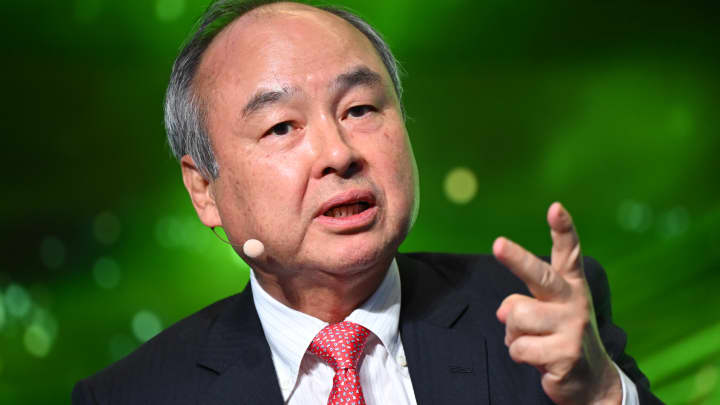
Malaysian Prime Minister Anwar Ibrahim says SoftBank is planning a major investment in artificial intelligence, data centres and emerging technologies, with Sarawak and peninsular Malaysia identified as potential locations.
KUALA LUMPUR, October 26, 2026 — Japan's SoftBank Group is reportedly planning to invest $50 billion in Malaysia, a move that could significantly expand the country's artificial intelligence and digital infrastructure industry.
Malaysian Prime Minister Anwar Ibrahim disclosed the proposed investment following discussions with SoftBank founder and Chief Executive Officer Masayoshi Son, according to reports from Bloomberg and CNBC.
The planned investment would focus on artificial intelligence, advanced technologies and data centres.
Anwar said Son had identified locations in Kuching, Sarawak, and peninsular Malaysia for the proposed projects.
The development comes as Malaysia works toward becoming an “AI nation” by 2030.
However, the reported $50 billion figure represents a proposed investment plan. SoftBank has not publicly confirmed a completed investment commitment of that amount in the cited reporting.
If realised, the initiative could become one of the most significant technology investment programmes in Malaysia's history.
SoftBank's $50 Billion Malaysia AI Investment Plan
According to CNBC's October 26 report, Anwar said SoftBank was planning $50 billion in investments across Malaysia.
The prime minister disclosed the plans after a video conference with Masayoshi Son earlier in the week.
The proposed investment locations include Kuching, the capital of Sarawak, and areas of peninsular Malaysia.
The focus would be on AI, data centres and new technologies.
These sectors require substantial long-term capital, particularly for computing infrastructure, electricity supply, networking equipment and specialised hardware.
For Malaysia, the scale of the reported plan is notable.
A $50 billion programme could support the country's efforts to develop a stronger position in the regional AI economy.
However, the reported discussions do not establish a final investment schedule.
They also do not provide a detailed breakdown of project spending, financing structures or construction timelines.
Therefore, the proposal should not be treated as an amount that has already been invested.
Why Sarawak Is Emerging as an AI Infrastructure Hub
Sarawak is an important part of the proposed investment strategy.
The Malaysian state has been attracting attention for its potential role in energy-intensive digital infrastructure.
AI data centres require dependable electricity supplies and long-term operating capacity.
Sarawak's energy resources could make it an attractive location for projects that need large amounts of power.
The state also offers opportunities to develop digital infrastructure outside Malaysia's established technology centres.
According to the reported remarks, SoftBank has identified Kuching as one potential investment location.
However, no final site allocation or individual project value has been announced for the proposed $50 billion programme.
Further announcements will be needed to clarify which projects move forward.
SoftBank, Grab and Petros Already Have an AI Agreement
The latest reports follow an important agreement announced earlier in October.
On October 8, 2026, SoftBank Group signed a framework agreement with Singapore-based Grab and Petroleum Sarawak Berhad, also known as Petros.
The agreement covers the exploration of AI and digital infrastructure development in Sarawak.
According to SoftBank's official announcement, the companies intend to examine opportunities involving AI computing services and advanced technologies.
The collaboration brings together three different capabilities.
SoftBank contributes international technology investment experience.
Grab provides a regional technology platform with operations across Southeast Asia.
Petros offers a connection to Sarawak's energy sector.
Together, the companies may explore infrastructure opportunities that combine computing demand with energy availability.
However, the framework agreement is exploratory.
It should not be presented as proof that the entire reported $50 billion investment has been contractually committed.
The relationship between the framework agreement and the proposed wider investment programme has not been fully detailed.
Malaysia Wants to Become an AI Nation by 2030
Malaysia has identified artificial intelligence as a major part of its economic development strategy.
The government wants to become an AI-driven nation by 2030.
Its national AI action plan aims to strengthen the country's capabilities in research, infrastructure, talent and adoption.
The strategy goes beyond attracting international data centre operators.
Malaysia also wants domestic businesses and public institutions to benefit from AI technologies.
This includes improving productivity, supporting digital services and building a more competitive technology workforce.
Foreign investment could help provide the infrastructure needed for these ambitions.
However, building data centres alone does not guarantee widespread AI adoption.
Malaysia must also develop technical skills, local business participation and commercially useful applications.
The long-term impact will depend on whether infrastructure spending translates into broader economic benefits.
Global Technology Companies Are Already Investing in Malaysia
SoftBank's reported plans come amid a wider wave of technology investment.
Several major international companies have announced large Malaysian infrastructure projects.
Google: In 2024, Google announced a $2 billion investment to establish its first Malaysian data centre and cloud region.
Amazon Web Services: AWS announced plans to invest approximately $6.2 billion in Malaysia through 2038.
Microsoft: In 2024, Microsoft announced a $2.2 billion investment in cloud and AI infrastructure and related digital initiatives.
These investments demonstrate Malaysia's growing importance as a regional technology location.
However, the figures cover different investment periods and project structures.
They should not be treated as directly comparable completed expenditures.
The reported SoftBank plan is larger than the individual announcements above, but its terms remain less defined.
Malaysia Has Attracted $94 Billion in Data Centre Investment
The Malaysian Investment Development Authority has reported substantial investment activity in the data centre sector.
According to figures cited by CNBC, Malaysia recorded 385.7 billion ringgit, or approximately $94 billion, in data centre-related investments between 2021 and the first half of 2026.
This figure highlights the scale of the country's digital infrastructure investment pipeline.
However, investment approvals, commitments and actual spending are different measures.
The reported amount should not automatically be interpreted as cash already deployed into completed facilities.
Even so, the figure shows how strongly Malaysia has positioned itself within Southeast Asia's data centre market.
The country is attracting investment from global technology groups seeking regional computing capacity.
Why AI Data Centres Are Attracting Billions
Artificial intelligence infrastructure has become a major investment priority.
Training and operating advanced AI models requires substantial computing power.
That demand creates opportunities for data centre developers, chip suppliers, cloud providers and energy companies.
AI infrastructure projects also require supporting facilities.
These include power systems, cooling equipment, networking connections and physical security.
As computing requirements grow, technology companies increasingly seek locations with suitable land, energy access and connectivity.
Malaysia is positioning itself to meet some of that demand.
However, the economics of data centre investment remain complex.
Projects require large upfront capital commitments.
Operating costs can also be significant, particularly when electricity demand is high.
Long-term profitability depends on utilisation, customer demand, financing and infrastructure efficiency.
The Energy Challenge Behind Malaysia's AI Ambitions
Electricity supply will be an important consideration for Malaysia's AI infrastructure expansion.
Large data centres can consume substantial amounts of power.
They also require dependable supply to support continuous operations.
This creates opportunities for energy providers, but it can place pressure on existing infrastructure.
Developers must consider grid capacity, electricity prices and the availability of suitable power sources.
Environmental concerns are also relevant.
Cooling systems can require significant water or energy resources, depending on the technology and location.
For Malaysia, sustainable growth will require balancing digital investment with energy planning.
Sarawak's role in the reported SoftBank strategy makes the relationship between energy and AI infrastructure particularly important.
However, the cited reports do not specify the energy mix or environmental commitments associated with the proposed $50 billion programme.
What the Investment Could Mean for Malaysia's Economy
A large AI infrastructure programme could create several economic opportunities.
Construction projects may generate demand for engineering, equipment and specialist services.
Operating data centres can create technical employment and support local suppliers.
New computing infrastructure may also make it easier for businesses to access AI services.
Over time, these capabilities could support innovation in finance, manufacturing, logistics and other sectors.
However, the economic impact depends on the design and execution of individual projects.
Data centres do not necessarily create employment in proportion to their capital cost.
Moreover, imported hardware can account for a significant share of infrastructure spending.
Malaysia will therefore need to focus on local talent development and business participation.
The most valuable outcome would be a stronger domestic technology ecosystem, rather than infrastructure investment alone.
The Financial Services and Fintech Opportunity
Malaysia's AI infrastructure ambitions may also have implications for financial technology.
Banks, payment companies and other financial institutions increasingly use AI for customer service, fraud detection and operational efficiency.
More regional computing capacity could support the development of AI-powered financial services.
For example, financial institutions may use advanced analytics to identify suspicious transactions or improve internal workflows.
However, regulated financial businesses must still comply with applicable data protection, cybersecurity and outsourcing requirements.
The availability of computing infrastructure does not remove those obligations.
The reported SoftBank plan also does not identify any confirmed fintech-specific investment allocation.
Therefore, the financial services opportunity remains a potential downstream benefit rather than an announced part of the programme.
TheFinRate Analysis: Malaysia Is Competing for AI Infrastructure Leadership
The reported SoftBank investment highlights a wider competition among countries seeking to attract AI infrastructure.
Malaysia is positioning itself as a destination for global technology capital.
Its strategy combines data centre investment, national AI planning and partnerships with international technology companies.
SoftBank's exploratory agreement with Grab and Petros adds another dimension.
It links technology investment with regional digital services and energy infrastructure.
This could help Malaysia develop a more integrated AI ecosystem.
However, the headline $50 billion figure should be evaluated carefully.
The proposal remains subject to further confirmation and execution.
The actual economic impact will depend on project approvals, financing, construction, energy availability and customer demand.
Malaysia's long-term challenge will be turning investment announcements into productive infrastructure and local capabilities.
What Happens Next?
Several developments will determine the future of the reported investment plan.
First, investors will watch for an official SoftBank announcement confirming the proposed amount and scope.
Second, project details may identify specific locations in Sarawak and peninsular Malaysia.
Third, further agreements could clarify the roles of Grab, Petros and other partners.
Finally, Malaysia's progress toward its 2030 AI ambitions will depend on infrastructure delivery and domestic adoption.
For now, the reported $50 billion proposal remains an important signal of investor interest rather than a completed investment programme.
Conclusion: SoftBank's Reported Plan Could Accelerate Malaysia's AI Ambitions
SoftBank is reportedly planning $50 billion in technology investments across Malaysia.
The proposed projects would focus on AI, advanced technologies and data centres.
The discussions come shortly after SoftBank's framework agreement with Grab and Petros to explore AI infrastructure in Sarawak.
They also align with Malaysia's ambition to become an AI nation by 2030.
However, the investment amount and implementation details have not been formally confirmed by SoftBank in the cited reporting.
The bigger story is Malaysia's attempt to turn international AI infrastructure investment into long-term economic and technological leadership.
Whether the reported $50 billion plan delivers that outcome will depend on what moves from discussion to construction.
Comments
No comments yet. Be the first to share your thoughts.
Leave a comment