
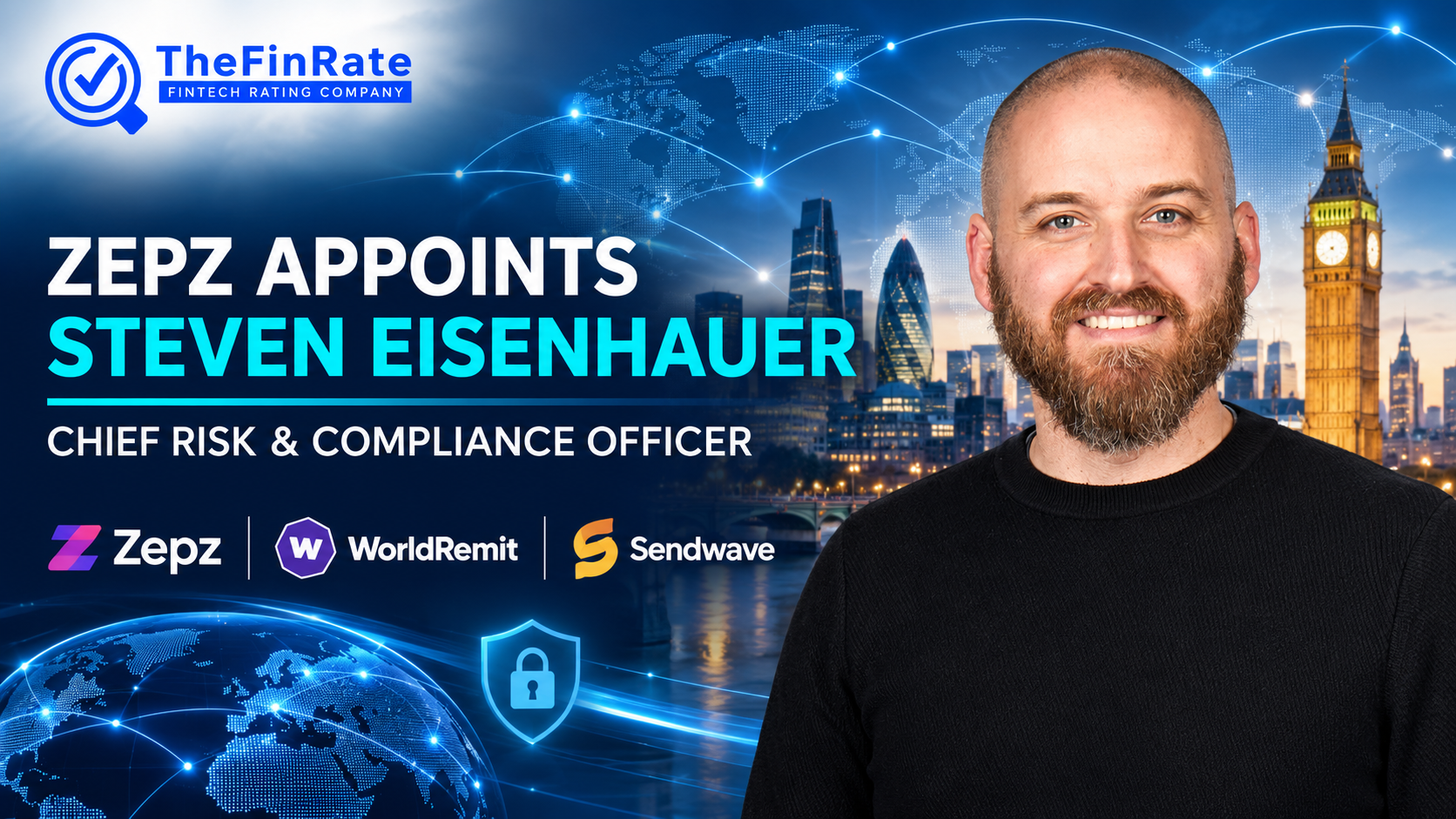
The WorldRemit and Sendwave parent has appointed a fintech risk and compliance executive as it expands its cross-border payments business and continues investing in fraud prevention.
Zepz, the global payments group behind WorldRemit and Sendwave, has appointed Steven Eisenhauer as its new Chief Risk & Compliance Officer (CRCO). Announced in London on November 3, 2026, the appointment comes as the company continues to expand its international payments services and digital financial products.
Eisenhauer joins Zepz this month and will lead the group’s global risk and compliance strategy. His remit includes strengthening the company’s existing capabilities, overseeing continued investment in fraud and financial crime protection technology, and working with regulators and partners as Zepz develops new products.
The appointment highlights the growing importance of risk management in cross-border payments. As remittance providers expand across markets and introduce new digital services, they must protect customers while navigating different regulatory requirements.
Eisenhauer Brings Experience Across Banking, Payments, and Cryptoassets
Eisenhauer brings more than 15 years of international risk and compliance leadership across banking, payments, and cryptoassets.
Most recently, he served as Group Chief Risk and Compliance Officer at EML Payments, where he led the company’s global risk and compliance strategy. Before that, he built and scaled the compliance function at Ramp Network, a fast-growing crypto business.
His career has included work across the UK, the European Union, the United States, and Latin America. Zepz said he has helped fintech companies navigate complex regulatory environments, support expansion into new products and markets, and build relationships with regulators and financial institutions.
This experience is relevant to Zepz’s international operating model. The group serves customers through WorldRemit and Sendwave, which provide cross-border money transfer services across multiple markets.
Eisenhauer’s role will involve working with regulators and partners as the business continues to grow. Zepz said he will build on the compliance expertise already within the organization rather than establish the function from scratch.
Risk and Compliance at the Centre of Zepz’s Growth Strategy
Zepz’s appointment comes amid reported business momentum. The company said revenue and send volumes grew by 25% in 2025, while it transferred $17 billion for customers during the year.
Growth across remittance services can increase the scale and complexity of financial crime controls. Providers must manage risks that can include fraud, identity misuse, suspicious transactions, and compliance obligations across different jurisdictions.
Zepz said Eisenhauer will oversee its continued investment in fraud and financial crime protection technology, supported by an experienced team.
Barrie Morris, Interim CEO of Zepz, said risk management and compliance have been fundamental to earning customer trust. He added that the function is embedded in the company’s culture, with employees sharing responsibility for protecting customers.
Morris described Eisenhauer’s appointment as a reflection of the importance of risk and compliance to the business and to the people who rely on its services.
The company did not disclose a new technology investment amount, a specific implementation timetable, or changes to its existing risk controls as part of the announcement.
Supporting New Products and International Expansion
Zepz’s risk and compliance strategy also supports its broader product ambitions.
The group says it is developing the next generation of cross-border payments through WorldRemit and Sendwave. Its services incorporate technologies such as stablecoins, while newer products aim to extend beyond traditional remittances.
One example is the Sendwave Wallet, which Zepz says enables customers in more than 100 countries to store, send, spend, and save money in digital dollars.
These services can introduce additional operational and regulatory considerations. Product structures, customer eligibility, local rules, and financial crime controls may differ across markets.
Eisenhauer said he was joining a business where responsibility to customers and communities gives compliance a clear purpose. He described his role as an opportunity to strengthen Zepz’s capabilities alongside colleagues, regulators, and partners while supporting growth and innovation.
The company has not announced specific new products or markets tied directly to Eisenhauer’s appointment. Instead, it positioned the role as part of the group’s continued development in an evolving regulatory environment.
A Broader Challenge for Cross-Border Payments
The appointment reflects a wider challenge facing international payments providers: how to expand access while maintaining strong safeguards for customer funds and financial systems.
Remittance businesses operate across borders, connecting senders and recipients who may use different payment methods and financial institutions. As providers introduce digital wallets and stablecoin-related services, their risk frameworks must support a broader range of products and customer activity.
For Zepz, the stated priority is to build on its existing compliance capabilities while continuing to invest in fraud and financial crime protection.
The company serves more than nine million customers and operates across a network of international payment corridors. Its scale makes risk management central to customer trust and its ability to develop new services.
Eisenhauer’s appointment brings leadership experience from traditional payments and digital assets at a time when those sectors are increasingly connected.
What to Watch
The immediate focus will be how Eisenhauer works with Zepz’s existing teams, regulators, and partners as the company continues to develop its products.
Further details on new risk technology, product launches, or market expansion have not been announced. The company’s statement instead emphasizes continued investment, collaboration with regulators, and the role of compliance in supporting responsible growth.
For cross-border payments providers, growth increasingly depends on more than moving money efficiently. It also requires risk and compliance systems that can keep pace with new products, markets, and financial technology.
Comments
No comments yet. Be the first to share your thoughts.
Leave a comment