
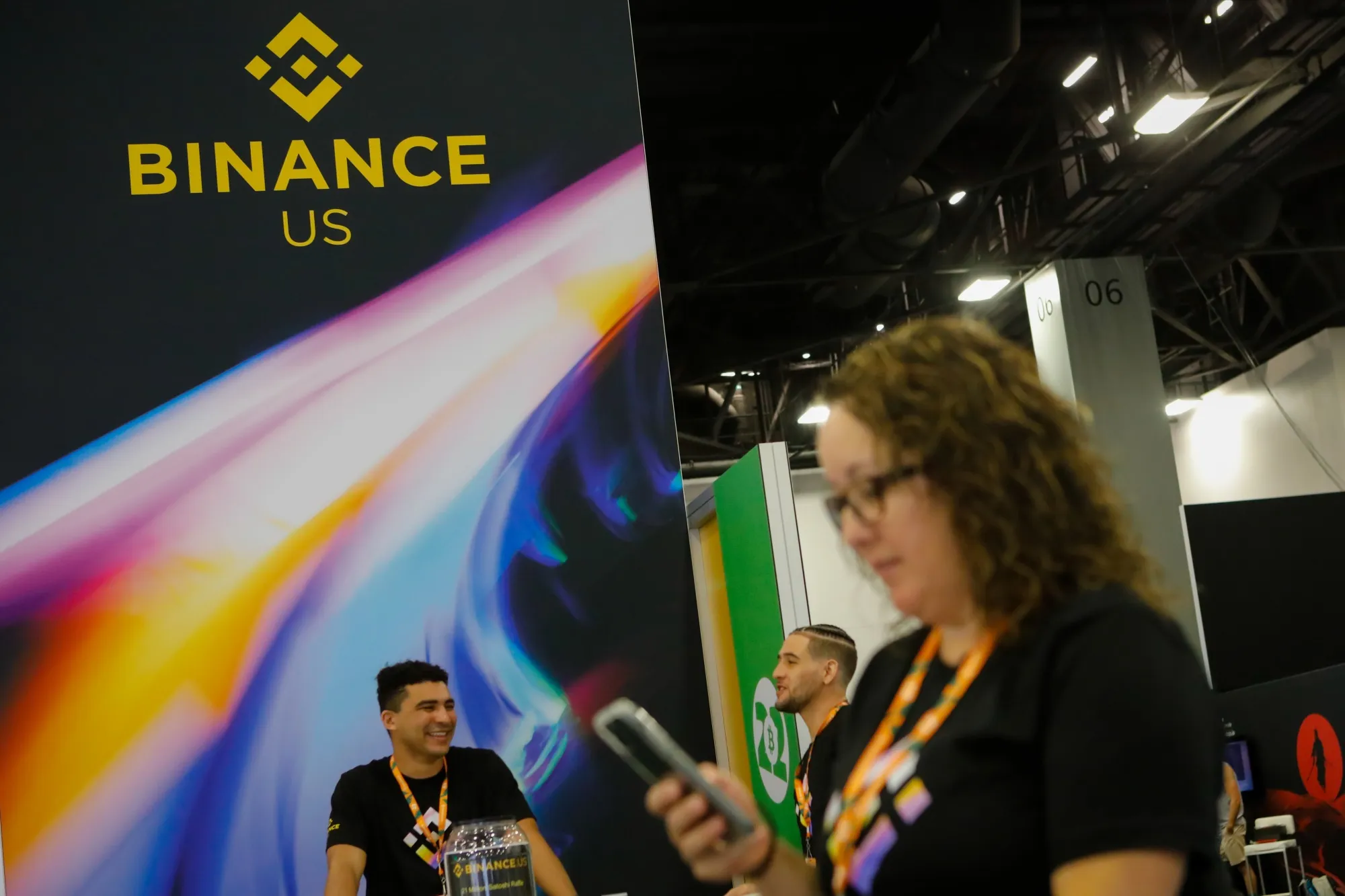
The US Department of Justice is reviewing whether Binance complied with its 2023 settlement agreement as federal prosecutors investigate potential Iran sanctions violations. The review raises fresh questions about the exchange’s compliance obligations, although authorities have not concluded that Binance breached the agreement.
The US Department of Justice (DOJ) is scrutinizing Binance Holdings Ltd.'s compliance with a landmark 2023 settlement as federal authorities investigate transactions potentially linked to Iranian sanctions evasion. The review brings renewed attention to the compliance commitments the cryptocurrency exchange accepted after agreeing to a settlement worth approximately $4.3 billion.
Tysen Duva, head of the DOJ’s Criminal Division, confirmed in an interview with Bloomberg that officials were reviewing Binance’s compliance with the agreement. He declined to provide details about the investigation or say whether the exchange had violated the settlement.
The distinction is important. An investigation does not establish wrongdoing, and the reported review could end without new charges or penalties. Binance has said it continues to strengthen its controls and cooperate with law enforcement.
The scrutiny nevertheless creates a significant compliance issue for one of the cryptocurrency industry’s largest exchanges. Binance’s 2023 agreement imposed extensive obligations relating to anti-money laundering controls, sanctions compliance, reporting, and oversight. A proven breach could expose the company to further legal consequences.
DOJ Reviews Binance’s Compliance With Its 2023 Settlement
The current review follows Binance’s November 2023 resolution with US authorities. Under that agreement, Binance pleaded guilty to federal offenses involving the Bank Secrecy Act, operating an unlicensed money-transmitting business, and violations of the International Emergency Economic Powers Act.
The company agreed to pay more than $4 billion in penalties and forfeiture. The DOJ described the resolution as one of the largest corporate criminal penalties in US history. Binance also accepted enhanced compliance obligations and an independent monitor as part of the agreement.
The settlement followed years of scrutiny over Binance’s anti-money laundering controls and its handling of transactions involving US users and people in sanctioned jurisdictions.
The new review focuses on whether Binance has complied with its obligations since entering the agreement. Bloomberg reported that the DOJ is examining the issue alongside an investigation into possible sanctions violations involving Iran.
Duva said authorities were involved in an ongoing investigation but declined to discuss the facts or its status. The DOJ has not publicly concluded that Binance breached the settlement.
For financial institutions and cryptocurrency platforms, the case highlights a key feature of corporate enforcement agreements: paying a penalty does not necessarily end regulatory exposure. Companies may also be required to maintain controls, report potential misconduct, and cooperate with authorities for years after a settlement.
Iran Sanctions Probe Brings Fresh Scrutiny
The settlement review is taking place as federal prosecutors investigate whether Binance allowed transactions that may have violated US sanctions on Iran.
Bloomberg reported in September that prosecutors in Manhattan were investigating whether Binance knowingly allowed certain trading activity connected to Iran. The investigation also involves the DOJ’s Criminal Division in Washington. Authorities have not publicly established that Binance committed new sanctions violations.
A separate civil forfeiture action has added to the scrutiny. In September, federal prosecutors sought forfeiture of approximately $61 million, alleging that the funds were generated from Iranian black-market oil sales and laundered through Binance. The claim concerns the alleged origin and movement of funds; it is not, by itself, a final finding that Binance knowingly facilitated sanctions evasion.
The central question for investigators is whether relevant transactions passed through the exchange in circumstances that breached US sanctions law and whether Binance met its legal and contractual responsibilities to identify, report, or prevent prohibited activity.
Cryptocurrency platforms can be exposed to complex compliance risks because transactions may involve multiple wallets, intermediaries, trading accounts, and jurisdictions. A digital asset can move between addresses quickly, while identifying the individuals or entities ultimately controlling those addresses may require additional investigation.
Sanctions compliance therefore depends on more than identifying a customer when an account is opened. Exchanges must also maintain systems capable of monitoring activity, identifying suspicious patterns, assessing counterparties, and escalating potential violations.
The current investigation will determine whether the facts support any further legal action. Until authorities establish otherwise, allegations concerning transactions must remain distinct from findings about the exchange’s conduct.
What Binance Agreed to Under the $4.3 Billion Deal
Binance’s 2023 settlement imposed substantial obligations beyond its financial penalty.
According to the DOJ, Binance pleaded guilty to offenses involving anti-money laundering and sanctions compliance. The company agreed to enhance its compliance program, cooperate with authorities, and retain an independent compliance monitor for three years under the criminal resolution.
The agreement also established reporting requirements. Under the terms described in the Bloomberg report, Binance is required to report evidence or allegations of misconduct related to relevant federal laws governing money laundering, banking transactions, and sanctions violations.
These obligations matter because regulators often use corporate settlements to change a company’s behavior after misconduct has been established. The objective is not only to punish past violations but also to reduce the likelihood of similar failures in the future.
A compliance program must operate in practice, not merely exist on paper. Companies need clear escalation procedures, adequate staffing, transaction-monitoring systems, effective sanctions screening, and records that demonstrate how potential problems are handled.
The DOJ’s latest scrutiny raises the question of whether Binance has met the obligations attached to its settlement. It does not, however, establish that those controls have failed or that the company has violated the agreement.
The outcome will depend on evidence and the applicable legal standards. If investigators identify a breach, authorities would need to determine the appropriate legal response under the settlement and relevant law.
Could Binance Face Renewed Charges or Additional Penalties?
A proven breach of the 2023 agreement could create further legal exposure for Binance. The consequences would depend on the nature of any breach, the terms of the settlement, and the evidence gathered by prosecutors.
The Bloomberg report said a violation could potentially allow authorities to pursue criminal activity resolved under the agreement, exposing the company to renewed charges and additional financial penalties. That possibility is not the same as a decision to prosecute, and no such outcome has been established.
The original settlement demonstrates the scale of the financial consequences that can follow serious compliance failures. Binance agreed to a total financial resolution of approximately $4.3 billion in 2023, including penalties and forfeiture.
Any new enforcement action would be assessed on its own facts and legal basis. It would also be necessary to distinguish alleged sanctions violations from any alleged failure to meet the settlement’s separate reporting and compliance requirements.
For investors, counterparties, and businesses using cryptocurrency services, the uncertainty may be relevant to assessments of operational, legal, and reputational risk. However, the existence of an investigation alone does not establish that customer funds are at risk or that the exchange is unable to operate.
The case also illustrates why companies under regulatory agreements face continuing scrutiny. A settlement can impose long-term responsibilities, and the quality of a company’s compliance systems may remain an important issue long after the initial penalty has been paid.
Binance Says It Is Strengthening Compliance Controls
Binance said it continues to improve its controls and remains committed to cooperating with law enforcement.
The company has previously emphasized the scale of its compliance operation. In a February blog post cited in the report, Binance said more than 1,500 people worked on compliance, representing approximately 25% of its global workforce.
That figure indicates the resources Binance says it has dedicated to compliance. It does not, on its own, establish whether every control is effective or whether the company has met all its obligations under the settlement.
Compliance effectiveness depends on how systems work across the business. Staff must be able to escalate suspicious activity, management must respond to identified risks, and monitoring tools must keep pace with changing methods used to move illicit funds.
For cryptocurrency exchanges operating across multiple jurisdictions, these challenges can be particularly demanding. Different markets impose different legal requirements, while transactions may involve users, counterparties, and wallets in several countries.
The current investigation will place renewed attention on how Binance identifies and responds to potentially prohibited activity. The exchange’s cooperation with authorities may be relevant to the process, but it does not predetermine the outcome.
DOJ Encourages Crypto Firms to Self-Report Potential Misconduct
The review also comes as the DOJ seeks to encourage companies to report possible wrongdoing and cooperate with investigators.
Duva said the department wanted to build constructive relationships with cryptocurrency and technology companies, highlighting cooperation between public authorities and private businesses. He also described self-reporting as an important part of the department’s approach.
The policy reflects a broader enforcement strategy. Companies that proactively disclose potential violations and cooperate with authorities may be treated differently from those that conceal misconduct or fail to meet legal obligations. The precise benefits depend on the circumstances and applicable DOJ policies.
For digital asset businesses, the message is that compliance involves more than responding to a regulator after an issue becomes public. Companies need internal processes that can detect potential violations, preserve evidence, assess reporting obligations and escalate concerns promptly.
Self-reporting does not guarantee immunity from prosecution. However, effective cooperation can be an important consideration in how authorities evaluate a company’s conduct.
Binance’s settlement already includes reporting and compliance responsibilities, making the current review particularly significant. Investigators will need to assess whether the exchange met those obligations and how it handled any relevant evidence or allegations of misconduct.
Changpeng Zhao’s Guilty Plea Remains Part of Binance’s Regulatory History
Binance’s current scrutiny also follows the criminal case involving its founder and former chief executive, Changpeng Zhao, widely known as CZ.
In November 2023, Zhao pleaded guilty to failing to maintain an effective anti-money laundering programme at Binance. He resigned as chief executive and later served a four-month prison sentence. The DOJ’s original announcement described the company’s resolution and Zhao’s guilty plea as part of the wider enforcement action.
Zhao was pardoned by US President Donald Trump in October 2025, according to the report. The pardon is a separate development and does not itself determine whether Binance complied with its corporate settlement obligations or whether the current investigation will lead to charges.
The distinction between an individual’s criminal case and a company’s ongoing compliance obligations is important. Corporate settlements can continue to impose duties on an organisation even after leadership changes or the conclusion of related proceedings.
For Binance, the current review concerns its compliance with the agreement and the potential sanctions-related activity under investigation. Those questions must be assessed separately from the earlier guilty pleas.
What the Binance Review Means for the Crypto Industry
The DOJ’s scrutiny underscores a wider challenge for the cryptocurrency industry: companies must demonstrate that their compliance programmes can operate effectively at scale.
Large exchanges process transactions across borders and serve customers with different risk profiles. Their systems must identify suspicious activity, screen for sanctioned parties and respond to new information about wallets, counterparties and transaction patterns.
Regulators increasingly expect digital asset firms to maintain controls comparable to those required of other financial services businesses where applicable laws impose similar obligations. The technology used to move money may differ, but sanctions and anti-money laundering responsibilities remain central to enforcement.
The Binance case also shows that a settlement should not be treated as a permanent shield against further scrutiny. Where an agreement requires ongoing monitoring, reporting and remediation, authorities may continue examining whether those commitments are being met.
For other exchanges, the practical lesson is to maintain clear accountability for compliance decisions, document investigations and ensure that senior management receives timely information about material risks. A company’s ability to demonstrate the effectiveness of its controls may be as important as the existence of the controls themselves.
The case may also influence how institutional customers and business partners assess digital asset platforms. Compliance governance, transparency and cooperation with authorities can affect commercial confidence, particularly for organisations that must meet their own regulatory and risk-management requirements.
What Happens Next?
The DOJ has not publicly determined that Binance breached its 2023 settlement, and the investigation could conclude without additional charges or lawsuits. Authorities have declined to provide further details about the review.
The next developments will depend on what investigators establish about the transactions under scrutiny, Binance’s response to potential misconduct and the exchange’s compliance with its reporting and control obligations.
For now, the key fact is that US authorities are reviewing Binance’s compliance with a settlement that followed a major criminal resolution. The separate Iran-related investigation adds another layer of legal and sanctions risk, but allegations should not be confused with proven violations.
The central issue is whether Binance has met the obligations it accepted after the $4.3 billion settlement. The outcome could carry consequences for the exchange and reinforce the importance of effective sanctions and anti-money laundering controls across the digital asset industry.
Comments
No comments yet. Be the first to share your thoughts.
Leave a comment