
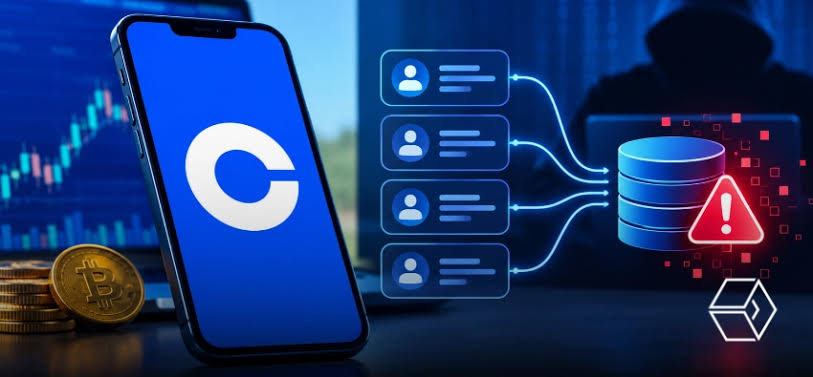
Coinbase says a third-party analytics incident exposed a limited subset of customer contact information, highlighting how external vendors can create cybersecurity risks even when a company's own systems remain secure.
Coinbase has denied reports that it was hacked after an incident at third-party analytics provider Amplitude exposed some customer contact information. The cryptocurrency exchange said its own systems had not experienced unauthorized access and that customer funds remained safe.
The disclosure, reported on October 27, 2026, concerns data associated with Coinbase and other Amplitude clients. According to a statement from Coinbase Support on X, the exposure involved a “small subset” of contact information.
Coinbase said it was notifying affected customers by email as required by law. However, the company did not disclose how many customers were affected or identify the specific contact-data fields involved.
The incident highlights a growing challenge for financial services companies: protecting customer information across a network of external technology providers, not just within their own systems.
What Happened in the Coinbase Data Incident?
According to the reported statement, the incident originated at Amplitude, an analytics provider used by Coinbase. Coinbase said the incident did not involve unauthorized access to its own systems.
The company also emphasized that customer funds remained safe. The available report does not indicate that passwords, private keys, or cryptocurrency holdings were compromised.
However, several important details remain unclear. Coinbase has not specified the number of affected customers, the exact information exposed, or the full circumstances surrounding the incident.
These gaps matter when assessing the potential impact. Contact information is less sensitive than private keys or account credentials, but it can still create risks for customers.
Until the scope of the incident becomes clearer, affected users should distinguish between the reported exposure of contact information and evidence of a compromise involving accounts or funds.
Why Exposed Contact Information Still Creates Risk
Even when financial accounts remain secure, exposed contact information can provide attackers with material for targeted phishing and social-engineering attempts.
For example, criminals may use an email address or phone number to send messages that appear to come from a cryptocurrency exchange. These messages may claim that an account requires urgent verification or that a suspicious transaction needs attention.
The objective may be to persuade a customer to disclose login credentials, share authentication codes, or approve a fraudulent transaction.
This is particularly relevant in cryptocurrency markets, where users can face irreversible losses if they authorize transfers to an attacker-controlled wallet.
The report does not establish that Coinbase customers have experienced follow-on attacks linked to this incident. Nevertheless, the potential for misuse makes customer communication and vigilance important after a data exposure.
Customers should be cautious of unexpected messages claiming to come from Coinbase. They should avoid clicking suspicious links, never share passwords or authentication codes, and access their accounts through official channels.
Third-Party Vendors Create a Wider Security Challenge
The Coinbase incident illustrates the cybersecurity risks associated with external service providers.
Financial companies often rely on third parties for analytics, customer support, cloud infrastructure, and other operational functions. These relationships can improve efficiency, but they also create additional points where sensitive information may be exposed.
A company can maintain strong controls over its own systems and still face risks if a vendor experiences a security incident.
This makes third-party risk management an important part of financial-sector cybersecurity. Companies need to understand what information vendors can access, how that information is protected, and how quickly incidents can be identified and reported.
Vendor assessments, access restrictions, data minimization, and clear incident-response procedures can help reduce exposure. However, these controls cannot eliminate every risk.
For cryptocurrency platforms, the consequences can extend beyond privacy concerns. Attackers may use exposed contact information to impersonate support staff, target customers with fraudulent recovery services, or attempt to obtain account access.
The Coinbase report does not establish that Amplitude's incident affected Coinbase's core infrastructure. It does, however, demonstrate why vendor security remains relevant even when a company's primary systems are not reported to have been breached.
Data Breaches Also Affect Other Financial Firms
The Coinbase disclosure comes amid other reported customer-data incidents involving financial firms in South Korea.
Daishin Securities said personal information belonging to 38,490 customers had been compromised. The reported information included names, email addresses, and mobile phone numbers after the brokerage detected signs of unauthorized access.
Separately, Yonhap News Agency reported that some Bithumb customer information had been leaked in an external cyberattack. Financial authorities had also begun an inspection into a data breach involving Mirae Asset Global Investments.
These incidents involve different organizations and reported circumstances. The available information does not establish that they are connected to the Coinbase or Amplitude incident.
Taken together, however, they underline the continuing importance of data protection across exchanges, brokerages, and other financial services providers.
What Coinbase Customers Should Know
Coinbase says customer funds remain safe and that its systems have not detected unauthorized access associated with the reported incident. The company is contacting affected customers by email.
Customers should remain alert to communications that create urgency or request sensitive information. They should verify messages independently and avoid sharing passwords, private keys, or one-time authentication codes.
It is also important to remember that a message can appear convincing without being genuine. Attackers may imitate a company's branding or use personal information to make fraudulent communications seem legitimate.
The report does not confirm that account credentials or funds were exposed, and customers should not assume that their accounts were compromised solely because of this disclosure.
The Bigger Lesson for Crypto Security
The Coinbase incident reinforces an important point about digital-asset security: protecting customer funds and protecting customer information are related, but distinct, responsibilities.
A company may report that its core systems remain secure while customers still face privacy risks through a third-party provider.
The next important details will be the number of affected customers, the specific information exposed, and any further findings about the incident.
For cryptocurrency platforms and financial institutions more broadly, the challenge is to extend effective security controls across the entire technology supply chain. In a connected financial ecosystem, a company's security depends not only on its own defenses but also on how carefully it manages the partners that handle customer data.
Coinbase says user funds are safe after a third-party vendor exposes customer contact info
Comments
No comments yet. Be the first to share your thoughts.
Leave a comment