
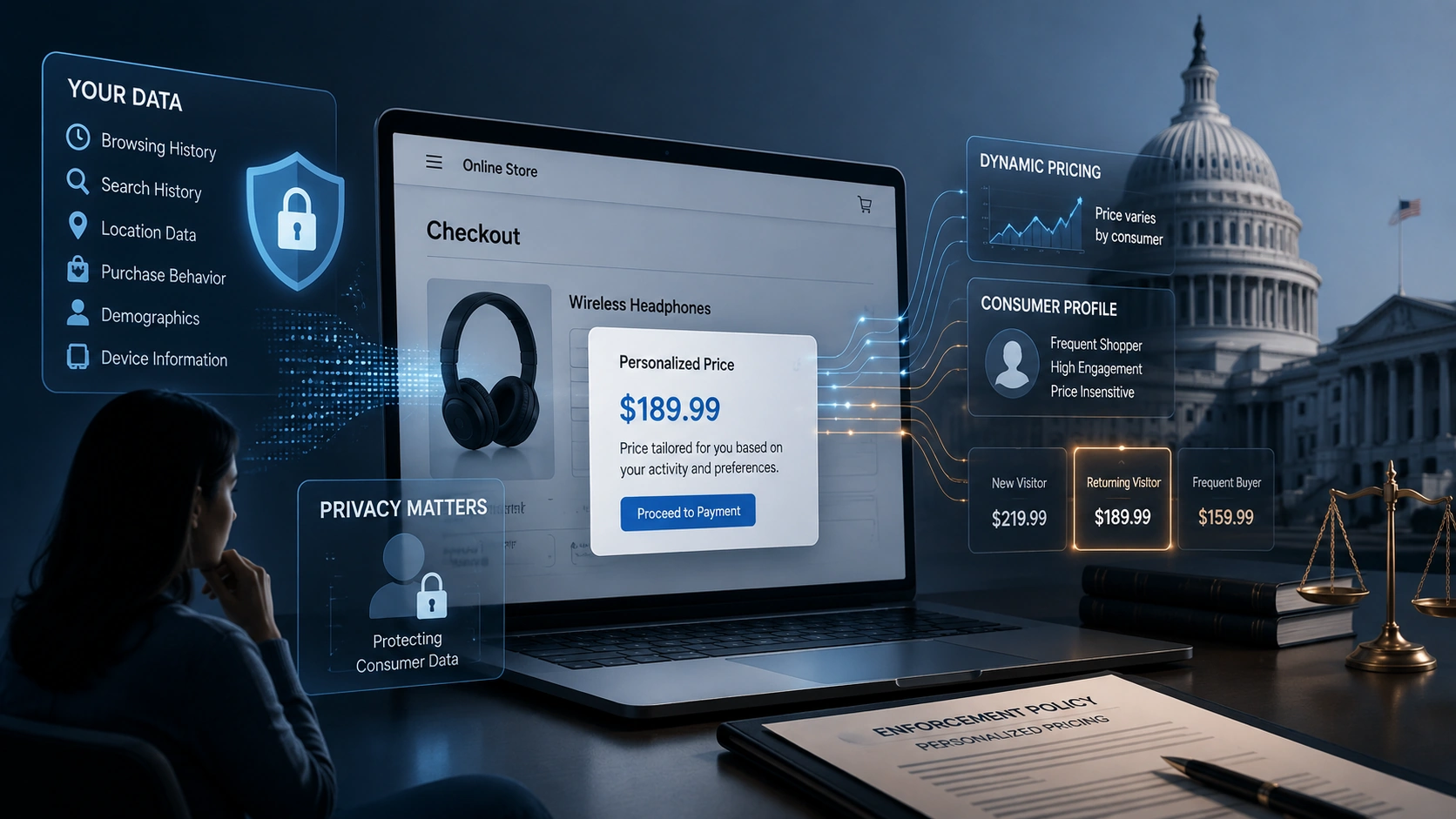
FTC Targets Personalized Pricing as Regulators Warn About Data-Driven Prices
The Federal Trade Commission wants to hear from the public about a rule. This rule could warn businesses about using pricing based on consumer data.
The U.S. Federal Trade Commission (FTC) is looking closer at personalized pricing. The FTC is warning businesses that using information to decide how much a person should pay could break federal laws that protect consumers.
On August 19 the FTC said it is looking for comments on a new plan. This plan covers pricing practices that use data to guess how much a person might pay.
This move could change a lot for stores, websites, fintech companies and other businesses. Many of these businesses use data to change prices, discounts or offers for people.
FTC Raises Concerns Over Personalized Pricing
Personalized pricing happens when a company uses info about a person to set a price for them.
That info might include what you look at online what you bought before where you are or other personal data. The FTC wants to focus on times when people expect a product or service to cost the same for everyone looking at it at that time and place.
The agency says that if businesses use pricing they should clearly explain it if people would not expect it.
The new plan would ask businesses to tell people if a price is personalized. They would also have to explain why the price is different and what kind of data they used. The FTC says that if businesses do not share this info it could be seen as an unfair way to do business under the FTC Act.
However the FTC also makes a point. The agency says Congress has not given it the power to ban pricing in every single case.
Instead the FTC is just showing how the agency will handle practices that might break the laws they already have.
Why Consumer Data Matters
Because of shopping businesses can see a lot more about us.
Companies can look at how we browse and what we buy to learn what we like. That data can then change the deals, product ideas and maybe even the prices we see.
The FTC has already looked into this through its work on surveillance pricing.
In findings from January 2025 the agency said that middleman companies could use details like location, age, browsing history and shopping habits to help businesses change prices and deals.
The agency also pointed out things like how you move your mouse or when you leave items in a shopping cart.
That old work helps explain why the FTC is making this proposal now.
Transparency Becomes a Key Issue
The main worry is not just that prices change.
Prices change all the time because of things like how many itemsre left or how much people want them. The FTC is worried about whether people know when their own personal information is changing the price they see.
For example a person might think an online item has one set price. If a store uses data to guess how much that specific person can afford that person might see a different price without knowing why.
The FTC says this lack of honesty could cause problems for consumer protection.
Chairman Andrew Ferguson said people expect a listed price to be the same for others, not a guess of what they will pay based on their personal information.
What Businesses Need to Consider
- This new plan could put pressure on companies to check how they use consumer data to set prices.
- Businesses that use pricing might need to look at:
- What consumer data affects price decisions
- If customers know about prices
- How companies explain why a price is personalized
- If pricing practices might trick consumers
- If outside tech companies are helping set prices
- How customer data moves between sites and companies
This is a big deal for digital businesses that use huge amounts of data and computers to set prices automatically.
AI Could Make the Issue More Important
This debate is happening as more businesses use artificial intelligence to study how people act.
AI systems can look at amounts of info very fast. They can find patterns that humans might miss. As these systems become more common businesses could use them to make smarter choices about deals, discounts and pricing.
That makes being honest more important.
People might not know if a computer system changed the price they got or what info was used to make that choice.
Because of this the FTC proposal comes at a time when using data for shopping is getting more complex.
Public Comments Will Shape the Next Step
The FTC has not made a rule to ban personalized pricing yet.
Instead the agency wants to hear what people think about the proposed plan. Once the plan is in the Federal Register the public will have 30 days to give their thoughts.
The Commission approved the notice with a 2-0 vote according to the FTC.
This means businesses, consumer groups and others can give their feedback before the agency does anything
What This Means for Consumers
For people this could mean more honesty about how personal information changes online prices.
The FTC approach suggests that people should be able to understand when their data is used to decide what they pay.
The agency is also building on its work to see how companies use personal info to change prices.
For businesses the message is simple: you need to look at your data-driven pricing to make sure it follows the law.
As digital shopping becomes more personal the line between a feature and a trick might get more attention from the government.
The Bigger Picture
The latest move by the FTC shows that consumer data and honest pricing are becoming linked in the eyes of the law.
Businesses have used data for a time to help with marketing.. When that same data changes the price a person pays the legal risks get much higher.
The proposed plan does not stop all pricing. It just points out when the FTC thinks hiding these prices could break consumer protection laws.
Fintech and digital shopping companies should watch this closely. As AI and data play a role in money and shopping regulators are looking closely at how businesses use personal data—and if people know it is happening.
Why this matters for FinRate
The FTC proposal touches on fintech, AI, data privacy, online shopping and consumer protection. It could change things for businesses that use customer data to set prices or offers making it a big deal, for the financial technology industry.
FTC Seeks Comment on Enforcement Policy Statement Regarding Personalized Pricing
Comments
No comments yet. Be the first to share your thoughts.
Leave a comment