
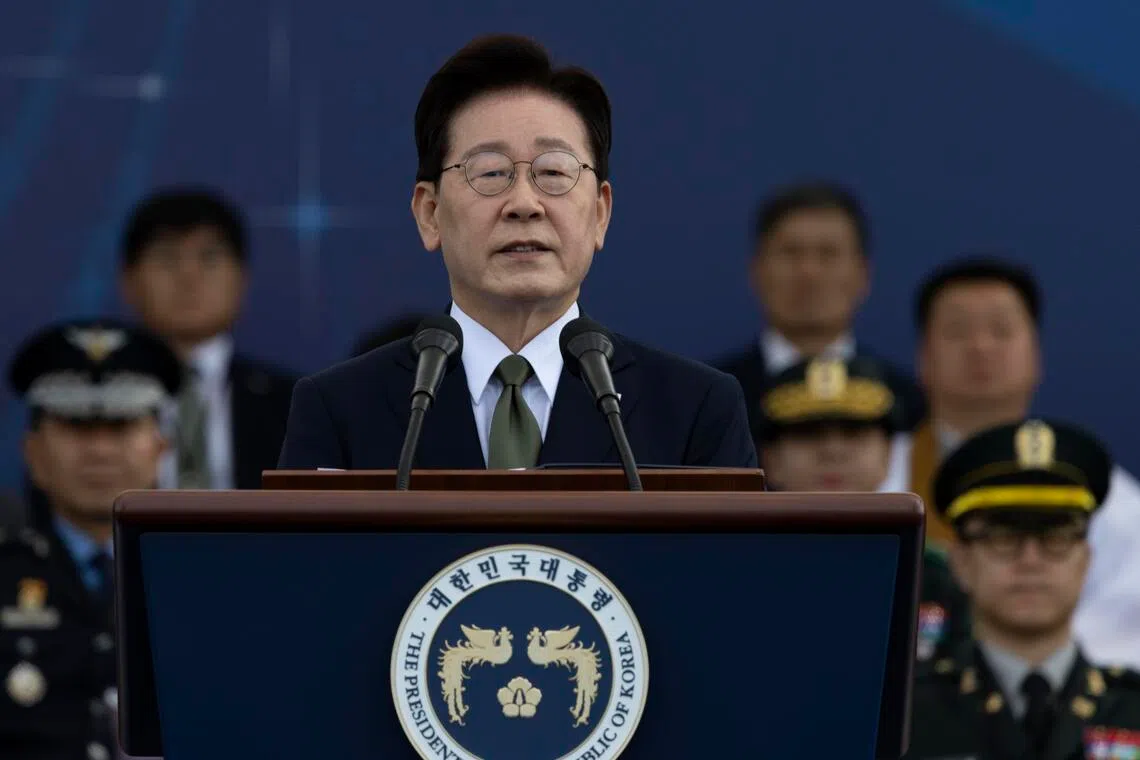
South Korean President Lee Jae Myung has ordered a thorough investigation and response measures after a series of personal data leak and cyberattack incidents affected banks, financial companies, and public agencies. The order comes as financial regulators widen on-site investigations following a breach reported by Shinhan Bank on September 30, along with additional incidents involving other financial institutions.
The Financial Services Commission, known as the FSC, has called for comprehensive security inspections across the financial sector, tighter access controls, and stronger consumer protection measures. Authorities are also moving to share attack methods, internet protocol addresses, and other threat information more quickly between institutions so that one bank's discovery doesn't sit isolated while others remain exposed.
The response intensified after additional breaches were reportedly discovered at second-tier financial institutions, prompting the FSC to bring forward an emergency meeting that had originally been scheduled for October 7. These developments have raised broader questions about whether attackers are testing vulnerabilities across South Korea's financial system as a whole, rather than targeting individual banks one at a time.
South Korea Expands Probe Into Financial Data Leaks
President Lee ordered authorities to investigate recent personal data leak incidents affecting banks, finance companies, and public agencies, according to Seoul's presidential office. The FSC subsequently convened an emergency meeting with financial industry associations, regulators, and executives from affected institutions to coordinate a response.
FSC Chairman Lee Eog-weon warned that the financial sector must respond with the highest level of vigilance as authorities continue investigating the incidents. The regulator had already held an emergency meeting the previous Friday after Shinhan Bank, KB Kookmin Bank, and other institutions reported cyberattacks. Yonhap News Agency also reported breaches involving Hana Bank and Woori Bank, suggesting the problem extended well beyond a single institution.
The banks could not immediately be reached for comment outside regular working hours, according to Reuters. The regulator said on-site investigations had begun after Shinhan Bank reported its breach on September 30, and those investigations have since expanded to cover other reported incidents. This widening scope matters quite a bit, because authorities are no longer treating these incidents as isolated cybersecurity events happening in isolation.
Authorities Investigate Whether Attacks Targeted Multiple Banks
One of the most important questions right now is whether the attackers were pursuing specific financial institutions or simply scanning the sector broadly for vulnerabilities. Yonhap reported that regulators believe the attacks may have involved broad scanning of multiple financial companies, rather than a single targeted institution. That assessment, however, hasn't been presented as a final finding.
Attack traffic was reportedly traced to IP addresses across several countries, including the United States, Japan, Singapore, Vietnam, and Britain, according to Yonhap, which cited bank data submitted to lawmakers. It's worth being careful here. The presence of IP addresses in those countries doesn't by itself establish where the attackers were actually located or who was responsible for the attacks.
That distinction will matter a great deal as investigators continue examining these incidents. Cyberattacks can involve infrastructure distributed across multiple jurisdictions, which means the geographic origin of network traffic can differ significantly from the identity or location of the people actually behind an attack. For South Korean financial institutions, the immediate priority is therefore to identify vulnerabilities, contain incidents, and prevent attackers from exploiting the same weaknesses elsewhere in the system.
South Korea's Financial Regulator Calls for Stronger Controls
The FSC has directed financial institutions to conduct comprehensive security inspections following the reported breaches, with particular attention paid to access controls, customer data handling, and the systems that process sensitive personal information. Regulators are asking institutions to review how data moves between internal systems and to tighten controls around who can access that data and under what circumstances.
Alongside those inspections, the FSC is pushing financial institutions to share threat intelligence more quickly with one another. That includes attack methods, suspicious IP addresses, and other indicators that could help a bank spot an intrusion attempt before it escalates into a full breach. The logic here is straightforward. If one institution identifies a new attack pattern, others across the sector should hear about it fast enough to defend against the same technique before it spreads further.
Stronger consumer protection measures are also part of the response. Regulators want financial institutions to be more transparent with customers when their data has been exposed, and to move faster in notifying affected individuals so they can take protective steps of their own. For South Korea's financial sector, the coming weeks will likely bring tighter oversight, more frequent security reviews, and closer coordination between banks that, until recently, handled these threats largely on their own.
South Korea data leaks prompt President Lee Jae-myung to order a wider probe as regulators strengthen cybersecurity across banks.
South Korean president orders probe into data leaks across the financial industry
Comments
No comments yet. Be the first to share your thoughts.
Leave a comment