
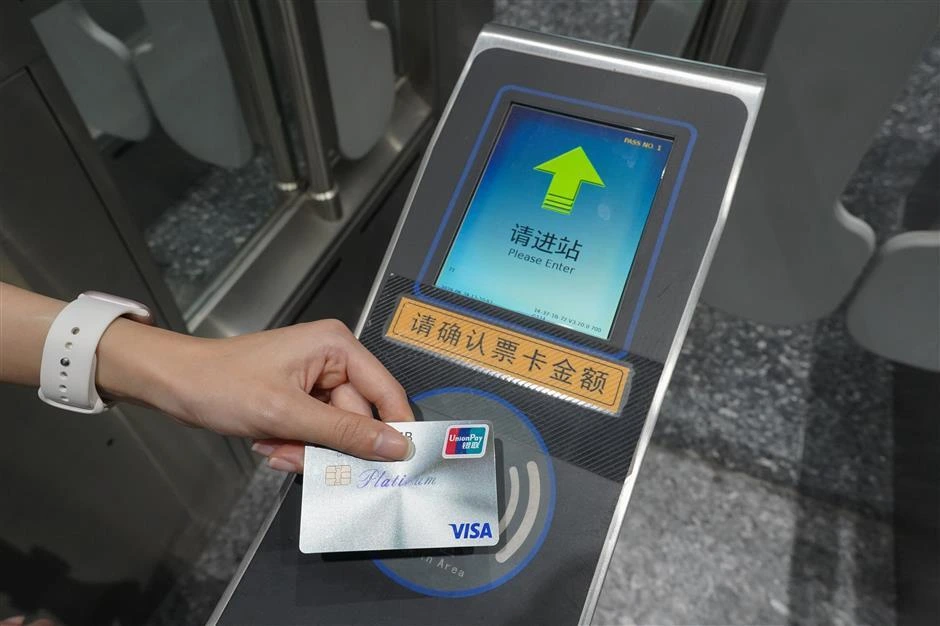
Visa has reached a significant milestone in its effort to expand within China, one of the world's largest and most competitive payments markets. On October 13, 2026, the global payments company announced that the People's Bank of China had approved its application to prepare for establishing a domestic bank card clearing institution, allowing Visa to begin formal preparations for a local business.
However, the decision is not a final operating license. Visa says it must continue through the regulatory process before it can begin domestic clearing operations. The approval moves Visa beyond the application stage and into formal preparations, but the company still needs to complete the remaining requirements before it can compete directly in domestic card clearing.
For Visa, the milestone could eventually open a route into a market where local payment networks and digital wallets already dominate, signalling further progress in China's opening to international payments providers.
Visa's China Approval Marks Progress Toward Domestic Operations
Visa has operated in China's broader payments ecosystem for decades, but participation in international payments is different from running a domestic bankcard clearing business. A domestic clearing institution helps process and clear card transactions within a market, connecting participating institutions under local rules, and establishing one can give a payment network a more direct role in domestic transactions, subject to regulatory approval and market adoption.
Visa said the decision marks an important step in its long-standing commitment to China. Chief Executive Officer Ryan McInerney welcomed the approval and acknowledged the role of leaders in both countries in pursuing a constructive and strategically stable relationship, adding that Visa would take the necessary steps under PBOC regulations to work toward domestic operations.
The announcement does not provide a commercial launch date or confirm that Visa has started clearing domestic transactions. The immediate development is regulatory, since Visa can now begin formal preparations for its proposed local institution, making the next phase critical as it works to satisfy the relevant authorities before operating.
Why China Matters to Global Payments Networks
China is a strategically important market for international payment companies because of the scale of its economy, its large consumer base, and its sophisticated payments infrastructure. The opportunity is not simply introducing an international card brand to new customers, though, since China has a distinct domestic payments ecosystem with established card clearing infrastructure and widely used mobile payment platforms.
China UnionPay is a major force in domestic bank card payments, while Alipay and WeChat Pay have become central to everyday digital payments, meaning Visa's potential domestic operation would enter a market with well-established incumbents rather than an underserved landscape.
Visa's global network and experience in cross-border payments may provide useful foundations, but domestic success would still require regulatory compliance, local financial institution connections, merchant acceptance, and a value proposition that fits China's existing payment habits. The preparation approval provides a pathway toward participation, but it does not establish how quickly Visa could scale or what share of the domestic market it might secure.
Preparation Approval Is Not the Final License
One of the most important aspects of the announcement is the regulatory stage it represents. Visa said the PBOC had approved its Application to Prepare, allowing it to begin formal preparations to establish a domestic bank card clearing institution, and that it would continue efforts to complete the process before beginning domestic clearing operations. The approval should not be described as Visa having fully launched its China business.
Preparatory work and the final authorization to operate remain separate stages. Reuters reported that the preparation period is subject to a one-year timeline before a further application for permission to open and operate is submitted. The announcement does not confirm that consumers can already use Visa to make domestic card payments through a newly established clearing network, and regulatory progress can reduce uncertainty around market access without immediately translating into transaction volume or profitability.
A Competitive Domestic Environment Awaits
If Visa completes the remaining requirements and begins domestic operations, it will face a market shaped by established infrastructure and mobile-first consumer behavior. China UnionPay holds a central position in the bankcard ecosystem, while Alipay and WeChat Pay have made mobile payments routine across retail purchases and online commerce. These systems are deeply embedded in merchant operations and consumer habits, so any new domestic offering would need a compelling reason for people to use it.
Domestic clearing also involves different competitive dynamics from Visa's international network, since local payment preferences, partnerships, pricing, and acceptance infrastructure can all shape the economics of market entry. Visa has not announced a commercial launch date or disclosed projected market share or revenue from the proposed business, so the opportunity should be understood as a strategic possibility rather than an immediate financial contribution.
A future domestic Visa clearing business could create additional options for participants in China's card payment ecosystem, depending on the services ultimately approved. For banks, the significance would depend on arrangements for issuing and acquiring institutions, while for merchants it would hinge on acceptance, processing, and costs. The announcement does not confirm specific bank partnerships, merchant rollouts, or service terms, so those details will emerge as Visa progresses. Domestic clearing is also distinct from cross-border payments, since Visa already runs an international network, while the proposed Chinese institution concerns its ability to operate domestically under China's own rules.
US-China Relations Form Part of the Broader Context
Visa's announcement also referred to the importance of constructive and strategically stable relations between the United States and China. Market access for international financial services companies can be influenced by domestic regulation as well as the broader relationship between governments, and Visa's statement acknowledged the role of both countries' leaders while describing the approval as a step forward in its commitment to China. The company did not say the approval was tied to a specific political agreement, so it is more accurate to treat that reference as part of Visa's public response than as an established political motive. The regulatory decision remains the central confirmed development: the PBOC has approved Visa's application to begin preparations.
What Happens Next
The next milestone is completing the required preparatory work, followed by submission and review of the application to begin operations. Visa must proceed under PBOC regulations, and until the necessary permissions are secured, it cannot treat the preparation approval as confirmation that domestic clearing has begun. Market participants will also watch for further disclosures about the institution's operating scope, local bank participation, and the timing of any eventual launch.
A license would be a key step, but a successful domestic operation would still require customer adoption, merchant acceptance, and competitive execution. For investors, the development is best viewed as progress on a long-term strategic objective rather than evidence of an imminent change in earnings, since Visa has not quantified the potential revenue of the proposed China business.
The key takeaway: China has authorized Visa to begin preparations for a domestic clearing institution, but the company has not yet announced the start of domestic operations.
Comments
No comments yet. Be the first to share your thoughts.
Leave a comment