
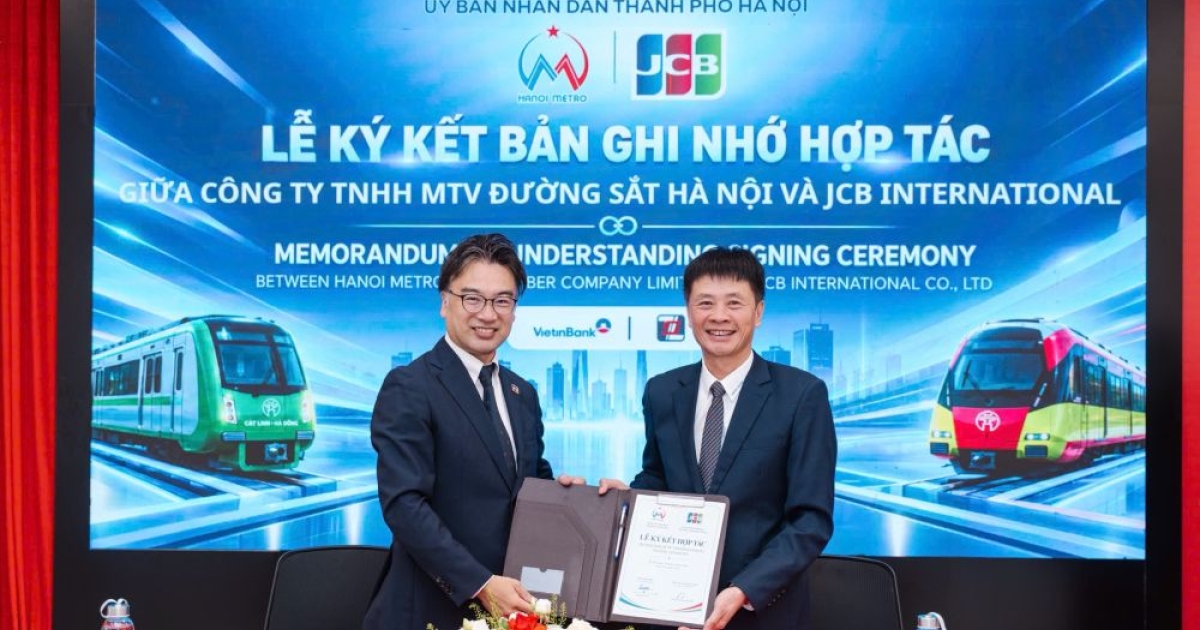
Hanoi is preparing to expand cashless payments across its urban transport network through a new partnership between Hanoi Metro and JCB International. The two organizations have signed a memorandum of understanding (MoU) to introduce JCB Transit contactless payments, with deployment expected to begin in 2027.
The planned service will allow passengers to use JCB contactless cards or compatible mobile devices directly at metro ticket gates. The initial rollout will cover two routes: the Cat Linh–Ha Dong line and the elevated section of the Nhon–Hanoi Station line.
The initiative aims to reduce reliance on cash and separate ticket purchasing methods. It could also make public transport more convenient for international visitors who already use JCB payment cards.
The agreement represents another step in Hanoi's efforts to expand digital payment options across its public transport system.
JCB Transit Will Bring Contactless Payments to Metro Gates
Under the planned arrangement, passengers will be able to tap supported JCB cards or compatible contactless mobile devices at ticket gates.
This approach could simplify the travel process. Instead of purchasing a separate ticket before each journey, passengers would be able to use an existing supported payment method.
The service will use JCB Transit, JCB's contactless payment solution for public transportation.
For everyday commuters, this could offer another convenient way to access the metro. It also gives visitors an alternative to carrying cash or navigating separate ticket purchasing systems.
However, the project remains in its preparation phase. Both organizations must complete the technical and operational work before the service can officially launch.
Two Hanoi Metro Lines Included in the Initial Plan
The proposed deployment will initially cover two urban railway routes.
Cat Linh–Ha Dong Line (Line 2A)
This route is one of the two lines identified for the first phase of JCB Transit acceptance.
Nhon–Hanoi Station Line (Line 3.1)
The initial plan covers the elevated section of this route.
The phased rollout will allow Hanoi Metro and JCB to coordinate the technical requirements and prepare the payment system for operation.
According to the MoU, both organizations will exchange expertise and work towards completing the conditions required for implementation. These include payment system safety, stability, and operational efficiency.
The agreement does not yet confirm an exact launch date or the final scope of payment acceptance.
International Tourists Are a Key Target Audience
The partnership also aims to make public transport more accessible to international visitors.
The announcement specifically identifies tourists from Japan, South Korea, and Taiwan as potential beneficiaries.
These markets are relevant because JCB cards are an established payment option for many travelers from the region.
When the service becomes available, eligible passengers will be able to use familiar payment cards or supported mobile devices at metro gates. This could reduce the inconvenience of preparing cash or exchanging foreign currency for individual journeys.
For Hanoi, the initiative could improve the transport experience for international visitors while supporting the city's wider cashless payment ambitions.
The actual benefit will depend on which cards and mobile devices are accepted when the system launches.
Why Contactless Transit Payments Matter for the Payments Industry
Public transport is becoming an important environment for contactless payment adoption.
Metro systems handle large passenger volumes and require payment experiences that are fast, reliable, and easy to use. Contactless acceptance can help reduce friction at ticket gates while giving passengers more payment choices.
For payment networks, transit infrastructure also creates opportunities to extend card acceptance beyond traditional retail transactions.
However, introducing contactless payments across a railway network involves more than installing payment terminals. Operators must ensure that payment processing, system security, transaction reliability, and existing ticketing arrangements work together.
This makes the preparation phase important for Hanoi Metro and JCB.
Their cooperation will need to address these operational requirements before passengers can use the service.
What Happens Before the 2027 Launch?
The MoU establishes a framework for cooperation, but JCB Transit is not yet operational on the Hanoi metro network.
The two organizations will continue researching, exchanging technical expertise, and completing the requirements for deployment.
Further information will be needed on supported payment cards, mobile devices, acceptance arrangements, and the final implementation schedule.
The initial service is expected to cover the two identified metro routes from 2027. Any expansion beyond those lines will depend on future decisions and implementation plans.
Hanoi Takes Another Step Towards Cashless Urban Mobility
The Hanoi Metro–JCB partnership highlights the growing role of digital payments in public transport.
By bringing contactless card payments directly to metro gates, the planned service could make journeys easier for local passengers and international tourists.
For JCB, the project offers an opportunity to extend its transit payment capabilities in Vietnam. For Hanoi, it supports efforts to diversify payment methods and improve the urban railway experience.
The next milestone will be completing the technical and operational preparations. If the rollout proceeds as planned, passengers could begin using JCB contactless payments across the two metro lines from 2027.
The development also reflects a wider shift in payments: everyday transport is becoming another important channel for cashless financial services.
Comments
No comments yet. Be the first to share your thoughts.
Leave a comment