
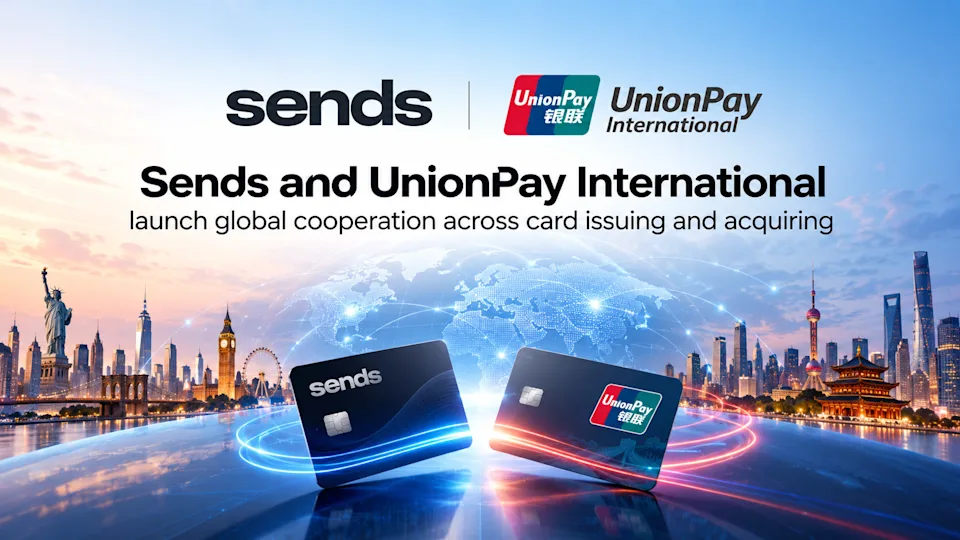
Sends is expanding its payment strategy through cooperation with UnionPay International, with plans to develop UnionPay card issuing alongside merchant acquiring capabilities to connect international payments and card acceptance.
Sends and UnionPay International (UPI) have launched a cooperation aimed at expanding payment options for consumers and businesses across international markets. The initiative covers two sides of card payments: enabling customers to access UnionPay-powered payment products and helping merchants within the Sends ecosystem accept UnionPay card transactions.
Announced on October 6, 2026, the cooperation brings UnionPay International’s global payment network together with Sends’ financial infrastructure. The companies plan to develop card issuing capabilities while working on acquiring services that would allow merchants to accept payments made with UnionPay cards.
The move reflects a broader strategy at Sends to connect accounts, international transfers, foreign exchange, cards and merchant payment acceptance within a more integrated financial services ecosystem.
For the payments industry, the announcement highlights the importance of building infrastructure that supports both sides of a transaction. Consumers need convenient ways to pay when operating across borders, while businesses need payment acceptance options that help them serve customers in different markets.
The cooperation is intended to address both requirements, although the announcement does not provide a detailed rollout timetable, launch markets or confirmed availability dates for the planned issuing capabilities.
Sends and UnionPay International Expand Their Payment Cooperation
The central development is the planned expansion of Sends’ payment capabilities through UnionPay International across card issuing and acquiring.
Under the issuing component, Sends plans to develop UnionPay-powered card products for its customers. These products would allow eligible users to make payments through UnionPay’s global acceptance network, subject to the products and services becoming available in the relevant markets.
The acquiring component focuses on merchants. Sends and UnionPay International are working to develop capabilities that would enable businesses within the Sends ecosystem to accept UnionPay card payments.
Together, these two elements create what Sends describes as a two-sided payment proposition. The company aims to support customers making international payments while giving merchants another way to receive payments from customers who use UnionPay cards.
The distinction matters because card issuing and merchant acquiring serve different functions within the payments system. Issuing provides cardholders with payment credentials and access to card services. Acquiring enables businesses to accept card transactions through the relevant payment infrastructure.
Developing both capabilities can help a financial services provider offer a more connected proposition to consumers and businesses rather than concentrating on only one part of the payment journey.
However, the announcement describes capabilities that the companies plan to develop. It should not be interpreted as confirmation that every planned card product or merchant service is already live across all markets.
What the Cooperation Means for Card Issuing
Card issuing is an important part of the new cooperation because it could expand the payment options available to Sends customers.
UnionPay-powered payment products would give customers access to the network’s acceptance infrastructure, potentially supporting purchases across markets where UnionPay cards are accepted. For people who travel, shop internationally or manage payments across borders, access to an additional card network can provide greater flexibility.
For Sends, the planned issuing capabilities also fit its broader effort to bring more financial services together within one ecosystem. Its existing proposition includes accounts, international transfers, foreign exchange and cards. Adding UnionPay-powered products would extend the role of cards within that offering.
The commercial value will depend on the eventual product design and launch arrangements. Relevant factors may include which customers are eligible, the markets in which cards can be issued, the types of cards available and the terms attached to each product.
The companies have not announced these details in the initial cooperation statement. Nor have they confirmed a specific launch date for the planned UnionPay issuing services.
That leaves the next stage focused on product development and implementation. Once the companies provide more information, customers and industry observers will be better placed to assess how the new capabilities compare with existing card options and how widely they will be available.
Merchant Acquiring Could Broaden Payment Acceptance
The acquiring component is equally important because it focuses on the businesses receiving payments.
Merchants that serve international customers often need to support a range of payment methods. The preferred method can differ depending on the customer’s location, the card or account they use, and the payment options available at checkout.
Sends says it is working with UnionPay International to develop acquiring capabilities that would allow merchants within its ecosystem to accept UnionPay card transactions.
If implemented across the intended merchant base, this could give businesses another way to serve customers who prefer or rely on UnionPay. Sends specifically identifies customers connected to Asian markets as a relevant audience for this expansion.
For merchants, payment acceptance is more than a checkout feature. It can influence how easily customers complete purchases, how businesses serve international buyers and how effectively companies support different customer payment preferences.
An additional card network may be useful for merchants seeking to broaden their payment options. Nevertheless, the practical benefits will depend on the markets supported, the types of transactions accepted, integration requirements and the commercial terms offered to businesses.
The announcement does not specify which merchant categories will receive access first or whether the planned acquiring capabilities will cover online payments, in-store transactions or both. These details will be important in determining the scope of the service once further information becomes available.
Why Issuing and Acquiring Matter Together
The combination of issuing and acquiring gives the cooperation a broader scope than an initiative focused on cardholders or merchants alone.
Issuing addresses the customer’s ability to pay. Acquiring addresses the merchant’s ability to accept that payment. When both functions are supported within a connected financial infrastructure, a provider can build services around more of the transaction journey.
This does not mean that every payment will take place entirely within Sends’ own systems or that the company will control every stage of a UnionPay transaction. Card payments typically involve multiple participants, including the cardholder, merchant, issuer, acquirer and payment network.
Instead, the strategic significance lies in Sends developing capabilities on both sides of card payments while working with an established international network.
For customers, the planned issuing products could provide another route to making payments internationally. For merchants, the acquiring capabilities could create an additional acceptance option. For Sends, the cooperation supports its ambition to connect more financial services within a single ecosystem.
The approach also illustrates how fintech providers can expand their offerings through partnerships rather than building every component independently. Payment networks contribute their acceptance infrastructure, while financial services providers can connect those capabilities to their customer and merchant propositions.
The success of such arrangements ultimately depends on execution: the quality of integrations, product availability, reliability, customer experience and the markets in which services can operate.
A Potential Opportunity for Businesses Serving International Customers
Sends has highlighted businesses serving international customers, particularly those connected to Asian markets, as a potential beneficiary of the acquiring expansion.
For companies selling products or services across borders, the ability to accept familiar payment methods can help reduce friction in the purchasing process. Customers may be more comfortable using a card network they already know, provided the merchant supports it and the transaction meets the applicable requirements.
The opportunity is relevant to businesses with international customer bases, but the scale of the benefit will vary. A merchant’s needs depend on its geography, customer mix, sales channels and existing payment arrangements.
A business with a significant number of customers who use UnionPay may have different priorities from one whose customers primarily use other card networks or local payment methods.
Merchants will also need clarity on practical considerations such as onboarding, settlement arrangements, transaction fees, refunds, disputes and supported currencies. The initial announcement does not disclose these operational details.
Consequently, the cooperation should be viewed as a potential expansion of payment choice rather than a guarantee of increased sales or access to every international market. The real impact will become clearer as the services are developed and their availability is confirmed.
How the Cooperation Fits Sends’ Wider Financial Ecosystem
The UnionPay International initiative is part of Sends’ broader strategy to connect financial services for individuals and businesses.
Rather than treating each service as a standalone product, Sends says it is expanding infrastructure across accounts, international transfers, foreign exchange, cards and payment acceptance.
This model reflects a wider direction in fintech. Customers and businesses often manage several related financial tasks, from holding funds and exchanging currencies to paying suppliers, transferring money internationally and collecting payments from customers.
Connecting these services can make a platform more useful to customers who would otherwise need to rely on multiple providers. It may also give businesses a more consolidated way to manage parts of their financial operations.
However, an integrated ecosystem does not automatically mean that every service is available in every country or that all products operate under identical terms. Financial services can be subject to different regulatory, operational and partner requirements depending on the market.
For Sends, the challenge will be to translate the planned cooperation into services that fit its existing offering and meet customer needs in the markets it serves.
UnionPay issuing and acquiring could add another layer to that ecosystem. The longer-term value will depend on how effectively the company combines the new capabilities with its accounts, transfers, foreign exchange and merchant services.
What UnionPay International Brings to the Cooperation
UnionPay International operates the international business of the UnionPay payment network. Its acceptance infrastructure gives the cooperation a route to support card payments across markets where UnionPay is accepted.
For Sends, working with an established payment network offers a way to develop card services without relying solely on an individual domestic payment scheme.
International acceptance is particularly relevant when customers and merchants operate across multiple markets. Payment networks can connect participants across borders, although actual card availability and acceptance vary by country, issuer, merchant and transaction type.
UnionPay’s network reach is therefore an important part of the proposed offering, but it should not be interpreted as universal acceptance at every merchant worldwide.
The partnership’s practical scope will depend on the services the companies implement and the markets where those services become available. Product terms, technical integrations and applicable regulatory requirements will also shape the customer and merchant experience.
The cooperation announcement does not disclose financial terms or provide a detailed implementation schedule. It therefore remains too early to quantify the expected commercial contribution or predict how quickly the new services will scale.
What Happens Next for Sends and UnionPay International?
The next stage will be the development of the planned issuing and acquiring capabilities.
For card issuing, important milestones will include confirmation of the product structure, eligibility requirements, supported markets and launch timing. For acquiring, merchants will need more information about onboarding, transaction acceptance, integration options and settlement arrangements.
These details will help businesses determine whether the new capabilities fit their payment needs and whether they can be incorporated into existing checkout or financial workflows.
The companies may also provide further information about supported transaction types and the markets in which customers can access the services. Until that information is available, it is important to distinguish the announced cooperation from a fully deployed, universally available product.
The broader direction is clear: Sends wants to expand the range of financial services it connects, while UnionPay International provides the network infrastructure underpinning the planned card capabilities.
The cooperation brings together two complementary elements of the payment journey—giving customers more potential ways to pay and helping merchants prepare to accept those payments.
Sends and UnionPay International Signal a Broader Payments Strategy
The cooperation between Sends and UnionPay International reflects an effort to expand payment choice across both card issuing and merchant acquiring.
For consumers, the planned UnionPay-powered products could add flexibility when making international payments. For merchants, the acquiring initiative could create another way to accept payments from international customers, including those connected to Asian markets.
For Sends, the partnership supports its broader ambition to connect accounts, transfers, foreign exchange, cards and payment acceptance within an integrated financial services ecosystem.
The announcement is an important development in that strategy, but the ultimate impact will depend on implementation, market availability and the features of the services that are eventually launched.
As international commerce continues to connect customers and businesses across borders, the ability to support both payment initiation and payment acceptance remains a relevant part of fintech infrastructure.
The next milestone will be turning the planned cooperation into clearly defined products that customers and merchants can access in practice.
Sends and UnionPay International launch global cooperation across card issuing and acquiring
Comments
No comments yet. Be the first to share your thoughts.
Leave a comment