
Introduction
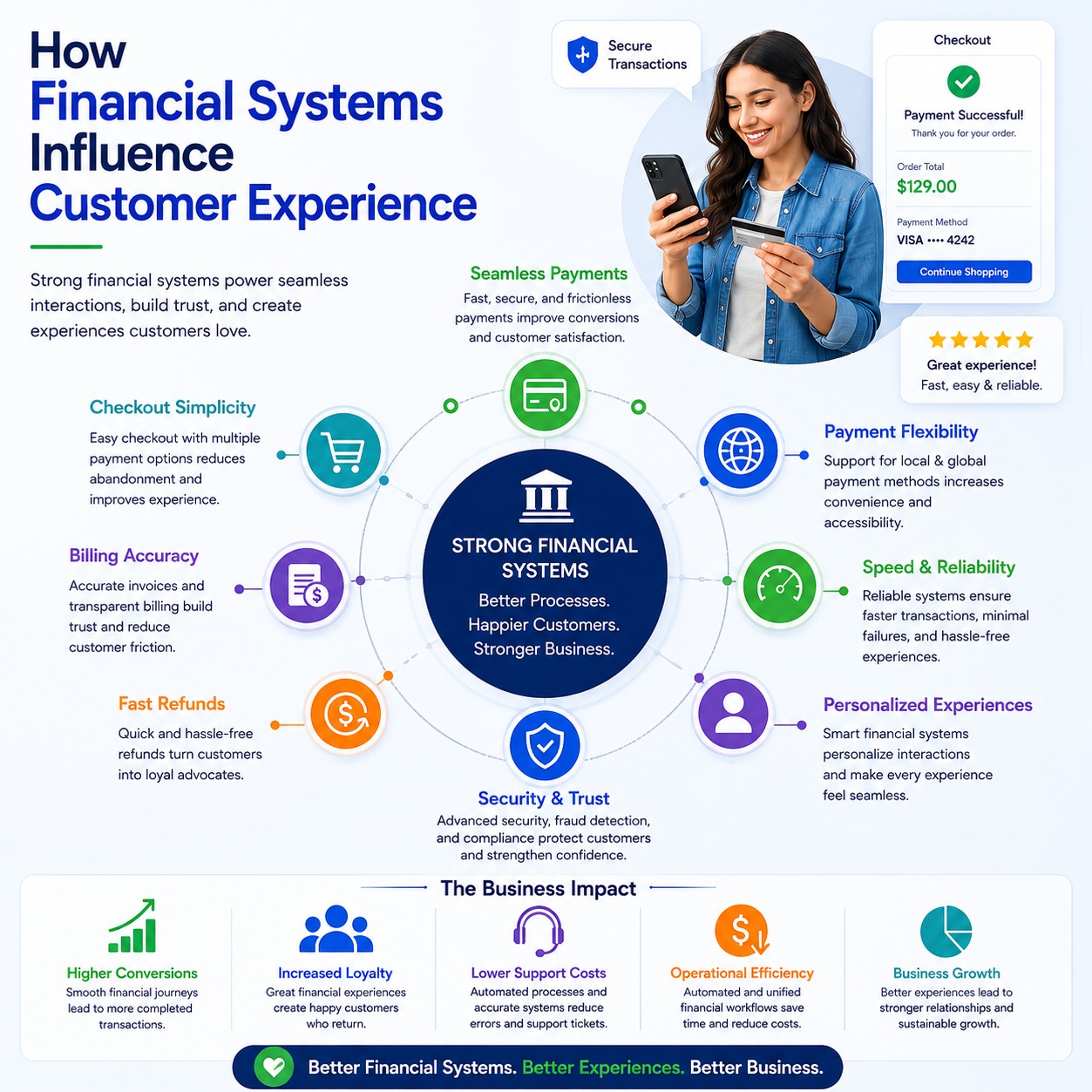
Customer experience is no longer shaped only by products, pricing, or customer support. In today’s digital economy, financial systems play a major role in how customers interact with businesses. Every payment, invoice, refund, subscription renewal, and checkout process contributes to the overall customer journey.
Modern customers expect fast, secure, and frictionless financial interactions. They want payments to process instantly, invoices to be accurate, refunds to happen quickly, and subscriptions to work without disruption. When financial systems fail to deliver smooth experiences, customer frustration increases quickly.
Many businesses underestimate how deeply financial systems affect customer trust and satisfaction. Slow payment processing, billing errors, failed transactions, and complicated checkout experiences can damage brand reputation and reduce customer loyalty.
As digital commerce continues expanding globally, businesses are increasingly realizing that strong financial systems are essential not only for operational efficiency but also for delivering better customer experiences.
Payment Experience Shapes Customer Perception
For many customers, the payment process is one of the final and most important stages of interacting with a business.
A smooth payment experience creates confidence and convenience, while a poor experience can immediately reduce trust.
Customers today expect:
- Fast checkout processes
- Multiple payment options
- Secure transactions
- Instant confirmations
- Mobile-friendly payments
If payment systems are slow or unreliable, customers may abandon purchases before completing transactions.
Financial systems directly influence conversion rates, customer satisfaction, and repeat purchasing behavior.
Businesses with modern payment infrastructure are often better positioned to deliver seamless customer experiences across digital channels.
Checkout Simplicity Improves Customer Satisfaction
Complicated checkout flows remain one of the biggest reasons customers abandon online purchases.
Long forms, multiple pages, forced account creation, and limited payment options create unnecessary friction during transactions.
Strong financial systems help businesses simplify checkout experiences through:
- One-click payments
- Guest checkout options
- Saved payment methods
- Autofill technology
- Digital wallet integration
The easier it is for customers to complete payments, the more likely they are to return for future purchases.
Checkout simplicity has become especially important in mobile commerce where users expect quick and effortless interactions.
Billing Accuracy Builds Trust
Billing errors can significantly damage customer relationships.
Incorrect invoices, duplicate charges, failed subscription renewals, or unexpected payment issues often create frustration and reduce confidence in a business.
Reliable financial systems help businesses maintain:
- Accurate invoicing
- Automated billing
- Transparent pricing
- Consistent subscription management
Customers are more likely to trust businesses that provide clear and reliable financial communication.
Accurate billing also reduces customer support requests and operational inefficiencies.
For subscription-based businesses, billing reliability is especially important because recurring payment failures can directly affect retention rates.
Fast Refunds Improve Customer Confidence
Refund experiences play a major role in customer perception.
Even when customers return products or cancel services, businesses can still maintain strong relationships if refund processes are fast and transparent.
Slow or complicated refunds often create frustration and reduce trust.
Efficient financial systems help businesses:
- Process refunds quickly
- Automate refund workflows
- Provide real-time payment updates
- Improve transaction visibility
Customers increasingly expect refunds to happen almost instantly.
Businesses that simplify refund experiences are more likely to maintain positive customer relationships even after disputes or cancellations.
Multiple Payment Options Increase Convenience
Different customers prefer different payment methods depending on location, habits, and financial preferences.
Modern financial systems help businesses support:
- Credit and debit cards
- Digital wallets
- UPI payments
- Bank transfers
- Buy Now Pay Later services
- Local payment methods
Payment flexibility improves convenience and accessibility for customers across different regions.
International businesses especially benefit from localized payment experiences because customers are more likely to complete purchases when familiar payment methods are available.
Businesses with limited payment options may unintentionally reduce conversions and customer satisfaction.
Financial Systems Affect Speed and Reliability
Customers expect transactions to happen immediately.
Payment delays, failed authorizations, or system downtime can negatively affect customer experiences and damage trust.
Strong financial systems improve:
- Payment authorization rates
- Transaction speed
- Checkout reliability
- Settlement efficiency
Reliable payment infrastructure is especially important during high-traffic sales periods when transaction volumes increase significantly.
Customers are less tolerant of payment disruptions than ever before because digital commerce has made convenience a standard expectation.
Mobile Payments Influence Modern Experiences
Mobile commerce continues growing rapidly across global markets.
However, mobile users are more likely to abandon transactions if payment systems are difficult to use.
Financial systems optimized for mobile experiences support:
- Responsive checkout design
- Mobile wallets
- Faster loading speeds
- Minimal typing requirements
- One-tap payments
Businesses that prioritize mobile payment optimization often improve both conversion rates and customer engagement.
As smartphones become the primary shopping device for many consumers, mobile-friendly financial systems are becoming essential.
Security Is Part of Customer Experience
Customers expect financial interactions to be secure as well as convenient.
Strong security measures help businesses protect customer information while building trust.
Modern financial systems use:
- Encryption
- Tokenization
- Fraud detection tools
- Multi-factor authentication
- PCI DSS compliance
Visible security measures reassure customers during checkout and reduce hesitation when sharing payment details.
Businesses that experience frequent fraud incidents or security breaches often suffer long-term reputational damage.
Reliable financial security is now a major component of positive customer experience.
Personalized Financial Experiences Matter
Modern financial systems increasingly support personalization.
Businesses can use customer data to create smoother financial interactions such as:
- Saved payment preferences
- Personalized billing options
- Local currency pricing
- Faster repeat checkouts
Personalized experiences reduce friction and improve convenience for returning customers.
Customers are more likely to remain loyal to businesses that make transactions easy and familiar.
Personalization also helps businesses improve retention and customer lifetime value.
Automation Improves Customer Interactions
Automation allows businesses to deliver faster and more consistent financial experiences.
Modern financial systems automate:
- Invoice generation
- Subscription renewals
- Payment confirmations
- Refund processing
- Fraud monitoring
Automation reduces operational delays and minimizes human errors.
Customers benefit from faster responses, more accurate billing, and smoother financial interactions overall.
For businesses handling large transaction volumes, automation is essential for maintaining high-quality customer experiences at scale.
Cross-Border Financial Experiences
As businesses expand internationally, financial systems become even more important.
International customers often face challenges such as:
- Currency conversion confusion
- Limited payment methods
- Cross-border transaction delays
- Higher payment friction
Businesses with strong global financial infrastructure can provide:
- Multi-currency support
- Local payment methods
- Faster international transactions
- Transparent pricing
Localized financial experiences improve trust and make businesses more accessible to international customers.
Customer Support and Financial Systems
Financial systems also influence customer support quality.
When payment data is fragmented or difficult to access, support teams struggle to resolve issues quickly.
Integrated financial systems improve:
- Transaction visibility
- Billing transparency
- Refund tracking
- Customer communication
Faster issue resolution improves customer satisfaction and reduces operational stress for support teams.
Strong financial infrastructure allows businesses to provide more efficient and accurate customer assistance.
The Growing Role of AI in Customer Finance Experiences
Artificial intelligence is increasingly improving customer-facing financial interactions.
AI-powered financial systems can:
- Detect fraudulent transactions
- Personalize payment experiences
- Predict failed payments
- Improve checkout optimization
- Automate customer communication
AI helps businesses create financial interactions that are both secure and frictionless.
As AI adoption grows, financial systems will continue becoming more intelligent and customer-focused.
Why Financial Systems Are Strategic for Businesses
Financial systems are no longer just back-office operational tools.
They now directly influence:
- Customer loyalty
- Brand trust
- Conversion rates
- Retention performance
- Overall customer satisfaction
Businesses that invest in modern financial systems often create smoother customer experiences while improving operational efficiency simultaneously.
In competitive digital markets, payment and billing experiences can significantly influence whether customers choose to stay with a brand or switch to competitors.
Conclusion
Financial systems play a critical role in shaping customer experience in modern business environments.
Fast payments, secure transactions, accurate billing, reliable refunds, mobile optimization, and personalized financial interactions all contribute to stronger customer relationships.
Businesses that fail to modernize financial infrastructure risk creating friction that negatively affects trust, conversions, and customer retention.
As digital commerce continues evolving, companies that prioritize efficient and customer-focused financial systems will be better positioned to deliver seamless experiences and achieve long-term growth.
Comments
No comments yet. Be the first to share your thoughts.
Leave a comment