
Introduction
The global payments landscape is undergoing a dramatic transformation. Consumers today expect transactions to be fast, secure, and convenient, whether they are shopping online, paying bills, transferring money, or making in-store purchases. As smartphones become central to everyday life, digital wallet apps have emerged as one of the most influential innovations in financial technology.
They have fundamentally changed how people interact with money. Instead of carrying physical cash or multiple payment cards, users can store payment information digitally and complete transactions with just a few taps. From peer-to-peer transfers and online shopping to cross-border payments and contactless purchases, digital wallet apps have become an essential part of modern financial ecosystems.
As businesses and consumers continue embracing digital-first experiences, digital wallet apps are playing a critical role in shaping the future of payments, banking, and commerce.
What Are Digital Wallet Apps?
Digital wallet apps are software applications that securely store payment credentials and financial information, allowing users to make transactions electronically through smartphones, tablets, smartwatches, and other connected devices.
These apps can store:
- Debit card information
- Credit card information
- Bank account details
- Loyalty cards
- Gift cards
- Digital currencies
- Identification documents
Instead of using physical payment methods, users can access their digital wallets to complete transactions quickly and securely.
It serve as a bridge between consumers, merchants, financial institutions, and payment networks, creating a seamless transaction experience.
How Digital Wallet Apps Work
It use advanced technologies to facilitate secure payments.
The process typically includes:
User Registration
Users create an account and link payment methods such as bank accounts or payment cards.
Secure Data Storage
Sensitive information is encrypted and stored securely using tokenization and advanced security protocols.
Payment Authorization
When making a payment, the wallet verifies the transaction using authentication methods such as passwords, biometrics, or facial recognition.
Transaction Processing
The payment request is transmitted securely to payment processors and financial institutions for authorization and settlement.
This streamlined process allows transactions to be completed within seconds.
Types of Digital Wallet Apps
Closed Wallets
Closed wallets are issued by a specific company and can only be used within that company’s ecosystem.
Examples include:
- Retail store wallets
- E-commerce platform wallets
Semi-Closed Wallets
Semi-closed wallets can be used across multiple participating merchants but generally do not allow cash withdrawals.
Open Wallets
Open wallets offer the highest level of flexibility, enabling users to make purchases, transfer funds, and withdraw cash through authorized banking networks.
Key Benefits of Digital Wallet Apps
Convenience
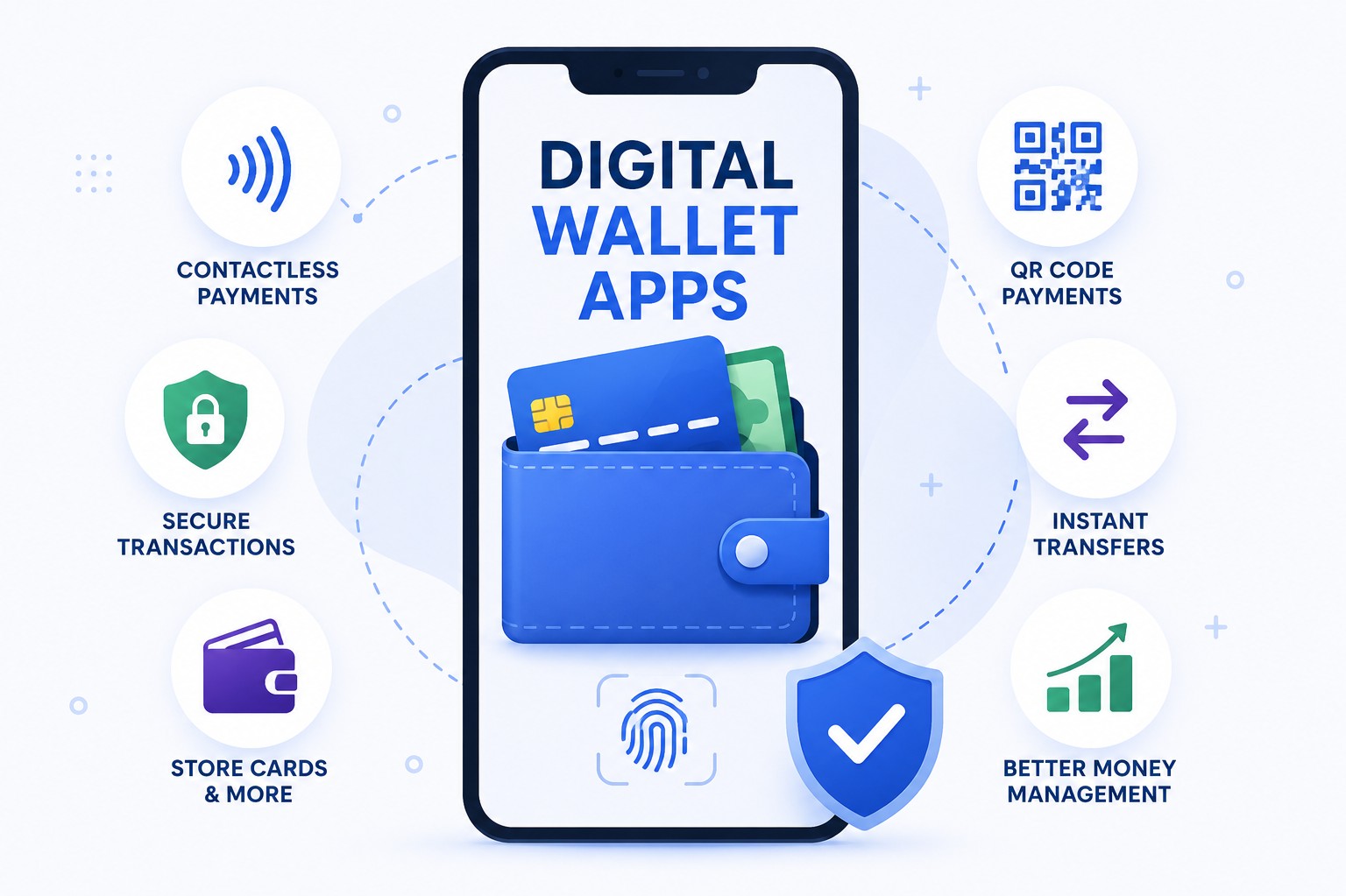
Digital wallet apps eliminate the need to carry physical cash or multiple cards. Users can make payments anytime and anywhere using their mobile devices.
Faster Transactions
Payments can be completed in seconds, reducing checkout times and improving customer experiences.
Enhanced Security
Modern digital wallet apps utilize:
- Tokenization
- Encryption
- Biometric authentication
- Multi-factor authentication
These technologies significantly reduce fraud risks.
Better Financial Management
Many wallet apps include budgeting tools, spending insights, and transaction tracking features that help users manage finances more effectively.
Contactless Payments
Consumers increasingly prefer touch-free payment methods, making digital wallets a popular solution for both merchants and customers.
Digital Wallet Apps and Financial Inclusion
One of the most important contributions of digital wallet apps is their role in promoting financial inclusion.
Millions of people worldwide remain underserved by traditional banking systems. Digital wallets provide access to financial services through mobile devices, enabling users to manage funds, make payments, and participate in the digital economy. As a result, the demand for cryptocurrency wallet development services is growing, helping businesses create secure and accessible financial solutions that empower users to
- Receive payments
- Transfer money
- Pay bills
- Store value
- Access financial products
This accessibility is helping bridge financial gaps in both developed and emerging markets.
The Role of Digital Wallet Apps in E-Commerce
E-commerce has become a major growth driver for digital wallet adoption.
Consumers increasingly prefer wallet-based payments because they:
- Simplify checkout processes
- Reduce payment friction
- Improve transaction security
- Support one-click purchases
For merchants, digital wallet apps can improve conversion rates, reduce cart abandonment, and enhance customer satisfaction.
Emerging Technologies Driving Digital Wallet Apps
Artificial Intelligence
AI enhances fraud detection, risk management, and personalized financial services.
Blockchain Technology
Some digital wallets now support cryptocurrency storage and blockchain-based transactions.
QR Code Payments
QR codes simplify payment acceptance, especially for small businesses and mobile-first consumers.
Near Field Communication (NFC)
NFC technology enables contactless payments by allowing devices to communicate securely at close range.
Challenges Facing Digital Wallet Apps
Despite rapid adoption, digital wallet apps face several challenges.
Cybersecurity Threats
As digital transactions increase, cybercriminals continue targeting financial platforms.
Regulatory Compliance
Wallet providers must comply with evolving financial regulations, including anti-money laundering and data privacy requirements.
Consumer Trust
Building and maintaining trust remains essential for long-term adoption.
Interoperability
Ensuring seamless transactions across different payment systems and regions remains a key challenge.
Future Trends in Digital Wallet Apps
Super Apps
Many providers are expanding digital wallets into broader ecosystems that include banking, shopping, transportation, and lifestyle services.
Embedded Finance
Digital wallet apps are increasingly becoming part of embedded finance solutions that integrate financial services directly into non-financial platforms.
Cross-Border Payments
Enhanced interoperability and real-time settlement capabilities will improve international payment experiences.
Digital Identity Integration
Future wallets may serve as secure repositories for digital identities, credentials, and verification services.
Central Bank Digital Currencies (CBDCs)
As governments explore digital currencies, digital wallet apps are expected to become important distribution channels.
Conclusion
Digital wallet apps have evolved from simple payment tools into comprehensive financial platforms that support transactions, financial management, commerce, and digital lifestyles. Their ability to deliver convenience, security, and accessibility has made them a cornerstone of the modern payments ecosystem.
As technologies such as artificial intelligence, blockchain, embedded finance, and digital identity continue to advance, digital wallet apps will play an even greater role in shaping the future of financial services. For businesses, financial institutions, and consumers alike, embracing digital wallet technology is no longer optional it is becoming a fundamental requirement in an increasingly cashless and connected world.
Comments
No comments yet. Be the first to share your thoughts.
Leave a comment