
Introduction
The financial industry is undergoing one of the most significant transformations in its history. As blockchain technology, digital assets, and decentralized finance continue to mature, stablecoins have emerged as a critical bridge between traditional finance and the digital economy. While much attention has been focused on U.S. dollar-backed stablecoins, a new category is rapidly gaining momentum: the Euro Stablecoin.
They are designed to maintain a stable value by being pegged to the euro, providing users with the benefits of digital assets without the volatility associated with traditional cryptocurrencies. As Europe accelerates its digital finance agenda through initiatives such as the Markets in Crypto-Assets (MiCA) regulation, Euro are becoming increasingly important for businesses, financial institutions, fintech companies, and consumers.
The rise of Euro stablecoins represents more than just another cryptocurrency trend. It reflects a broader shift toward programmable money, faster payments, enhanced financial inclusion, and the modernization of Europe’s financial infrastructure.
What Is a Euro Stablecoin?
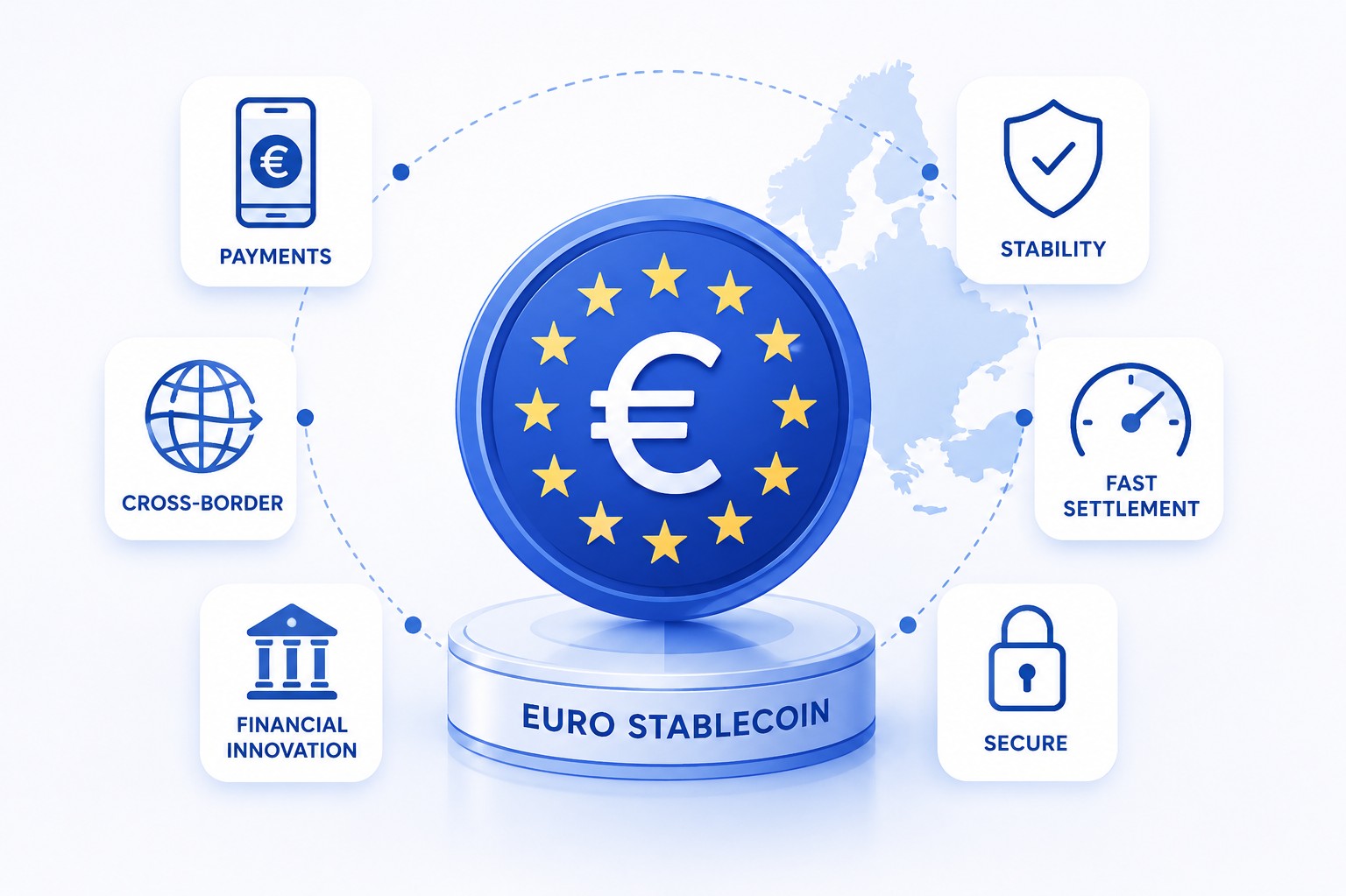
A Euro Stablecoin is a digital asset whose value is pegged to the euro on a one-to-one basis. Each token is typically backed by euro reserves held in regulated financial institutions or supported through approved reserve mechanisms.
Unlike cryptocurrencies such as Bitcoin or Ethereum, which can experience significant price fluctuations, its aim to maintain price stability. This stability makes them suitable for payments, trading, remittances, treasury operations, and various financial applications.
The primary objective is simple: combine the reliability of the euro with the efficiency and accessibility of blockchain technology.
How Euro Stablecoins Work
They operate on blockchain networks and are issued by regulated entities or fintech providers.
The process generally includes:
Reserve Backing
For every stablecoin issued, an equivalent amount of euros is held in reserve. These reserves are often maintained in segregated accounts and subject to audits.
Token Issuance
When users deposit euros, the issuer creates and distributes an equivalent number of stablecoins.
Blockchain Transactions
The stablecoins can be transferred instantly across supported blockchain networks, enabling efficient digital transactions.
Redemption
Users can redeem stablecoins for euros, ensuring the token maintains its peg to the underlying currency.
This mechanism creates trust and helps preserve price stability.
Why Euro Stablecoins Matter
Enhancing European Digital Payments
Traditional international payments can be slow and expensive. They offer near-instant settlement capabilities while reducing transaction costs.
Businesses can send and receive funds globally without relying on multiple intermediary banks.
Supporting Financial Innovation
They serve as foundational infrastructure for fintech platforms, decentralized applications, and emerging financial ecosystems.
Developers can integrate programmable payments, automated settlements, and smart contract functionality directly into their products.
Strengthening European Financial Sovereignty
Much of the global stablecoin market remains dominated by dollar-denominated assets. Euro stablecoins help strengthen the euro’s presence within digital financial ecosystems.
This supports Europe’s broader objective of maintaining monetary influence in an increasingly digital world.
Facilitating Cross-Border Commerce
International businesses often face delays, currency conversion costs, and settlement inefficiencies.
Euro stablecoins simplify cross-border transactions by enabling direct value transfers on blockchain networks.
Key Use Cases of Euro Stablecoins
Cross-Border Payments
Businesses can transfer funds internationally with greater speed and transparency than traditional banking channels.
Corporate Treasury Management
Companies can use Euro stablecoins to optimize liquidity management and facilitate real-time treasury operations.
Decentralized Finance (DeFi)
Euro stablecoins provide a stable medium of exchange within decentralized lending, borrowing, and trading platforms.
Merchant Payments
Online merchants can accept Euro stablecoins as a payment method, reducing settlement delays and transaction fees.
Remittances
Individuals can send funds internationally without relying on costly remittance providers.
Tokenized Asset Markets
Euro stablecoins are increasingly used for settling transactions involving tokenized securities, real estate, and other digital assets.
Benefits of Euro Stablecoins
Price Stability
The euro peg minimizes volatility and makes stablecoins practical for everyday financial activities.
Faster Settlement
Transactions can often be completed within minutes rather than days.
Lower Costs
Reduced reliance on intermediaries can significantly lower transaction expenses.
Transparency
Blockchain technology provides enhanced visibility into transactions and settlement processes.
Accessibility
Users can access digital euro-denominated assets through mobile devices and digital wallets.
Programmability
Smart contracts enable automated payments, recurring settlements, and innovative financial products.
Challenges Facing Euro Stablecoins
Despite their advantages, Euro stablecoins face several challenges.
Regulatory Compliance
Issuers must comply with evolving regulatory frameworks, particularly under MiCA and other European financial regulations.
Market Adoption
Dollar-backed stablecoins currently dominate global markets, making adoption a key challenge for euro-denominated alternatives.
Liquidity Considerations
Maintaining sufficient liquidity is essential to support redemption requests and preserve confidence.
Security Risks
Digital assets remain exposed to cybersecurity threats, smart contract vulnerabilities, and operational risks.
Banking Relationships
Stablecoin issuers often depend on traditional banking partners for reserve management and compliance operations.
Euro Stablecoins and MiCA Regulation
The implementation of MiCA marks a major milestone for the European crypto industry.
MiCA establishes clear rules for stablecoin issuers, including:
- Reserve management requirements
- Consumer protection standards
- Transparency obligations
- Governance frameworks
- Operational resilience measures
This regulatory clarity is expected to encourage institutional participation and increase trust in Euro stablecoins.
As a result, Europe could become one of the most regulated and stable environments for digital asset innovation.
Euro Stablecoins vs. Traditional Banking
While traditional banking remains essential, Euro stablecoins offer several advantages:
Comments
No comments yet. Be the first to share your thoughts.
Leave a comment