
Introduction
The rise of digital assets has transformed the way businesses think about payments. Companies operating in international markets often face challenges such as high transaction fees, currency conversion costs, payment delays, and banking restrictions. As a result, many organizations are exploring alternative payment methods that provide greater flexibility and efficiency.One solution gaining significant attention is crypto invoicing. By allowing businesses to issue invoices and receive payments in cryptocurrencies, crypto invoicing creates new opportunities for global commerce while simplifying cross-border transactions.
As blockchain technology continues to mature and digital assets become more widely accepted, crypto invoicing is emerging as an innovative payment solution for businesses seeking faster, more accessible, and borderless payment experiences.
What Is Crypto Invoicing?
Crypto invoicing is the process of creating and sending invoices that allow customers to pay using cryptocurrencies or digital assets.
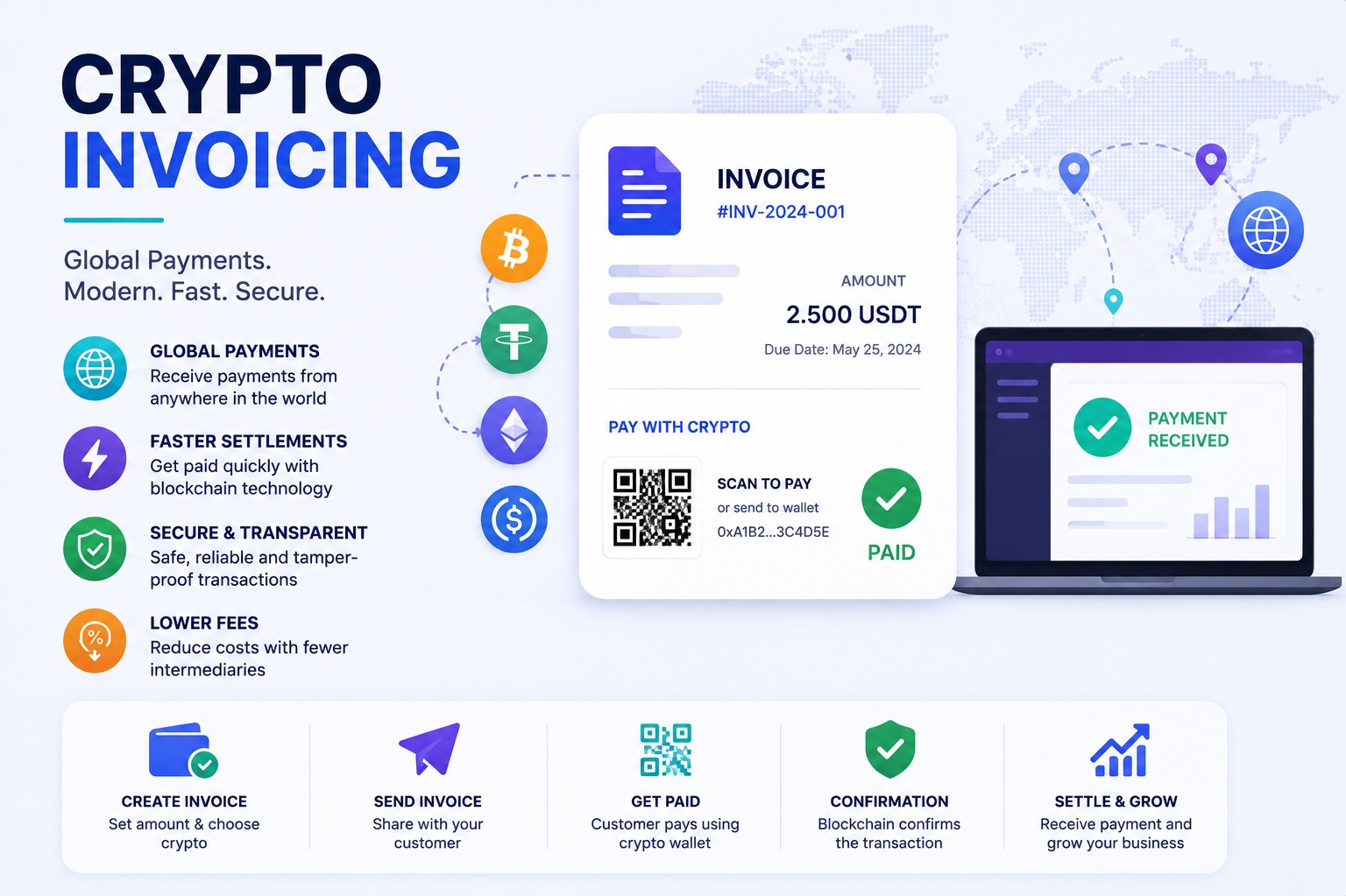
Instead of requesting payment through traditional banking methods, businesses can generate invoices containing payment details such as:
- Cryptocurrency wallet addresses
- QR codes
- Payment amounts
- Supported digital assets
- Payment deadlines
Customers can then complete payments directly from their crypto wallets.
The process enables businesses to accept digital currencies while maintaining streamlined billing operations.
Why Businesses Are Exploring Crypto Invoicing
Global businesses often encounter obstacles when receiving international payments.
Common challenges include:
- High banking fees
- Slow settlement times
- Currency conversion expenses
- Limited payment accessibility
- Cross-border transaction complexity
Crypto invoicing offers an alternative approach that can help reduce some of these challenges.
For businesses operating internationally, digital asset payments may provide additional flexibility and efficiency.
How Crypto Invoicing Works
The process is relatively straightforward.
Invoice Creation
A business generates an invoice specifying the amount due and supported cryptocurrency options.
Payment Request
The invoice includes a wallet address or QR code for payment.
Customer Payment
The customer sends the required digital assets using a compatible crypto wallet.
Blockchain Verification
The transaction is validated through the blockchain network.
Payment Confirmation
Once confirmed, the business receives notification that payment has been completed.
Many platforms automate these steps, making the process similar to traditional invoicing systems.
Benefits of Crypto Invoicing
Faster International Payments
Digital asset transactions can often be completed more quickly than traditional international bank transfers.
Global Accessibility
Customers can make payments regardless of geographical location.
Reduced Intermediaries
Transactions may involve fewer intermediaries compared to conventional payment systems.
Payment Flexibility
Businesses can offer additional payment options to customers.
Improved Operational Efficiency
Automated invoicing tools simplify payment collection and reconciliation.
These benefits are contributing to growing interest among businesses worldwide.
Crypto Invoicing for Cross-Border Commerce
International business transactions often involve multiple banks, payment networks, and currencies.
This complexity can increase costs and processing times.
Crypto invoicing helps facilitate global payments by enabling direct digital asset transfers between parties.
Potential advantages include:
- Faster settlements
- Reduced transaction friction
- Expanded payment reach
- Simplified international transactions
For companies serving global customers, these capabilities can support business growth and operational efficiency.
The Role of Stablecoins
Many businesses prefer stablecoins for invoicing because their value is typically linked to traditional currencies.
Stablecoins can help reduce the price volatility commonly associated with cryptocurrencies.
Benefits include:
- More predictable payment values
- Easier financial planning
- Reduced exposure to market fluctuations
- Improved transaction stability
As stablecoin adoption increases, they are becoming a popular option for business payments.
Security and Transparency
Blockchain technology provides transparency and security advantages for payment processing.
Every transaction is recorded on a distributed ledger, creating an auditable transaction history.
Additional benefits include:
- Enhanced transaction visibility
- Cryptographic security
- Reduced risk of payment disputes
- Tamper-resistant records
These features contribute to growing confidence in digital asset payment systems.
Challenges of Crypto Invoicing
Despite its advantages, crypto invoicing presents several considerations.
Price Volatility
Some cryptocurrencies experience significant market fluctuations.
Regulatory Uncertainty
Regulations continue to evolve across different jurisdictions.
Tax and Accounting Requirements
Businesses must maintain accurate records and comply with applicable reporting obligations.
Customer Adoption
Not all customers are familiar with digital asset payments.
Organizations should evaluate these factors before implementing crypto payment strategies.
Industries Using Crypto Invoicing
Crypto invoicing is gaining traction across various sectors.
Examples include:
- Technology companies
- Digital service providers
- Freelancers and consultants
- Software businesses
- E-commerce merchants
- International agencies
These organizations often benefit from faster global payment collection and expanded customer payment options.
Future Trends in Crypto Invoicing
Several developments are expected to influence the future of digital asset billing.
These include:
- Increased stablecoin adoption
- Improved payment automation
- Integration with accounting platforms
- Enhanced regulatory clarity
- Expansion of Web3 commerce
- Greater enterprise adoption
As blockchain infrastructure continues evolving, crypto invoicing is likely to become more accessible and user-friendly.
Conclusion
Crypto invoicing is transforming how businesses request and receive payments in an increasingly digital economy. By enabling cryptocurrency and stablecoin transactions, organizations can expand payment options, support international customers, and improve payment efficiency.
While considerations such as regulation, accounting, and market volatility remain important, the growing adoption of blockchain technology continues to create new opportunities for businesses worldwide. Companies that understand and strategically implement crypto invoicing may gain a competitive advantage in the evolving landscape of digital commerce and global payments.
Comments
No comments yet. Be the first to share your thoughts.
Leave a comment