
Introduction
The rapid growth of cryptocurrencies has transformed the way people think about money, investments, and financial services. While digital assets were initially viewed primarily as investment vehicles, their practical use in everyday transactions has expanded significantly in recent years.One of the most important developments driving this adoption is the emergence of Crypto Cards. These payment solutions allow users to spend cryptocurrencies in much the same way they use traditional debit or credit cards.
By connecting digital asset holdings with global payment networks, crypto cards bridge the gap between blockchain technology and everyday commerce. As consumer interest in digital finance continues to grow, crypto cards are becoming an increasingly important part of the modern payments ecosystem.
What Are Crypto Cards?
Crypto Cards are payment cards that enable users to spend cryptocurrency holdings for purchases and transactions.
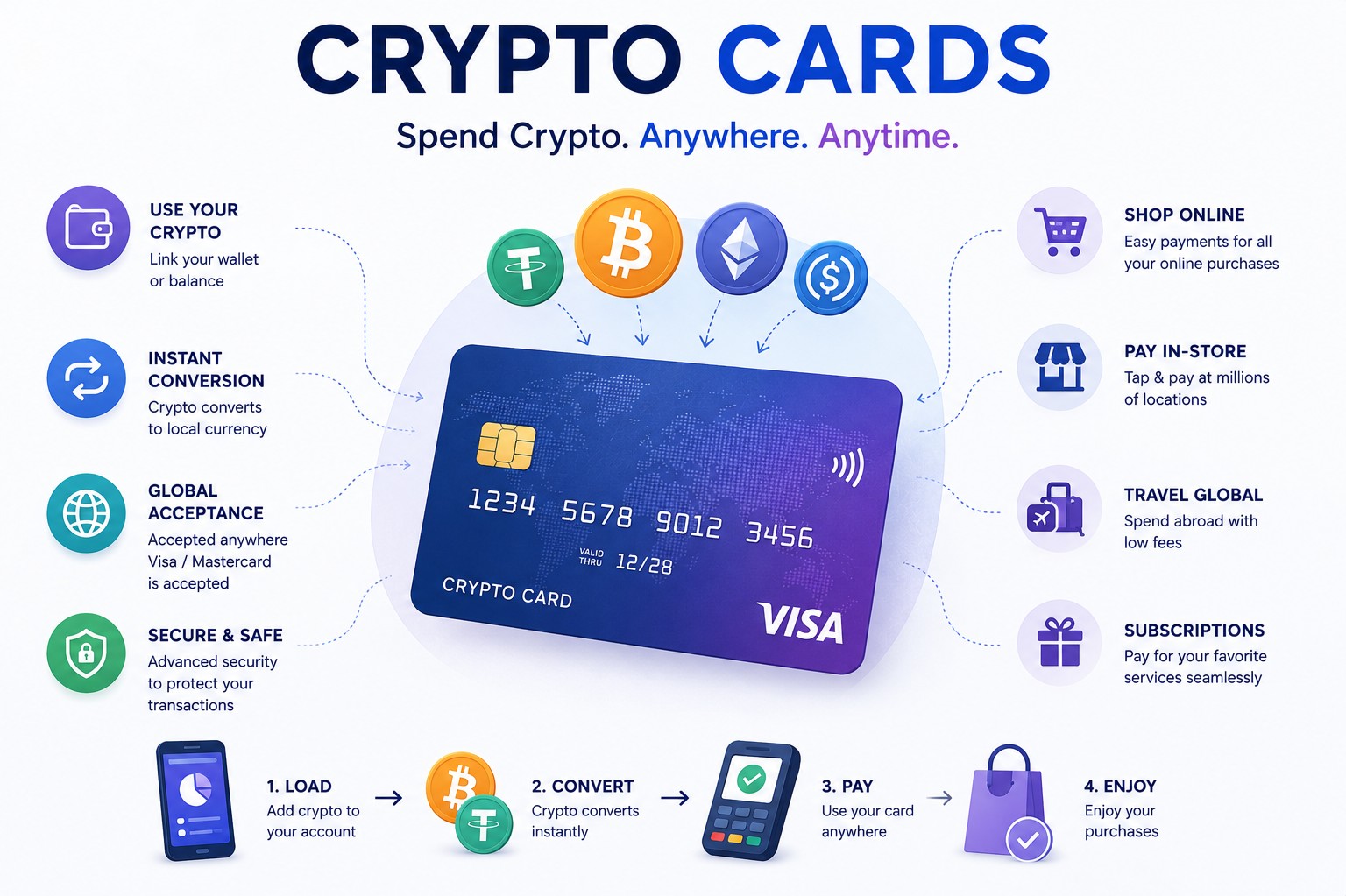
These cards are typically linked to a crypto wallet or digital asset account. When a purchase is made, the cryptocurrency is converted into fiat currency, allowing merchants to receive payment through traditional payment networks.
They generally function similarly to conventional payment cards, offering users the ability to make purchases online, in stores, and internationally.
This combination of digital assets and traditional payment infrastructure creates a more accessible way to use cryptocurrency in daily life.
How Crypto Cards Work
The process behind crypto card transactions is designed to be simple for consumers.
A user maintains cryptocurrency balances within a linked wallet or account. When a payment is initiated, the card provider converts the required amount of cryptocurrency into the local fiat currency.
The transaction is then processed through standard card payment networks.
This conversion occurs almost instantly, allowing users to pay with digital assets without requiring merchants to directly accept cryptocurrency.
The result is a seamless payment experience that combines blockchain-based assets with established financial infrastructure.
Why Crypto Cards Are Growing in Popularity
Several factors have contributed to the growing adoption of crypto cards.
First, cryptocurrency ownership has increased globally. As more individuals hold digital assets, demand for practical spending solutions continues to rise.
Second, users increasingly want flexibility in how they manage their finances. Rather than transferring funds between multiple platforms, it provide direct access to digital asset balances.
Additionally, improvements in payment technology, regulatory clarity, and consumer awareness have strengthened confidence in crypto-based financial products.
These trends have positioned crypto cards as an important gateway between traditional finance and the digital asset economy.
Key Benefits of Crypto Cards
Crypto cards offer numerous advantages for both consumers and businesses.
Some of the most notable benefits include:
- Convenient access to digital assets
- Global payment acceptance
- Fast transaction processing
- Reduced reliance on traditional banking
- Multi-currency capabilities
- Enhanced spending flexibility
- Integration with digital wallets
- Simplified crypto utilization
These features help make cryptocurrencies more practical for everyday financial activities.
Supporting Everyday Crypto Spending
One of the biggest challenges facing cryptocurrency adoption has been usability.
Many digital asset holders have historically treated cryptocurrencies as long-term investments rather than spending tools.
Crypto cards help solve this issue by allowing users to access the value of their digital assets without complex conversion processes.
Consumers can use their crypto balances for:
- Retail purchases
- Travel expenses
- Online shopping
- Subscription services
- Dining and entertainment
- International transactions
This practical utility helps drive broader adoption of digital assets.
Global Payment Accessibility
Crypto cards are particularly valuable for individuals and businesses operating internationally.
Traditional cross-border payment systems can involve currency conversion fees, banking delays, and operational complexity.
Because cryptocurrencies operate on global blockchain networks, crypto cards can support international spending more efficiently.
Many providers also offer multi-currency functionality, allowing users to manage various digital and fiat currencies through a single platform.
This flexibility is especially appealing to global travelers, freelancers, and international businesses.
Crypto Cards and Financial Inclusion
Financial inclusion remains a significant challenge in many parts of the world.
Millions of individuals have limited access to traditional banking services due to geographic, economic, or regulatory barriers.
Crypto cards can help expand financial access by connecting digital asset ecosystems with payment networks.
Individuals who participate in cryptocurrency markets may gain access to payment capabilities without relying entirely on conventional banking infrastructure.
While challenges remain, crypto cards represent a promising development in expanding financial participation.
Security Features of Crypto Cards
Security is a major priority for both card providers and users.
Modern crypto cards typically incorporate multiple layers of protection, including:
- Encryption technologies
- Two-factor authentication
- Tokenization
- Fraud monitoring
- Secure wallet integration
- Real-time transaction alerts
These safeguards help protect users against unauthorized transactions and account compromise.
As the digital asset industry matures, security standards continue to improve across crypto payment products.
Regulatory Considerations
The regulatory environment surrounding cryptocurrencies continues to evolve.
Crypto card providers must navigate requirements related to:
- Anti-money laundering compliance
- Customer verification procedures
- Consumer protection regulations
- Payment licensing requirements
- Data privacy standards
Regulatory compliance plays a critical role in ensuring trust and long-term sustainability within the crypto payments sector.
As governments and regulators develop clearer frameworks, adoption of crypto cards is expected to accelerate.
Challenges Facing Crypto Cards
Despite their advantages, crypto cards face several challenges.
Cryptocurrency price volatility can affect purchasing power and spending behavior. Regulatory uncertainty in some jurisdictions may also impact product availability.
Additionally, consumer education remains important. Many users are still unfamiliar with how crypto payment systems operate.
Card providers must continue improving transparency, security, and user experiences to encourage broader adoption.
Addressing these challenges will be essential for long-term growth.
The Future of Crypto Cards
The future of crypto cards appears promising as digital assets become more integrated into mainstream financial systems.
Emerging technologies such as stablecoins, decentralized finance, blockchain-based identity solutions, and real-time payment infrastructure are expected to strengthen crypto payment ecosystems.
Future crypto cards may offer enhanced rewards programs, improved interoperability, and deeper integration with traditional banking services.
As the gap between digital assets and conventional finance continues to narrow, crypto cards will likely play a major role in shaping the future of payments.
Conclusion
Crypto Cards are transforming the way digital assets are used in everyday financial activities. By connecting cryptocurrency holdings with global payment networks, they provide a practical solution for spending digital assets while maintaining the convenience of traditional card payments.
From international transactions and financial inclusion to payment innovation and digital commerce, they are helping bridge the gap between blockchain technology and real-world spending. As adoption continues to grow and payment technologies evolve, crypto cards are expected to become an increasingly important component of the global financial ecosystem.
Comments
No comments yet. Be the first to share your thoughts.
Leave a comment