
Introduction
The payments industry is evolving rapidly, driven by digital transformation, changing consumer preferences, and the growing adoption of cryptocurrencies. What was once considered a niche financial innovation has now become a legitimate payment method accepted by businesses across industries worldwide.As cryptocurrencies gain mainstream attention, businesses are increasingly exploring ways to accept digital assets as payment for goods and services. This has led to the emergence of crypto acquiring, a specialized payment infrastructure that enables merchants to accept cryptocurrency payments while maintaining operational simplicity and financial stability.
From e-commerce retailers and SaaS providers to travel companies and global marketplaces, businesses are leveraging crypto acquiring solutions to reach new customers, expand internationally, and offer innovative payment experiences.
As digital assets continue to reshape the financial landscape, crypto acquiring is becoming an important component of modern payment strategies.
What Is Crypto Acquiring?
Crypto acquiring refers to the process of enabling merchants to accept cryptocurrency payments from customers through specialized payment providers or acquiring platforms.
Similar to traditional card acquiring, crypto acquiring facilitates payment acceptance, transaction processing, settlement, and merchant onboarding. However, instead of handling payments made through credit cards or bank transfers, crypto acquirers process transactions involving digital currencies.
Commonly accepted cryptocurrencies include:
- Bitcoin (BTC)
- Ethereum (ETH)
- USD Coin (USDC)
- Tether (USDT)
- Litecoin (LTC)
- Solana (SOL)
When customers choose cryptocurrency as a payment method, the crypto acquiring provider manages the transaction and facilitates settlement according to the merchant’s preferences.
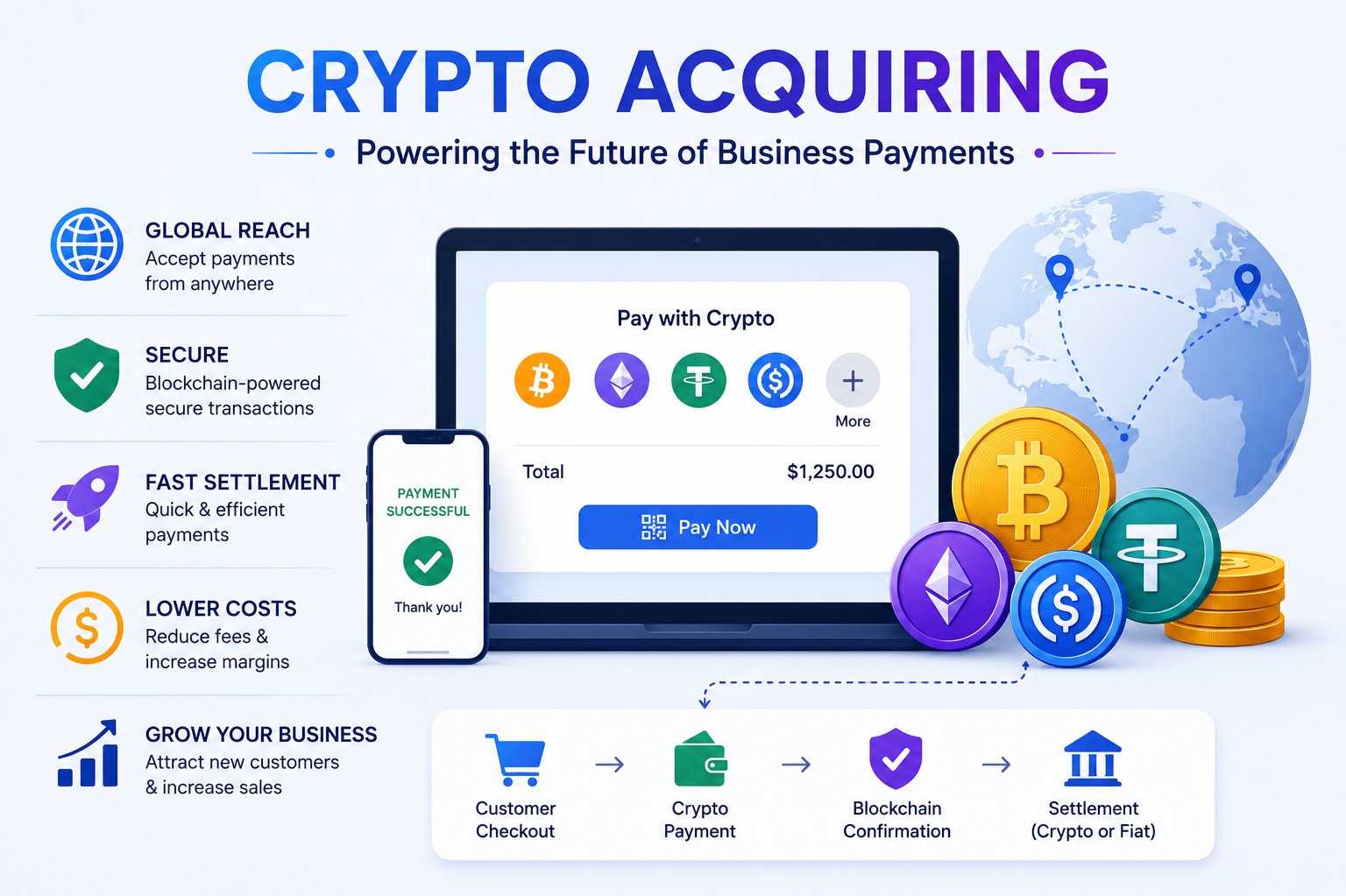
How Crypto Acquiring Works
The crypto acquiring process is designed to be seamless for both merchants and customers.
A typical transaction follows these steps:
Customer Initiates Payment
The customer selects cryptocurrency as the preferred payment method during checkout.
Payment Address Generation
The acquiring platform generates a secure wallet address or QR code linked to the transaction.
Cryptocurrency Transfer
The customer sends the payment from their crypto wallet.
Blockchain Verification
The transaction is verified on the blockchain network.
Settlement
Depending on merchant preferences, the acquiring provider can:
- Settle funds in cryptocurrency
- Convert crypto into fiat currency
- Support hybrid settlement options
This flexibility allows businesses to benefit from crypto payments without necessarily holding digital assets themselves.
Why Businesses Are Adopting Crypto Acquiring
The rise of crypto acquiring is being driven by several factors.
Expanding Customer Reach
Millions of consumers worldwide actively use cryptocurrencies.
Accepting crypto payments allows businesses to engage with a growing segment of digitally savvy customers who prefer alternative payment methods.
Cross-Border Payment Efficiency
Traditional international payments often involve:
- High transaction fees
- Currency conversion costs
- Banking intermediaries
- Settlement delays
Cryptocurrency transactions can reduce many of these barriers, enabling faster and more cost-effective global payments.
Faster Settlement
Depending on the blockchain network used, transactions can settle significantly faster than traditional cross-border payment methods.
This improves cash flow and operational efficiency.
Reduced Chargeback Risk
Unlike traditional card payments, cryptocurrency transactions are generally irreversible once confirmed on the blockchain.
This can help reduce chargeback fraud and payment disputes.
Innovation and Brand Positioning
Businesses that accept cryptocurrencies often position themselves as innovative and forward-thinking organizations.
This can strengthen brand perception among technology-focused consumers.
Key Features of Modern Crypto Acquiring Platforms
Today’s crypto acquiring providers offer far more than simple wallet integration.
Multi-Currency Support
Businesses can accept multiple cryptocurrencies through a single platform.
Automatic Fiat Conversion
Merchants concerned about cryptocurrency volatility can automatically convert incoming payments into fiat currencies.
Payment Gateway Integration
Many providers offer plugins and APIs that integrate with:
- E-commerce platforms
- Mobile applications
- Online marketplaces
- Subscription billing systems
Compliance and Risk Management
Leading platforms incorporate:
- Know Your Customer (KYC) controls
- Anti-Money Laundering (AML) monitoring
- Transaction screening
- Fraud detection tools
Real-Time Reporting
Businesses gain visibility into transaction volumes, settlements, and payment performance through advanced dashboards and analytics.
Industries Benefiting from Crypto Acquiring
E-Commerce
Online retailers can attract global customers and provide alternative payment options without relying solely on traditional banking systems.
SaaS and Digital Services
Software providers frequently serve international customers, making crypto payments an attractive option for subscription billing and global transactions.
Travel and Hospitality
Travel businesses can simplify international payments while serving customers from diverse regions.
Gaming and Digital Entertainment
Gaming platforms have become early adopters of cryptocurrency payments due to their digitally native customer base.
Marketplaces
Digital marketplaces can facilitate payments between international buyers and sellers using crypto acquiring infrastructure.
Benefits of Crypto Acquiring for Businesses
Global Accessibility
Cryptocurrencies operate across borders, allowing businesses to accept payments from customers worldwide.
Lower Transaction Costs
In some cases, crypto transactions can reduce payment processing costs compared to traditional card networks.
Enhanced Payment Flexibility
Customers gain more payment choices, which can improve conversion rates and customer satisfaction.
Financial Inclusion
Crypto payments provide access to customers who may have limited access to traditional banking services.
Competitive Differentiation
Offering cryptocurrency payments can help businesses stand out in competitive markets.
Challenges and Risks
Despite its advantages, crypto acquiring also presents challenges.
Price Volatility
Cryptocurrency values can fluctuate significantly.
Merchants accepting direct crypto settlements may face exposure to market volatility.
Automatic fiat conversion is often used to mitigate this risk.
Regulatory Uncertainty
Cryptocurrency regulations continue to evolve across different jurisdictions.
Businesses must stay informed about compliance obligations in their operating markets.
Consumer Education
Some customers remain unfamiliar with cryptocurrency payments.
Clear payment instructions and user-friendly interfaces are essential.
Security Considerations
Digital asset transactions require strong cybersecurity measures to protect against fraud and unauthorized access.
Regulatory and Compliance Considerations
Compliance is a critical aspect of crypto acquiring.
Reputable providers implement frameworks that address:
- AML requirements
- KYC verification
- Transaction monitoring
- Sanctions screening
- Data protection standards
Businesses should carefully evaluate acquiring partners to ensure they operate within applicable regulatory frameworks.
Strong compliance practices help build trust and reduce operational risks.
The Future of Crypto Acquiring
The future of crypto acquiring is closely linked to broader developments in digital finance.
Several trends are accelerating adoption:
Stablecoin Growth
Stablecoins such as USDC and USDT provide price stability while maintaining the efficiency of blockchain-based payments.
Many businesses view stablecoins as a practical bridge between traditional finance and cryptocurrencies.
Institutional Adoption
Banks, payment providers, and financial institutions are increasingly exploring digital asset services.
This is helping legitimize crypto payment infrastructure.
Embedded Finance Integration
Crypto payment capabilities are becoming integrated directly into business platforms, marketplaces, and financial applications.
Improved Regulatory Clarity
As governments establish clearer digital asset regulations, businesses may gain greater confidence in adopting crypto payment solutions.
Blockchain Innovation
Advancements in blockchain technology continue to improve scalability, transaction speed, and cost efficiency.
These improvements will further strengthen the value proposition of crypto acquiring.
Conclusion
Crypto acquiring is transforming the way businesses accept and process payments in the digital age. By enabling merchants to accept cryptocurrencies securely and efficiently, crypto acquiring solutions open new opportunities for global growth, customer acquisition, and payment innovation.
While challenges such as regulation and volatility remain important considerations, advancements in stablecoins, compliance frameworks, and payment technology are making crypto acquiring increasingly practical for mainstream businesses.
As digital assets become a more established part of the global financial ecosystem, businesses that embrace crypto acquiring today may be better positioned to capitalize on the next generation of payment innovation and cross-border commerce.
Comments
No comments yet. Be the first to share your thoughts.
Leave a comment