
Introduction
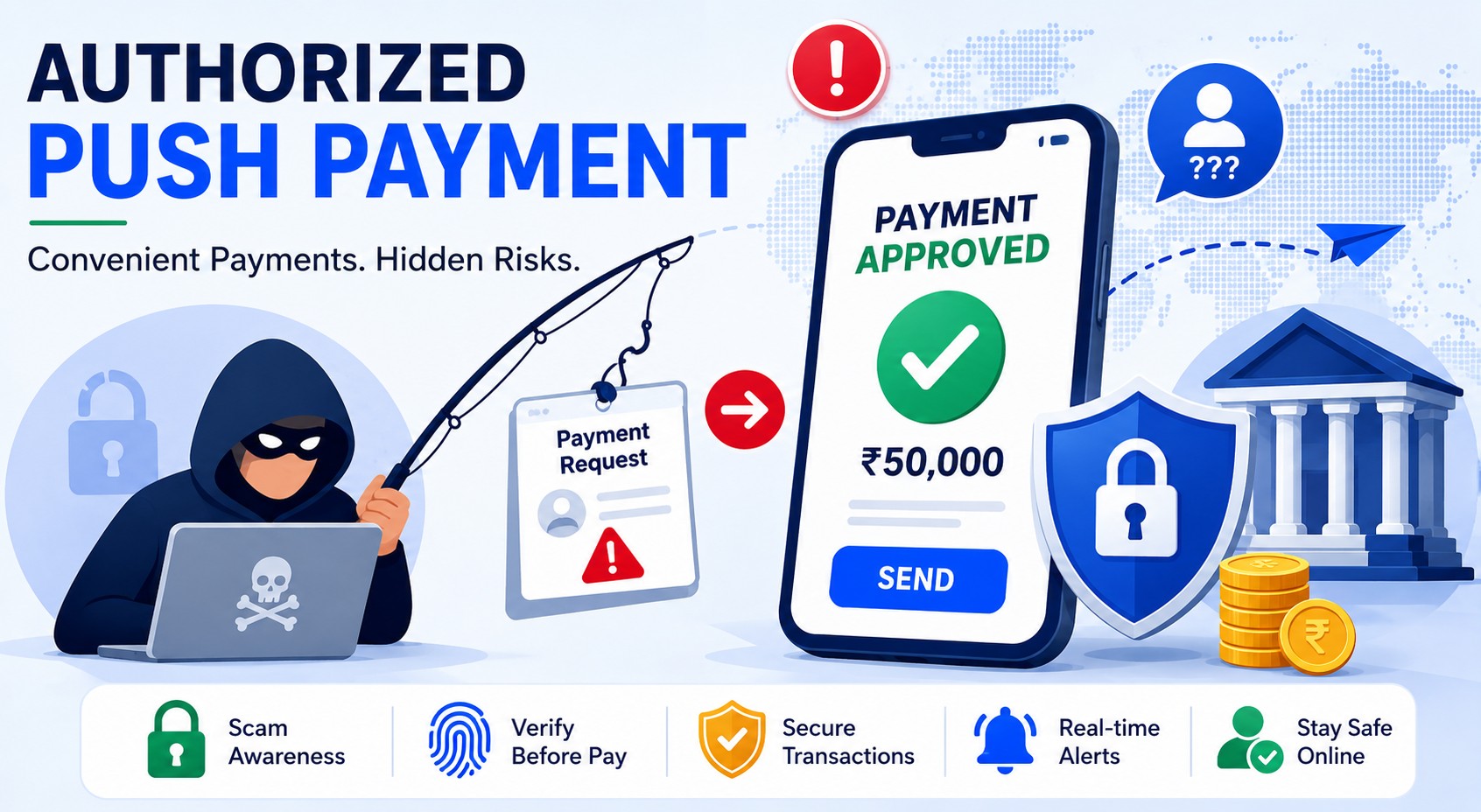
The digital payments revolution has transformed the way individuals and businesses move money. Real-time payment systems, mobile banking applications, and instant account-to-account transfers have made financial transactions faster and more convenient than ever before. While these innovations have significantly improved customer experiences, they have also created new opportunities for financial criminals.One of the most concerning forms of financial crime today is Authorized Push Payment (APP) fraud. Unlike traditional fraud, where criminals gain unauthorized access to accounts, APP fraud relies on manipulation and deception. Victims willingly authorize a payment because they believe they are sending money to a legitimate recipient.
As instant payment systems continue to expand globally, APP fraud has become one of the fastest-growing threats facing banks, fintech companies, businesses, and consumers. Understanding how these scams operate is critical to reducing risk and strengthening payment security.
What Is an Authorized Push Payment?
An Authorized Push Payment occurs when an account holder intentionally instructs their bank or payment provider to transfer money from their account to another account. These transactions are legitimate and occur every day for purposes such as paying suppliers, transferring funds between personal accounts, purchasing goods, or settling invoices.
APP fraud occurs when criminals deceive victims into authorizing these payments. The payment itself is genuine because the customer initiates it, but the recipient account belongs to a fraudster rather than the intended beneficiary.
This distinction makes APP fraud particularly challenging. Since the customer authorizes the transaction, traditional fraud detection systems may initially view the payment as legitimate, allowing the funds to move quickly through the banking system.
Why APP Fraud Is Different from Traditional Fraud
Traditional payment fraud often involves stolen cards, compromised credentials, or unauthorized account access. Financial institutions can frequently identify suspicious activity because the customer did not approve the transaction.
APP fraud works differently. The victim knowingly completes the payment after being manipulated through social engineering tactics. Criminals exploit trust, urgency, fear, or emotional pressure to convince individuals that the transfer is necessary.
Because the transaction is approved by the account holder, recovering funds can be difficult once the money reaches the fraudster’s account. This makes prevention far more important than remediation.
How APP Fraud Works
Most APP fraud schemes begin with contact from someone pretending to be a trusted individual or organization. The fraudster may claim to represent a bank, government agency, supplier, investment company, or even a family member in distress.
The criminal then creates a convincing scenario designed to trigger an emotional response. Victims may be told their bank account has been compromised, an invoice requires urgent payment, or an investment opportunity is about to expire.
Once trust is established, the victim is instructed to transfer money immediately. Since the payment is authorized by the account holder, the funds are often transferred within seconds through modern real-time payment networks. By the time the victim realizes the deception, the money may have already been moved through multiple accounts.
Common Types of APP Fraud
Impersonation scams are among the most common forms of APP fraud. Criminals pose as bank employees, law enforcement officers, or government officials and convince victims to transfer funds to a so-called “safe account.”
Invoice fraud is particularly damaging for businesses. Fraudsters intercept communications between suppliers and customers, alter payment instructions, and redirect legitimate payments to fraudulent accounts. Companies often discover the scam only when the supplier reports that payment was never received.
Investment scams have also increased significantly in recent years. Fraudsters promise high returns through fake investment opportunities and persuade victims to transfer funds. Once the money is received, the investment platform disappears.
Romance scams represent another growing category. Criminals spend weeks or months building emotional relationships with victims before requesting financial assistance. These scams often result in substantial losses because victims trust the individuals behind the requests.
Why APP Fraud Is Increasing
The rapid adoption of real-time payment systems has created an environment where funds can move instantly between accounts. While this speed benefits consumers and businesses, it also reduces the time available to identify and stop fraudulent transactions.
At the same time, criminals have become increasingly sophisticated in their use of social engineering. Publicly available information from social media platforms, data breaches, and online directories enables fraudsters to create highly personalized scams that appear genuine.
The growing popularity of digital banking has further expanded the attack surface. More people are conducting financial activities online, making them potential targets for fraud schemes delivered through email, phone calls, messaging apps, and social media platforms.
The Impact on Businesses and Consumers
APP fraud can have devastating financial consequences. For individual consumers, losses may involve savings accounts, retirement funds, or emergency reserves. The emotional impact can be equally significant, often leading to stress and reduced confidence in digital financial services.
Businesses face additional risks. A single fraudulent supplier payment can result in operational disruptions, strained vendor relationships, and substantial financial losses. Small and medium-sized enterprises are particularly vulnerable because they may lack dedicated fraud prevention resources.
Beyond direct losses, APP fraud can damage trust in financial systems and increase compliance pressures for banks and payment providers.
The Role of Banks in Preventing APP Fraud
Financial institutions are investing heavily in technologies and processes designed to combat APP fraud. Advanced transaction monitoring systems now analyze payment behavior in real time, identifying unusual activity before transactions are completed.
Banks are also strengthening customer education efforts. Warning messages, payment confirmation screens, and fraud awareness campaigns help customers recognize common scam tactics before authorizing payments.
Many institutions have introduced additional verification procedures for high-risk transactions, creating opportunities to intervene before funds leave an account.
Confirmation of Payee and Account Verification
One of the most effective tools in the fight against APP fraud is account verification technology. Confirmation of Payee systems compare the recipient’s name with the destination account details before a payment is processed.
If a mismatch is detected, customers receive a warning and can reconsider the transaction. This simple measure has proven highly effective in reducing certain types of fraud, particularly invoice scams and misdirected payments.
As regulators and payment networks continue prioritizing fraud prevention, account verification solutions are expected to become increasingly widespread.
Artificial Intelligence and Fraud Detection
Artificial intelligence is transforming APP fraud prevention by enabling financial institutions to detect suspicious behavior more accurately and efficiently. Machine learning systems analyze large volumes of transaction data and identify patterns that may indicate fraud.
Unlike traditional rule-based systems, AI can continuously learn and adapt to new fraud techniques. This allows banks to identify unusual payment requests, risky recipient accounts, and behavioral anomalies before funds are transferred.
As fraudsters become more sophisticated, AI-driven monitoring will play an increasingly important role in protecting customers and businesses.
The Future of APP Fraud Prevention
The fight against APP fraud is evolving rapidly. Financial institutions, regulators, fintech companies, and payment providers are collaborating more closely to improve information sharing and strengthen fraud prevention frameworks.
Emerging technologies such as behavioral biometrics, predictive analytics, and real-time risk scoring are expected to improve the ability to detect scams before payments are completed. Enhanced consumer protection measures and reimbursement frameworks are also likely to increase accountability across the financial ecosystem.
While fraud techniques will continue evolving, advancements in technology and industry cooperation provide strong foundations for reducing future losses.
Conclusion
Authorized Push Payment fraud has emerged as one of the most significant challenges facing modern financial services. By exploiting trust rather than technology, criminals can persuade victims to transfer funds willingly, making these scams particularly difficult to detect and reverse.
As digital banking and instant payments become increasingly common, preventing APP fraud will require a combination of customer awareness, advanced technology, regulatory support, and industry collaboration. Organizations that invest in proactive fraud prevention strategies will be better positioned to protect customers, reduce financial losses, and maintain trust in the digital payments ecosystem.
In an era where money moves faster than ever, safeguarding authorized payments has become a critical priority for the future of financial security.
Comments
No comments yet. Be the first to share your thoughts.
Leave a comment