
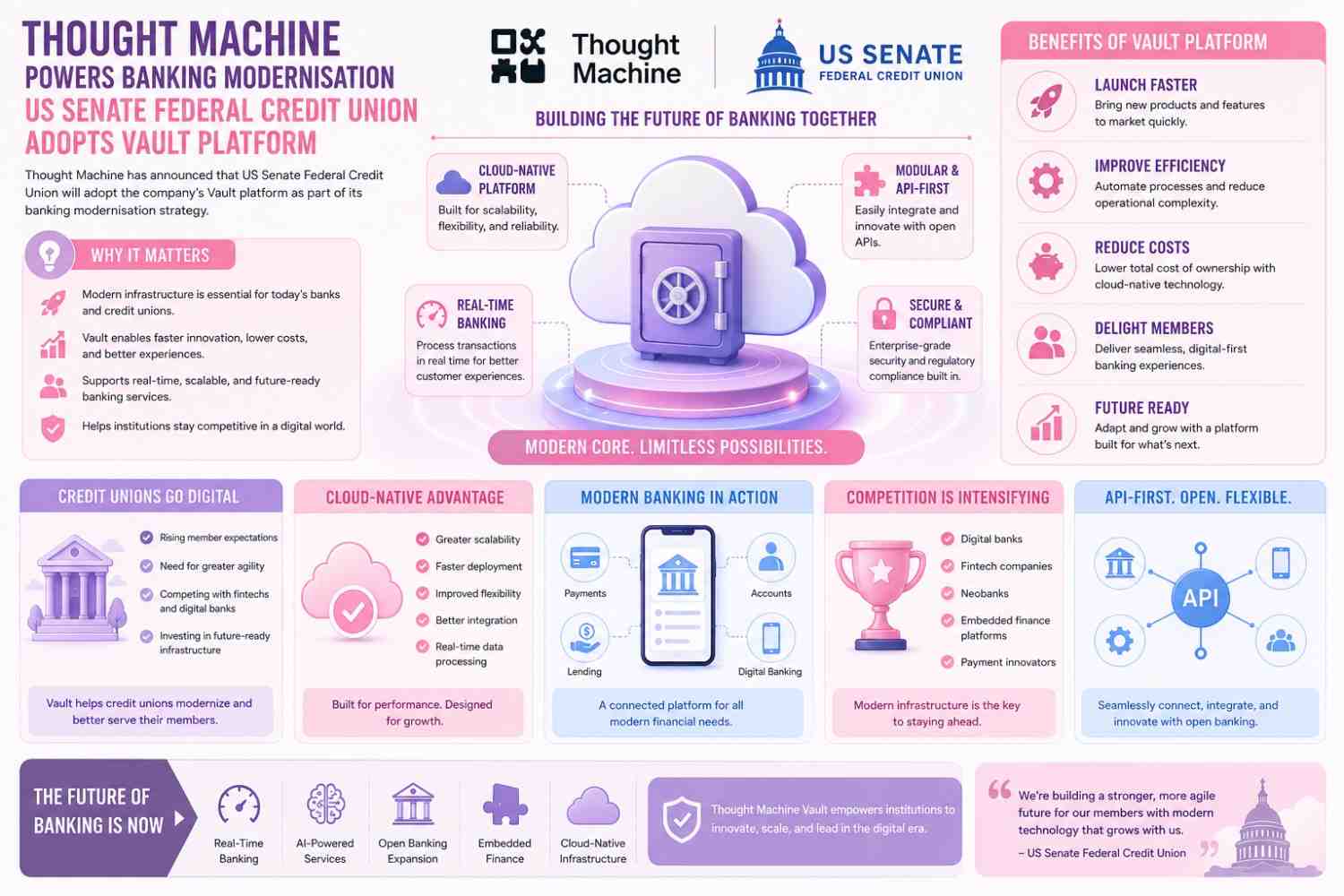
Thought Machine has announced that US Senate Federal Credit Union will adopt the company’s Thought Machine Vault platform as part of its banking modernisation strategy. The move highlights growing demand for cloud-native banking infrastructure as financial institutions continue upgrading legacy systems.
Over the past few years, banks and credit unions worldwide have accelerated digital transformation efforts. As a result, many institutions are investing heavily in flexible cloud-based platforms capable of supporting modern banking services.
Consequently, the adoption of Thought Machine Vault reflects broader industry momentum toward next-generation core banking technology. Moreover, financial institutions increasingly want infrastructure that can improve scalability, speed, and customer experience. In addition, banks are prioritising systems that can support future digital innovation.
Why Thought Machine Vault Matters for Banking
Core banking systems form the foundation of modern financial institutions.
These systems support:
- Customer accounts
- Payments processing
- Lending operations
- Transaction management
- Digital banking services
However, many traditional financial institutions still rely on older legacy systems that can limit innovation and increase operating complexity.
Because of this challenge, demand for modern cloud-native platforms like Thought Machine Vault continues to grow rapidly. Furthermore, banks are increasingly replacing outdated infrastructure with flexible digital systems.
Additionally, modern banking infrastructure may help institutions:
- Launch products faster
- Improve operational efficiency
- Reduce maintenance costs
- Improve customer experiences
- Support real-time banking services
As a result, banks and credit unions are increasingly prioritising technology modernisation initiatives. At the same time, customer expectations for digital banking continue rising globally.
Credit Unions Continue Modernising Digital Infrastructure
Credit unions are investing more heavily in digital banking technology as customer expectations continue evolving.
Today, consumers increasingly expect:
- Mobile banking access
- Instant payments
- Real-time account updates
- Personalised financial tools
- Seamless digital experiences
Because of these changing expectations, financial institutions must modernise their infrastructure to remain competitive. In many cases, institutions are also looking for platforms that can improve operational agility.
The adoption of Thought Machine Vault by the US Senate Federal Credit Union reflects this wider push toward digital banking transformation.
Furthermore, cloud-native platforms may help credit unions compete more effectively with both traditional banks and fintech firms. Consequently, technology investment is becoming a major strategic priority across the credit union sector.
Cloud-Native Banking Platforms Gain Momentum
Cloud-native banking systems are becoming increasingly popular across global financial services markets.
Unlike older legacy infrastructure, cloud-native platforms offer:
- Greater scalability
- Faster deployment
- Improved flexibility
- Better system integration
- Real-time data processing
Because of these advantages, many financial institutions are moving away from outdated core systems.
The growing adoption of Thought Machine Vault underscores the rising demand for flexible banking infrastructure to support the growth of digital finance.
Moreover, cloud-based platforms may help institutions improve resilience while reducing long-term technology costs. At the same time, banks are seeking systems that can adapt quickly to changing customer and regulatory demands.
Consequently, cloud-native infrastructure is becoming an increasingly important part of financial services transformation strategies.
Banking Modernisation Continues Accelerating
Financial institutions worldwide are accelerating efforts to modernise technology infrastructure.
Banks and credit unions are investing heavily in:
- Cloud computing
- API-based banking systems
- Digital onboarding tools
- AI-powered analytics
- Real-time payment infrastructure
As a result, infrastructure providers are playing a larger role within financial services ecosystems.
The adoption of Thought Machine Vault reflects how financial institutions increasingly prioritise flexible and scalable digital banking systems.
Furthermore, banking modernisation may help institutions improve operational speed and reduce system limitations created by legacy infrastructure. Meanwhile, financial institutions are also seeking better ways to improve customer engagement and service delivery.
Competition Across Digital Banking Intensifies
Competition within digital banking continues to increase rapidly.
Today, traditional financial institutions compete with:
- Digital banks
- Fintech companies
- Embedded finance platforms
- Payment technology firms
- Neobanks
Because of this competitive environment, banks and credit unions are under growing pressure to improve digital capabilities.
The implementation of Thought Machine Vault may help financial institutions deliver faster and more modern banking experiences.
Additionally, cloud-native infrastructure may support faster innovation cycles and better customer engagement. Consequently, financial institutions continue prioritising technology upgrades to remain competitive in the digital economy.
At the same time, customer loyalty increasingly depends on digital convenience and seamless banking experiences.
API-Based Banking Systems Continue Expanding
Modern financial infrastructure increasingly relies on API connectivity and modular banking architecture.
API-driven systems may help financial institutions:
- Integrate third-party services
- Improve digital product development
- Expand customer features
- Improve operational flexibility
- Accelerate system innovation
Because of these benefits, modular banking technology continues to gain momentum across financial services markets.
The growing adoption of Thought Machine Vault reflects a broader interest in open and flexible banking infrastructure.
Furthermore, API-based systems may improve collaboration between traditional financial institutions and fintech providers. In addition, modular infrastructure may help banks adapt more quickly to changing market trends.
Security and Compliance Remain Key Priorities
As banking systems become more digital, cybersecurity and regulatory compliance remain critical priorities.
Financial institutions must continue managing:
- Data protection requirements
- Payment security standards
- Regulatory compliance
- Operational resilience
- Fraud prevention systems
Because of these responsibilities, banking infrastructure providers must balance innovation with strong security frameworks.
The adoption of Thought Machine Vault highlights how modern banking systems increasingly combine scalability, flexibility, and compliance capabilities.
Additionally, cloud-native platforms may help institutions improve monitoring and system reliability across digital operations. Meanwhile, regulators continue increasing focus on cybersecurity and operational resilience across financial services.
Future Outlook for Thought Machine Vault
Looking ahead, demand for modern banking infrastructure is expected to continue growing globally.
Several trends may shape the future of banking technology, including:
- Real-time banking systems
- AI-driven financial services
- Open banking expansion
- Embedded finance growth
- Cloud-native infrastructure adoption
Because digital transformation continues accelerating, financial institutions will likely continue investing heavily in scalable technology platforms.
In addition, banks are expected to prioritise systems that can support faster innovation and long-term digital growth.
The growing adoption of Thought Machine Vault could therefore reflect a broader long-term shift toward cloud-based banking ecosystems.
Final Thoughts
The decision by US Senate Federal Credit Union to adopt Thought Machine’s Vault platform highlights the growing importance of cloud-native infrastructure within modern banking.
As financial institutions continue modernising systems and expanding digital services, demand for flexible and scalable core banking technology is expected to remain strong.
The adoption of Thought Machine Vault reflects broader industry momentum toward faster, more connected, and customer-focused financial services.
Ultimately, modern infrastructure platforms may play a major role in shaping the future evolution of digital banking worldwide.
Comments
No comments yet. Be the first to share your thoughts.
Leave a comment