
Introduction
The digital economy has fundamentally changed how businesses connect buyers and sellers. Instead of operating as traditional retailers, many companies now function as platforms that facilitate transactions between multiple parties. From e-commerce marketplaces and food delivery applications to ride-sharing services and freelance platforms, marketplaces have become a dominant force in global commerce.
At the center of every successful platform lies a sophisticated payment infrastructure capable of handling complex financial flows. Unlike traditional payment processing, marketplace payments must manage transactions involving multiple stakeholders, including buyers, sellers, service providers, and platform operators. Funds often need to be collected, split, held, and distributed according to specific business rules and regulatory requirements.
As marketplaces continue to grow across industries, payment infrastructure has become a strategic differentiator. Efficient, secure, and compliant marketplace payments are no longer optional—they are essential for delivering seamless user experiences and supporting sustainable platform growth.
What Are Marketplace Payments?
Marketplace payments refer to the systems and processes used to facilitate financial transactions between participants on a digital platform. Rather than processing a simple payment between a customer and a merchant, marketplace payment systems manage money movement among multiple parties within a single ecosystem.
When a buyer makes a purchase, the platform may collect the payment, deduct commissions or fees, allocate funds to sellers, and initiate payouts according to predefined schedules. All of these activities occur behind the scenes while maintaining transparency and compliance.
This creates a more complex financial environment than traditional payment processing. The platform must accurately track every transaction, manage fund distribution, and ensure that all participants receive the correct payments at the appropriate time.
The Rise of the Marketplace Economy
The marketplace model has gained popularity because it allows businesses to scale rapidly without owning inventory or directly delivering services. Platforms such as online marketplaces, booking platforms, gig economy applications, and digital service exchanges connect supply and demand while generating revenue through transaction fees.
As these ecosystems expand, the volume and complexity of transactions increase significantly. A platform may process thousands or even millions of payments daily involving numerous sellers, regions, currencies, and payment methods.
This growth has increased demand for specialized marketplace payment solutions capable of supporting high transaction volumes while maintaining efficiency and compliance. Payment infrastructure has become one of the most important foundations of the platform economy.
How Marketplace Payments Work
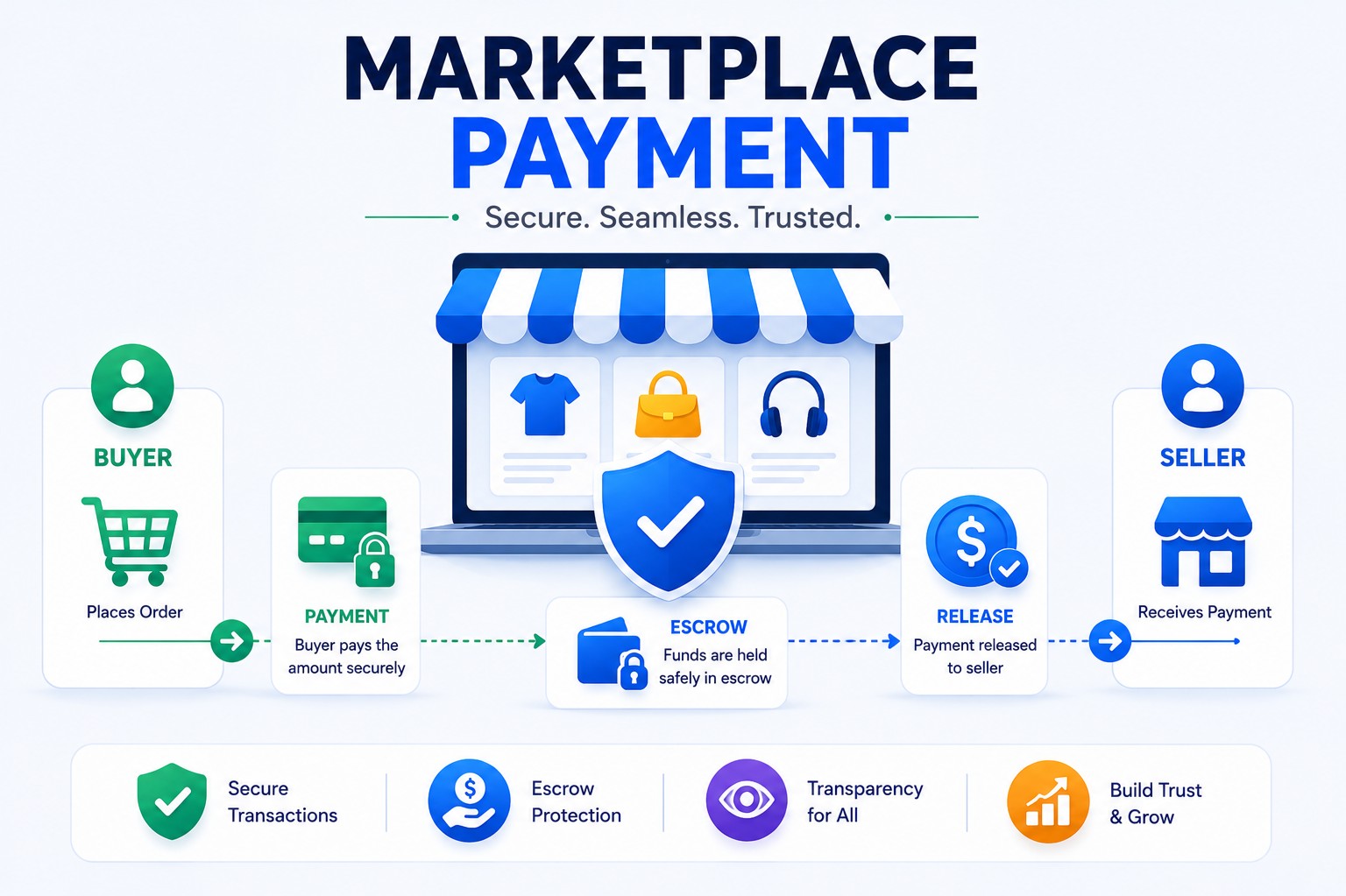
The marketplace payment journey typically begins when a customer completes a purchase. Instead of sending funds directly to the seller, the payment is often routed through the marketplace’s payment infrastructure.
The platform receives the funds and records the transaction within its financial system. Depending on the business model, the platform may deduct commissions, service fees, taxes, or other charges before distributing the remaining amount to the seller.
In some cases, funds are held temporarily until specific conditions are met, such as product delivery or service completion. Once the requirements are satisfied, payouts are released to the appropriate parties.
This process creates a seamless experience for users while allowing the platform to maintain control over transaction management and financial operations.
The Importance of Split Payments
One of the defining characteristics of marketplace payments is the ability to split funds among multiple participants. A single transaction may involve a seller, the marketplace operator, logistics providers, affiliates, and tax authorities.
Split payment functionality ensures that each party receives its designated portion automatically. Without this capability, platforms would face significant operational challenges and manual reconciliation requirements.
Automated payment splitting improves accuracy, reduces administrative overhead, and supports scalable growth. It also enhances transparency by providing clear visibility into how funds are allocated and distributed.
As marketplaces expand their ecosystems, split payments become increasingly important for maintaining operational efficiency.
Seller Onboarding and Verification
Before sellers can receive payments, marketplaces must verify their identities and ensure compliance with regulatory requirements. This onboarding process is a critical component of marketplace payment infrastructure.
Platforms typically collect business information, identification documents, banking details, and tax-related data during registration. These checks help satisfy Know Your Customer (KYC) and Anti-Money Laundering (AML) obligations.
A smooth onboarding experience is essential because lengthy verification processes can discourage potential sellers. Modern payment providers increasingly use automation and artificial intelligence to accelerate verification while maintaining compliance standards.
Effective onboarding creates a strong foundation for secure and scalable marketplace operations.
Marketplace Payouts and Fund Distribution
Payout management is one of the most important functions within a marketplace payment system. Sellers expect timely access to their earnings, while platforms must balance liquidity management, fraud prevention, and operational efficiency.
Many marketplaces offer flexible payout schedules, allowing sellers to receive funds daily, weekly, or according to customized settlement arrangements. Some platforms even support instant payouts through real-time payment networks.
The speed and reliability of payouts directly influence seller satisfaction and retention. As competition among marketplaces increases, efficient payout capabilities are becoming a key differentiator.
Platforms that provide transparent and predictable payment experiences often build stronger relationships with their sellers.
Compliance and Regulatory Responsibilities
Marketplace operators must navigate an increasingly complex regulatory environment. Because they facilitate financial transactions between multiple parties, they often face additional compliance obligations compared to traditional merchants.
Requirements may include customer verification, transaction monitoring, sanctions screening, tax reporting, and fraud prevention measures. Regulatory expectations vary across jurisdictions, creating additional challenges for global platforms.
Failure to comply can result in financial penalties, reputational damage, and operational disruptions. As a result, compliance has become an integral part of marketplace payment strategy rather than a separate operational function.
Modern payment providers help marketplaces address these challenges through integrated compliance tools and automated monitoring systems.
Fraud Prevention in Marketplace Payments
Fraud remains a significant concern for digital marketplaces. Criminals may attempt to create fake seller accounts, process fraudulent transactions, manipulate refunds, or exploit platform vulnerabilities.
To combat these risks, marketplace payment systems increasingly incorporate advanced fraud detection technologies. Machine learning algorithms analyze transaction behavior, account activity, device information, and payment patterns to identify suspicious activity in real time.
Fraud prevention is not only about reducing financial losses. It also protects platform reputation and helps maintain trust among buyers and sellers. Strong security measures are therefore essential for long-term marketplace success.
Cross-Border Marketplace Payments
Many marketplaces operate internationally, serving buyers and sellers across multiple countries. Cross-border transactions introduce additional complexities related to currency conversion, regulatory compliance, and payment processing.
Modern marketplace payment solutions support multi-currency transactions, localized payment methods, and international payout capabilities. These features help platforms expand globally while delivering seamless experiences for users.
Cross-border payment infrastructure also enables marketplaces to access new revenue opportunities and attract a broader range of sellers and customers.
As global digital commerce continues growing, international payment capabilities are becoming increasingly important.
Embedded Finance and Marketplace Payments
Embedded finance is transforming how marketplaces deliver financial services. Rather than relying solely on payment processing, many platforms now offer additional financial products directly within their ecosystems.
These services may include working capital loans, seller wallets, business accounts, insurance products, and instant payout solutions. Marketplace payment infrastructure often serves as the foundation for these offerings.
By embedding financial services into their platforms, marketplaces can generate new revenue streams while strengthening user engagement. This trend is accelerating across industries and reshaping the future of platform-based commerce.
The Future of Marketplace Payments
The future of marketplace payments will be driven by automation, real-time processing, and deeper financial integration. Artificial intelligence will improve fraud detection and payment optimization, while open banking initiatives will create new payment options and data-sharing opportunities.
Real-time settlement networks will continue reducing payout delays, and embedded finance solutions will expand the range of financial services available within marketplace ecosystems.
At the same time, regulatory scrutiny will increase, making compliance and risk management even more important. Platforms that invest in scalable, secure, and compliant payment infrastructure will be best positioned for future growth.
Conclusion
Marketplace payments have become the financial backbone of the platform economy. By enabling secure transaction processing, automated fund distribution, seller payouts, and regulatory compliance, they support the complex financial relationships that power modern digital marketplaces.
As e-commerce, gig economy platforms, and online service marketplaces continue expanding, payment infrastructure will play an increasingly strategic role in business success. Organizations that build efficient and scalable marketplace payment systems can improve user experiences, strengthen trust, and unlock new growth opportunities in the evolving world of digital commerce.
Comments
No comments yet. Be the first to share your thoughts.
Leave a comment