
Introduction
Financial services are no longer confined to banks and financial institutions. Today, consumers can apply for loans while shopping online, purchase insurance during travel bookings, and access business financing directly from accounting software. This transformation is being driven by embedded finance solutions, one of the most disruptive innovations in the financial technology landscape.
Embedded finance is changing how businesses deliver value to customers by integrating financial products directly into non-financial platforms. Instead of redirecting users to banks or third-party providers, companies can now offer seamless financial experiences within their own ecosystems. As digital commerce continues to evolve, embedded finance solutions are becoming a key driver of customer engagement, revenue growth, and operational efficiency.
What Are Embedded Finance Solutions?
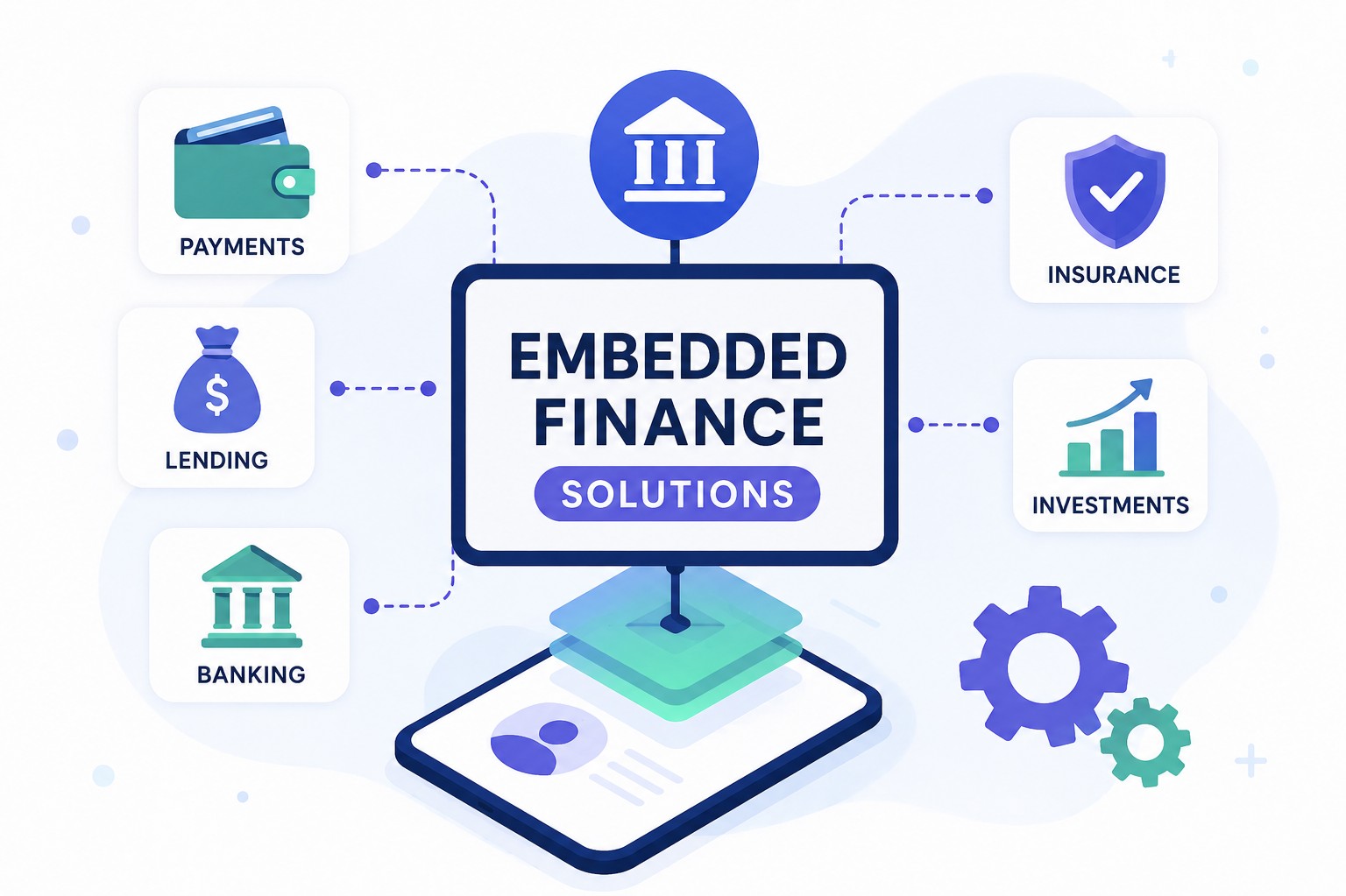
Embedded finance solutions refer to the integration of financial services into non-financial platforms, applications, or customer journeys. These services can include payments, lending, insurance, banking, investments, and card issuance.
Rather than requiring customers to interact separately with a financial institution, embedded finance enables them to access financial products directly where they are already conducting business.
For example:
- An e-commerce platform offering installment financing at checkout.
- A ride-hailing app providing driver debit cards and earnings accounts.
- Accounting software offering working capital loans to businesses.
- Travel websites selling insurance during the booking process.
The goal is to make financial services invisible, convenient, and highly relevant to customer needs.
Why Embedded Finance Solutions Are Growing Rapidly
Several factors are accelerating the adoption of embedded finance solutions worldwide.
Digital-First Consumer Expectations
Modern consumers expect convenience and speed. They prefer accessing services within a single platform rather than navigating multiple providers.
Advancements in APIs
Application Programming Interfaces (APIs) have simplified the integration of financial services into digital platforms. Businesses can connect to banking infrastructure without becoming financial institutions themselves.
Banking-as-a-Service (BaaS)
Banking-as-a-Service providers enable companies to embed regulated financial products using existing banking infrastructure, significantly reducing development complexity.
Increased Competition
Businesses are continuously seeking ways to differentiate themselves. Embedded finance creates new revenue streams while improving customer retention.
Key Types of Embedded Finance Solutions
Embedded Payments
Embedded payments are among the most widely adopted forms of embedded finance.
Customers can complete transactions without leaving an application or website. This creates a smoother user experience while increasing conversion rates.
Examples include:
- In-app purchases
- Digital wallets
- Subscription payments
- Marketplace transactions
Embedded Lending
Businesses can offer loans directly within their platforms.
Examples include:
- Buy Now, Pay Later (BNPL)
- Small business financing
- Merchant cash advances
- Consumer installment loans
Embedded lending provides customers with immediate access to credit at the point of need.
Embedded Banking
Companies can offer banking-like services such as accounts, debit cards, and money management tools.
Examples include:
- Gig economy worker accounts
- Business banking dashboards
- Expense management solutions
- Payroll-linked financial products
Embedded Insurance
Insurance products can be integrated directly into customer journeys.
Examples include:
- Travel insurance during flight bookings
- Device protection during electronics purchases
- Vehicle insurance during car rentals
This approach increases insurance adoption while improving customer convenience.
Embedded Investments
Investment products are increasingly being integrated into digital platforms.
Examples include:
- Micro-investing applications
- Automated wealth management
- Savings and investment features within consumer apps
Benefits of Embedded Finance Solutions
Enhanced Customer Experience
One of the biggest advantages of embedded finance solutions is convenience. Customers can access financial products without leaving the platform they already trust.
New Revenue Streams
Businesses can generate additional revenue through transaction fees, lending commissions, interchange income, and financial product partnerships.
Increased Customer Retention
When financial services become part of a platform’s ecosystem, customers are more likely to remain engaged over the long term.
Better Data Utilization
Embedded finance enables businesses to leverage customer data to offer more personalized financial products and services.
Faster Financial Access
Customers receive financing, payments, or insurance at the exact moment they need it, reducing friction and improving satisfaction.
How Embedded Finance Solutions Are Transforming Industries
E-Commerce
Online retailers use embedded finance to offer instant payments, financing options, and loyalty programs.
Transportation
Ride-sharing and logistics companies provide drivers with accounts, cards, and instant access to earnings.
Healthcare
Healthcare providers are introducing embedded financing options to help patients manage treatment costs.
Travel
Travel platforms embed insurance, payment options, and financing services into booking experiences.
SaaS Platforms
Software providers increasingly offer payment processing, invoicing, banking, and lending capabilities directly within their applications.
The Role of Fintech in Embedded Finance
Fintech companies play a crucial role in the growth of embedded finance solutions. They provide the infrastructure, APIs, compliance frameworks, and technology needed to integrate financial products efficiently.
Through partnerships with banks and regulated institutions, fintech firms help businesses launch financial services without building complex banking infrastructure from scratch.
This collaboration has accelerated innovation and lowered barriers to entry across industries.
Challenges of Embedded Finance Solutions
Despite significant opportunities, businesses must address several challenges.
Regulatory Compliance
Financial services operate within strict regulatory environments. Companies must ensure compliance with KYC, AML, and data protection requirements.
Security Risks
Handling financial data requires robust cybersecurity measures and fraud prevention systems.
Partner Dependence
Many embedded finance solutions rely on third-party providers. Service disruptions or compliance issues can impact business operations.
Customer Trust
Consumers must feel confident that their financial information is protected and handled responsibly.
Future Trends in Embedded Finance Solutions
Expansion of Open Banking
Open banking initiatives will continue driving innovation by enabling secure data sharing between financial institutions and third-party providers.
AI-Powered Financial Services
Artificial intelligence will improve risk assessment, fraud detection, personalization, and lending decisions.
Real-Time Payments
Instant payment capabilities will become standard across embedded finance ecosystems.
Embedded Financial Ecosystems
Businesses will increasingly offer multiple financial services within a single platform, creating comprehensive digital ecosystems.
Global Adoption
While adoption is strongest in developed markets, emerging economies are rapidly embracing embedded finance to improve financial inclusion and digital commerce.
Conclusion
Embedded finance solutions are redefining the relationship between businesses, customers, and financial services. By integrating payments, lending, insurance, banking, and investment products directly into digital experiences, companies can create more convenient, personalized, and valuable customer journeys.
As API technology, Banking-as-a-Service, open banking, and fintech innovation continue to evolve, embedded finance solutions will become an essential component of modern business strategy. Organizations that embrace this shift early will be better positioned to increase customer loyalty, unlock new revenue opportunities, and thrive in the future of digital finance.
Comments
No comments yet. Be the first to share your thoughts.
Leave a comment