
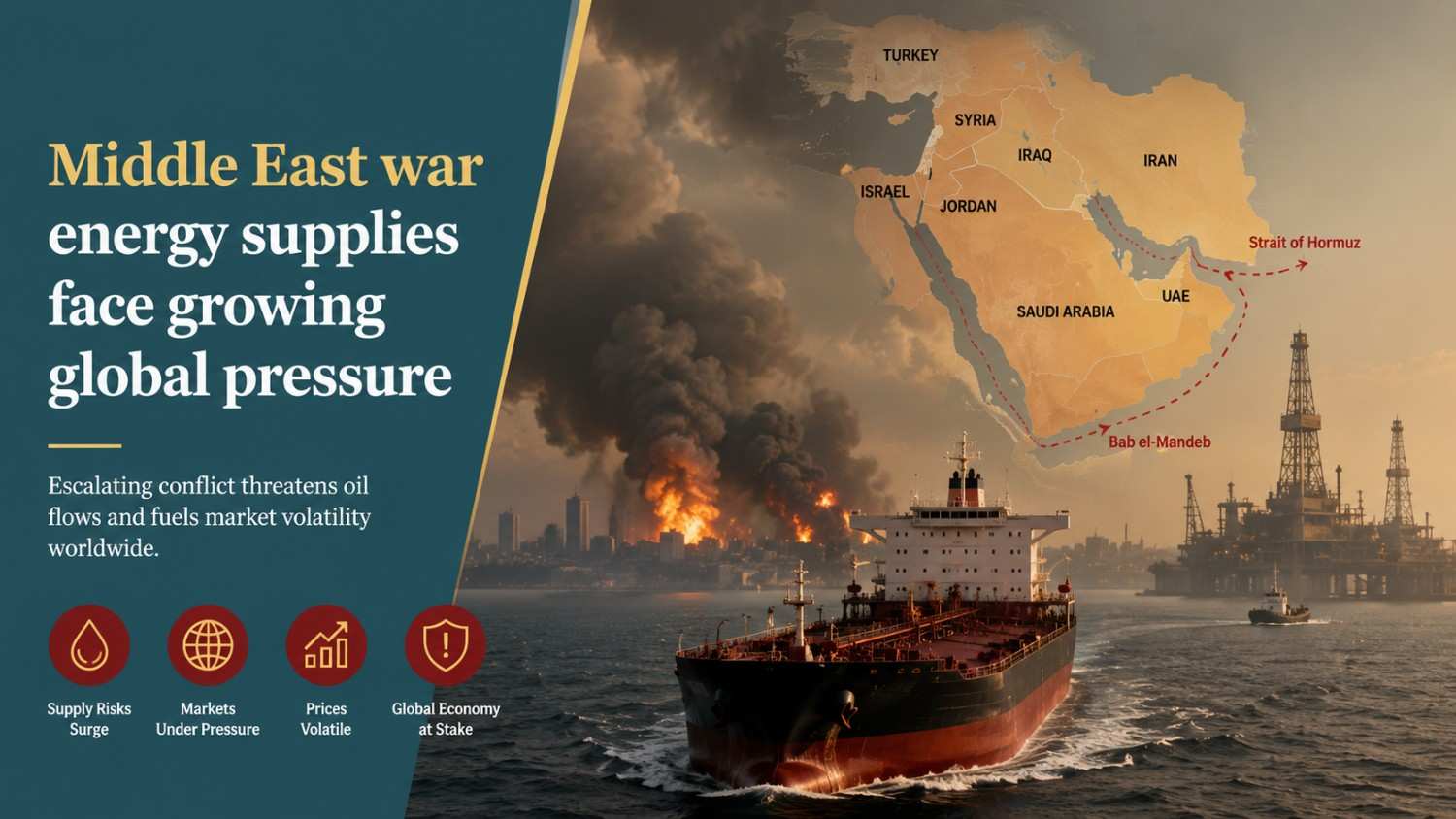
The strain on Middle East war energy supplies is becoming a major concern for governments, businesses, investors, and international financial institutions. The International Monetary Fund (IMF), the World Bank, the International Energy Agency (IEA), and other global organisations have warned that ongoing conflict in the region is increasing pressure on energy markets and creating fresh economic risks.
Moreover, the Middle East remains one of the most important energy-producing regions in the world. Because a significant share of global oil and gas exports originates from the region, disruptions can quickly affect international markets. As a result, policymakers are paying closer attention to developments that could impact supply routes and energy production.
Furthermore, concerns are no longer limited to energy prices alone. Instead, experts believe the situation could influence inflation, trade flows, investment decisions, and economic growth across multiple regions. Consequently, the discussion around Middle East war energy supplies has become a global economic issue rather than a purely regional challenge.
Middle East war energy supplies influence global energy markets
The condition of Middle East war energy supplies plays a critical role in determining global energy market stability. Because many countries depend on imported oil and natural gas, disruptions can create uncertainty across industries and economies.
Moreover, energy traders closely monitor geopolitical developments in the region. Even small disruptions can trigger significant price movements because markets often react to potential risks before actual supply shortages occur.
Additionally, energy-intensive industries such as transportation, manufacturing, aviation, and logistics are particularly sensitive to changes in fuel costs. As a result, rising energy prices can affect business profitability and consumer spending.
Furthermore, investors often view energy market instability as a signal of broader economic uncertainty. Consequently, stock markets, bond markets, and commodity markets can experience increased volatility during periods of geopolitical tension.
IMF warns Middle East war energy supplies remain vulnerable
The IMF has highlighted the vulnerability of Middle East war energy supplies and the potential economic consequences of prolonged disruption.
Moreover, IMF officials have noted that higher energy prices can create inflationary pressure across both developed and developing economies. Because energy costs influence transportation and production expenses, rising prices often affect the cost of goods and services.
Furthermore, inflation can reduce consumer purchasing power and weaken economic growth. As a result, central banks may face additional challenges when setting monetary policy.
Additionally, prolonged energy disruptions can affect investment decisions. Businesses may delay expansion plans if economic uncertainty increases. Consequently, growth prospects could weaken in several markets.
Meanwhile, governments are evaluating contingency plans to address possible energy shortages and market instability. Therefore, energy security remains a major policy priority.
World Bank sees broader economic risks
The World Bank has also expressed concern regarding Middle East war energy supplies and their wider economic impact.
Moreover, the institution believes higher energy prices could place additional pressure on vulnerable economies that rely heavily on imported fuel. Because these countries often have limited financial resources, rising energy costs can strain public budgets.
Furthermore, higher fuel prices may contribute to increased transportation expenses and food costs. As a result, households may experience greater financial pressure.
Additionally, commodity markets often react strongly to energy disruptions. Consequently, price volatility may extend beyond oil and gas into other sectors of the global economy.
Meanwhile, policymakers are monitoring inflation trends carefully. Therefore, governments may need to adjust economic strategies if disruptions continue.
Shipping routes remain a major concern
The stability of Middle East war energy supplies depends heavily on secure transportation routes.
Moreover, several important maritime corridors play a critical role in moving oil and natural gas to global markets. Because large volumes of energy exports pass through these routes, disruptions can have international consequences.
Furthermore, shipping delays can increase transportation costs and reduce supply efficiency. As a result, businesses may face higher operating expenses.
Additionally, uncertainty surrounding shipping routes can affect market sentiment. Consequently, energy traders often react quickly to developments involving key transport corridors.
Meanwhile, governments and industry leaders continue evaluating ways to strengthen supply chain resilience. Therefore, infrastructure security remains a major focus.
Middle East war energy supplies affect inflation outlook
The impact of Middle East war energy supplies extends directly into inflation forecasts around the world.
Moreover, energy is a key input for numerous industries. Because fuel costs influence transportation, manufacturing, and distribution, higher energy prices often contribute to broader inflationary pressure.
Furthermore, rising fuel costs can increase consumer prices for everyday products. As a result, households may face reduced purchasing power.
Additionally, inflation can influence central bank policy decisions. Consequently, policymakers may need to balance economic growth objectives against inflation control efforts.
Meanwhile, financial markets are closely monitoring inflation indicators. Therefore, energy developments remain important for investors.
Developing economies face greater challenges
Many experts believe disruptions to Middle East war energy supplies could affect developing economies more severely than wealthier nations.
Moreover, lower-income countries often spend a larger share of national resources on imported energy. Because of this dependence, rising fuel costs can create significant financial strain.
Furthermore, higher energy prices may contribute to currency pressure and increased government spending. As a result, fiscal challenges can become more difficult to manage.
Additionally, vulnerable populations may face rising living costs. Consequently, policymakers may need to implement support measures to protect households.
Meanwhile, international organisations continue monitoring countries that face elevated economic risks. Therefore, global cooperation remains important.
Businesses prepare for uncertainty
Companies across multiple industries are responding to concerns about Middle East war energy supplies.
Moreover, businesses are reviewing supply chain strategies and risk management plans. Because energy costs affect operational expenses, many firms are exploring ways to improve efficiency.
Furthermore, organisations are considering alternative energy sources where possible. As a result, investment in energy diversification may increase.
Additionally, companies are strengthening contingency planning. Consequently, many businesses are attempting to reduce exposure to future disruptions.
Meanwhile, investors continue evaluating which sectors may be most affected by prolonged energy market volatility.
Comparison between stable and disrupted energy markets
| Feature | Stable Markets | Disrupted Markets |
|---|---|---|
| Oil Prices | Predictable | Volatile |
| Inflation Risk | Lower | Higher |
| Economic Growth | Stronger | Slower |
| Supply Chains | Reliable | Uncertain |
| Business Costs | Stable | Rising |
Moreover, this comparison demonstrates why Middle East war energy supplies remain such an important topic for policymakers and financial institutions.
Governments strengthen energy security strategies
Governments worldwide are taking steps to address risks related to Middle East war energy supplies.
Moreover, many countries are reviewing strategic reserves and emergency response plans. Because energy security has become a major concern, policymakers are prioritising resilience.
Furthermore, investment in renewable energy continues increasing. As a result, some governments hope to reduce long-term dependence on imported fuels.
Additionally, international cooperation is expanding in several areas. Consequently, countries are sharing information and coordinating responses more closely.
Meanwhile, energy diversification remains a key objective for many economies.
Future outlook for Middle East war energy supplies
The future of Middle East war energy supplies will depend on geopolitical developments, infrastructure security, and market conditions.
Moreover, any improvement in regional stability could reduce pressure on energy markets. As a result, price volatility may decline.
However, continued uncertainty could create additional challenges. Consequently, businesses and governments are preparing for multiple scenarios.
Furthermore, energy security is likely to remain a top priority in coming years. Therefore, investment in resilient infrastructure may continue growing.
Additionally, global institutions will keep monitoring developments closely. Meanwhile, investors will continue assessing risks and opportunities across energy markets.
Final Thoughts
The situation surrounding Middle East war energy supplies highlights the close relationship between geopolitics, energy security, and economic stability.
Moreover, warnings from the IMF, World Bank, and other institutions demonstrate that energy disruptions can have far-reaching consequences. As a result, governments, businesses, and investors are paying close attention to developments in the region.
Furthermore, higher energy prices can influence inflation, trade, and economic growth across the world. Consequently, maintaining stable energy supplies remains a critical objective for policymakers.
Ultimately, the future of Middle East war energy supplies will play an important role in shaping global economic conditions, investment decisions, and energy security strategies in the months ahead.
IMF, World Bank, others warn Middle East war is straining energy supplies – CNBC TV18
Comments
No comments yet. Be the first to share your thoughts.
Leave a comment