
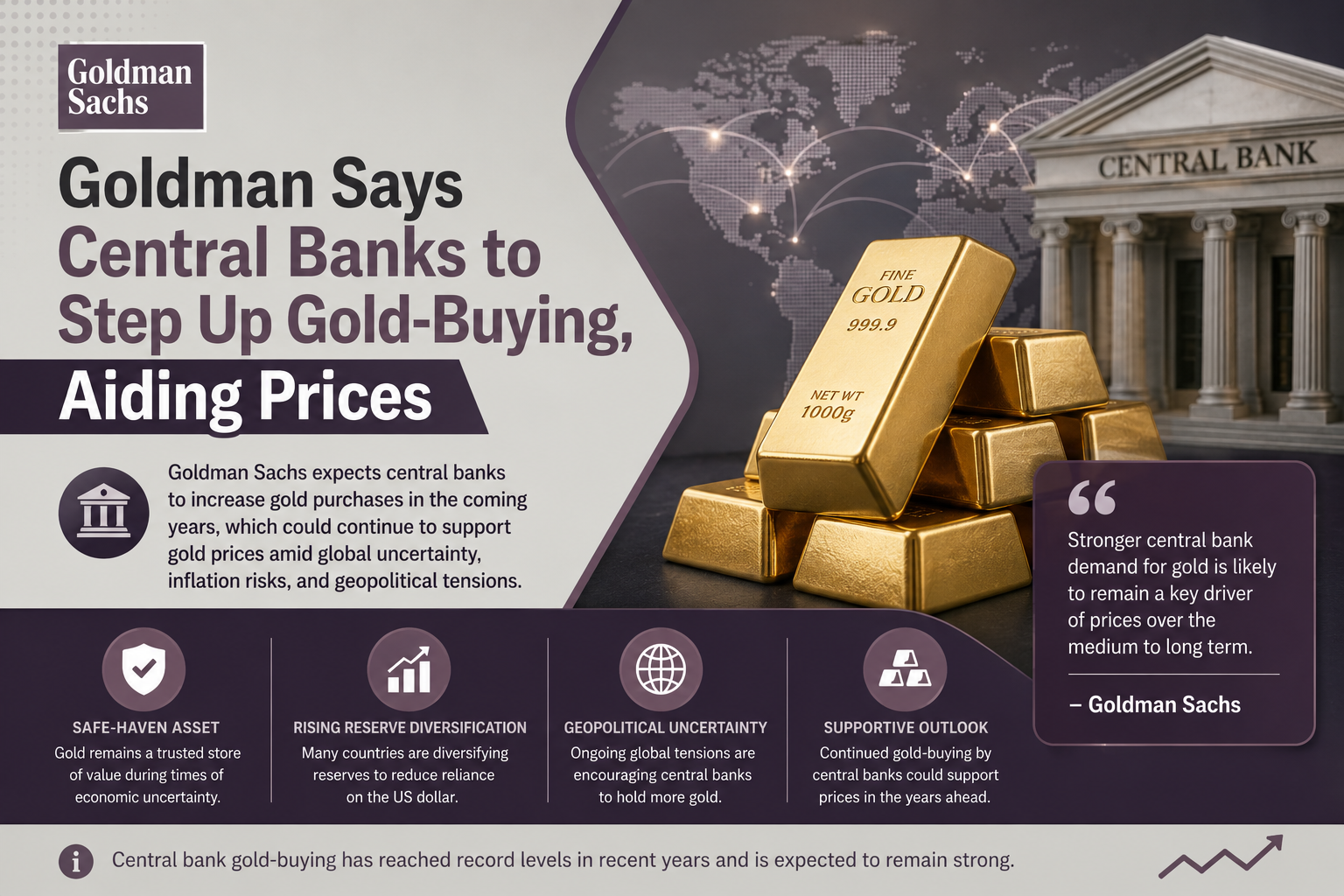
Goldman Sachs says central bank gold buying is expected to increase in the coming years, a trend that could continue supporting global gold prices. Moreover, stronger institutional demand may help stabilise commodity markets despite changing interest rates and ongoing economic uncertainty.
As inflation concerns, geopolitical tensions, and currency risks continue affecting global markets, many governments are expanding gold reserves. Therefore, analysts believe rising reserve demand could remain a major driver of long-term gold market strength.
Why gold reserve purchases are increasing
Central banks worldwide have steadily expanded gold purchases over recent years. In particular, many countries are using gold reserves to strengthen financial stability and reduce dependence on foreign currencies.
Additionally, gold remains a trusted reserve asset during periods of economic uncertainty. Consequently, governments continue viewing gold as an important tool for reserve diversification and long-term financial protection.
Several factors are driving higher institutional demand:
- Inflation concerns
- Geopolitical risks
- Currency market volatility
- Economic uncertainty
- Reserve diversification strategies
As a result, institutional gold demand has become a major force in global commodity markets.
Central bank gold buying supports gold prices
According to Goldman Sachs, stronger central bank gold buying may continue supporting gold prices even if economic conditions improve globally.
Typically, gold performs well during periods of uncertainty because investors view it as a safe-haven asset. However, large reserve purchases from central banks can also help stabilise prices during periods of market volatility.
Moreover, institutional demand often creates consistent long-term support for commodity markets. Therefore, analysts expect gold prices to remain relatively strong compared to historical averages.
Emerging markets expand gold reserves.
Many emerging market economies have accelerated gold purchases as part of broader reserve management strategies.
In particular, some countries are attempting to reduce exposure to the U.S. dollar while strengthening financial independence. Consequently, gold has become increasingly important within central bank reserve portfolios.
Furthermore, rising geopolitical tensions and global trade uncertainty have encouraged many governments to diversify reserve assets more aggressively.
As a result, emerging market central banks are expected to remain active participants in global gold markets.
Interest rates still affect gold demand.
Although institutional demand supports prices, interest rate policies remain an important factor for gold markets.
When interest rates rise, investors often move toward interest-bearing assets such as bonds and savings products. Consequently, gold demand from private investors may weaken because gold does not generate regular income.
However, Goldman Sachs analysts believe strong reserve purchases could offset some of that pressure in the coming years.
Therefore, official sector demand may continue helping stabilise gold prices despite changing monetary policy conditions.
Investor reaction to gold-buying outlook
Investors closely monitor forecasts related to reserve demand because they often influence commodity trading sentiment.
Some investors view Goldman Sachs’ outlook as a positive sign for long-term gold performance. Meanwhile, others remain cautious due to uncertainty surrounding inflation, interest rates, and global economic growth.
Additionally, many portfolio managers continue using gold as a hedge against market volatility and geopolitical risks.
Consequently, strong institutional demand may help maintain investor confidence in precious metals markets.
Challenges facing gold reserve demand
Despite strong reserve demand, gold markets still face several important challenges.
Higher interest rates
Rising rates may reduce investor interest in non-yielding assets like gold.
Stronger U.S. dollar
A stronger dollar can pressure gold prices because the metal becomes more expensive for international buyers.
Improving economic conditions
If global growth improves significantly, investors may shift toward equities and higher-risk assets.
Changing investor sentiment
Market confidence and lower uncertainty can weaken safe-haven demand for gold.
Therefore, analysts continue monitoring macroeconomic trends carefully.
Future outlook for central bank gold buying
Looking ahead, Goldman Sachs expects central bank gold buying to remain an important driver of gold prices.
Several trends may shape the future market:
- Continued reserve diversification
- Rising geopolitical uncertainty
- Inflation concerns
- Currency market volatility
- Central bank monetary policy changes
Consequently, institutional gold demand may continue supporting long-term market stability and price strength.
Conclusion
Goldman Sachs believes central bank gold buying will continue increasing, helping support global gold prices despite changing economic conditions and interest rate trends. As governments seek greater financial stability and reserve diversification, gold remains a critical asset within global financial systems.
Ultimately, continued reserve demand may play a major role in shaping future gold market performance and maintaining investor confidence in precious metals.
Comments
No comments yet. Be the first to share your thoughts.
Leave a comment