
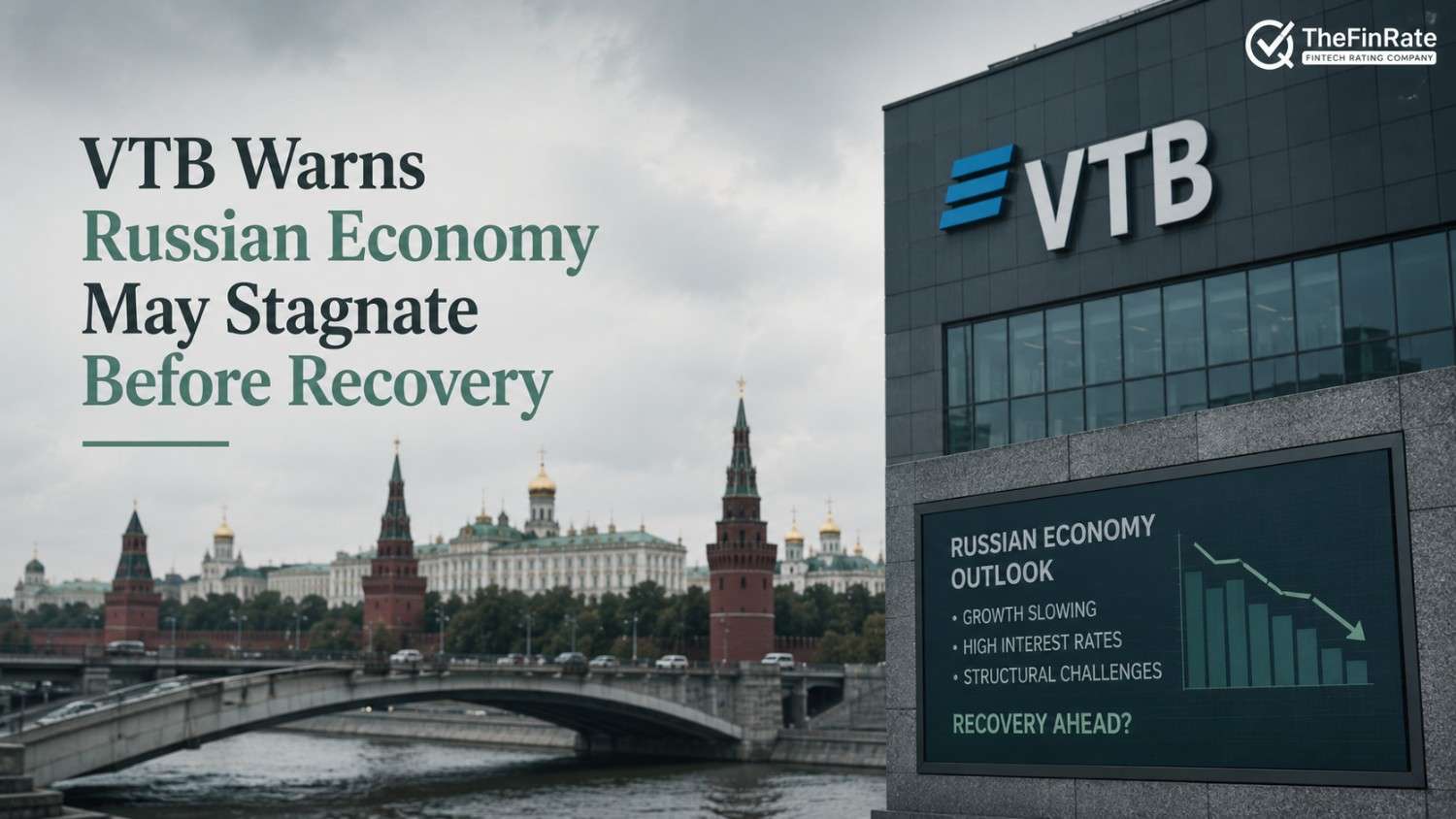
Russian economy stagnation concerns rise after VTB warning
Russian economy stagnation has become a major topic after Russian lender VTB warned that economic growth could remain weak this year before showing signs of recovery in the future.
Moreover, the bank suggested that current economic conditions may lead to a period of slower activity as businesses and consumers adjust to ongoing financial and geopolitical pressures. As a result, economists and investors are closely monitoring economic indicators for signs of improvement or further weakness.
Furthermore, the warning highlights the challenges facing Russia’s economy as policymakers seek to balance growth, inflation, investment, and financial stability.
Russian economy stagnation reflects growth challenges
The latest concerns about Russian economy stagnation stem from several economic pressures affecting business activity and investment.
Key factors include:
- Slower economic growth
- Investment uncertainty
- Inflation concerns
- Labour market pressures
- Financial market volatility
Moreover, economic growth often slows when businesses become cautious about spending and expansion. Because uncertainty can affect investment decisions, economic momentum may weaken.
Furthermore, policymakers continue evaluating measures to support growth.
VTB sees recovery potential beyond current slowdown
While discussing Russian economy stagnation, VTB also pointed to the possibility of future recovery.
Moreover, economic slowdowns do not necessarily indicate long-term decline. Because economies move through different cycles, periods of weaker growth are often followed by stabilization and improvement.
In addition, stronger investment activity could support future expansion.
Furthermore, economic recovery may depend on domestic and international developments.
Russian economy stagnation affects business confidence
The discussion surrounding Russian economy stagnation is influencing business sentiment across several sectors.
Several areas affected include:
- Manufacturing activity
- Corporate investment
- Consumer spending
- Infrastructure development
- Financial services
Moreover, businesses often adjust strategies when economic growth slows. Because demand conditions become less predictable, companies may delay certain investments.
Furthermore, confidence remains an important factor in economic performance.
Economic outlook remains closely watched
The issue of Russian economy stagnation continues attracting attention from investors, economists, and policymakers.
Moreover, market participants regularly monitor indicators such as industrial production, inflation, employment, and consumer spending. Because these measures provide insights into economic conditions, they play a key role in forecasting future trends.
In addition, financial institutions continue updating growth expectations.
Furthermore, economic forecasts may change as new data becomes available.
Comparison between stagnation and recovery phases
| Feature | Economic Stagnation | Economic Recovery |
|---|---|---|
| Growth Rate | Weak | Improving |
| Investment Activity | Lower | Rising |
| Business Confidence | Cautious | Stronger |
| Consumer Spending | Moderate | Expanding |
| Economic Momentum | Limited | Increasing |
Moreover, this comparison illustrates how economic conditions can evolve over time.
Russian banking sector monitors economic conditions
The conversation around Russian economy stagnation highlights the role of banks in assessing economic trends.
Moreover, financial institutions closely track business activity, lending demand, and consumer behavior. Because banks interact with multiple sectors of the economy, they often provide valuable insights into emerging trends.
In addition, lending activity can influence economic growth.
Furthermore, financial stability remains an important consideration.
Investment activity remains a key factor
The outlook for Russian economy stagnation is closely linked to investment trends.
Several important drivers include:
- Business expansion plans
- Infrastructure spending
- Industrial development
- Technology investment
- Financial sector activity
Moreover, investment contributes significantly to economic growth. Because businesses require confidence to commit capital, investment activity often reflects broader economic sentiment.
Furthermore, policymakers continue exploring ways to encourage development.
Inflation and monetary policy influence growth
The debate around Russian economy stagnation also involves inflation and monetary policy considerations.
Moreover, central banks often adjust policy settings to support economic stability. Because inflation affects consumer purchasing power and business costs, it remains a critical factor in growth projections.
In addition, interest rate decisions can influence borrowing and investment activity.
Furthermore, maintaining economic balance remains a policy priority.
Future outlook for Russian economy stagnation
The future of Russian economy stagnation will depend on economic performance, policy decisions, and business confidence.
Moreover, some analysts expect conditions to improve if investment activity strengthens and economic uncertainty declines. Because economic cycles naturally evolve, recovery remains possible over the medium term.
In addition, financial institutions will continue monitoring key indicators.
Furthermore, future growth prospects may be influenced by both domestic and global developments.
Final Thoughts
The warning about Russian economy stagnation from VTB underscores the challenges facing the economy in the near term.
Moreover, slower growth expectations reflect concerns surrounding investment, inflation, and broader economic conditions. As a result, policymakers, businesses, and investors are paying close attention to future developments.
Ultimately, Russian economy stagnation may prove temporary if economic activity stabilizes and recovery efforts gain momentum in the coming periods.
Russian lender VTB warns economy could stagnate this year before recovering | Reuters
Comments
No comments yet. Be the first to share your thoughts.
Leave a comment