
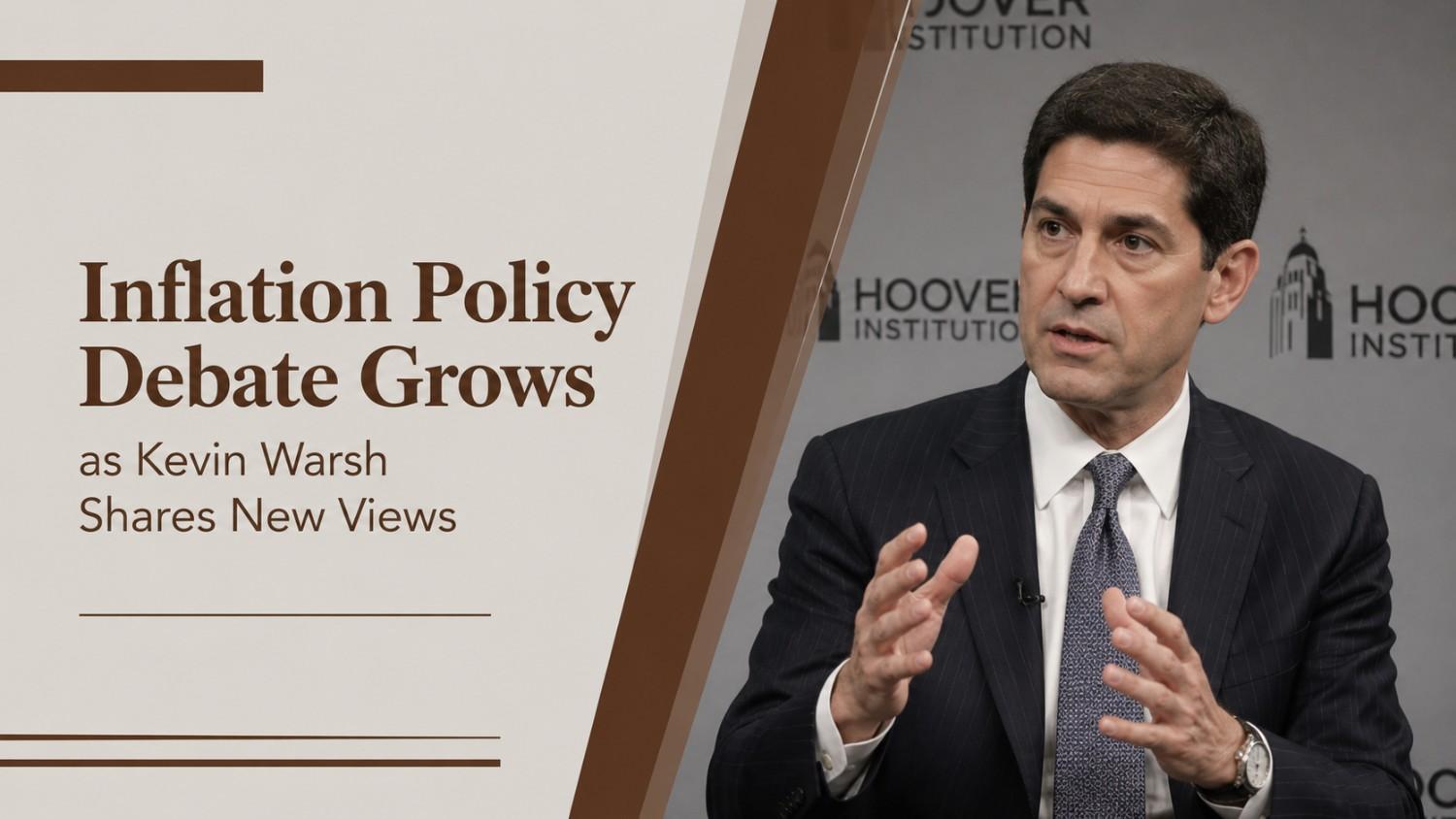
Inflation Policy Debate gains momentum as Kevin Warsh calls for a new approach
The Inflation Policy Debate has gained fresh attention after former Federal Reserve official Kevin Warsh argued that policymakers should rethink how they evaluate inflation and economic conditions.
Moreover, Warsh suggested that central banks may need broader frameworks for understanding price pressures in an economy that is being reshaped by geopolitical changes, government spending, labour market shifts, and global supply chain developments.
Furthermore, his comments come at a time when inflation remains a major concern for policymakers worldwide. As a result, the Inflation Policy Debate is attracting renewed interest from economists, investors, and financial institutions.
Inflation Policy Debate focuses on changing economic conditions
A key theme in the Inflation Policy Debate is whether traditional economic models remain effective in today’s environment.
Several factors influencing inflation include:
- Government spending
- Labour market conditions
- Energy prices
- Supply chain disruptions
- Global trade trends
Moreover, economic conditions have changed significantly over the past decade. Because markets are becoming more interconnected, some economists believe inflation analysis should evolve as well.
Furthermore, policymakers continue reviewing how different factors contribute to long-term price pressures. Consequently, debates about economic models remain active.
Kevin Warsh highlights broader inflation risks
The Inflation Policy Debate intensified after Warsh emphasized that inflation should not be viewed through a narrow lens.
Moreover, he argued that policymakers should consider a wider range of influences when assessing future inflation risks. Because structural changes can affect prices over long periods, broader analysis may provide a clearer picture of economic trends.
Furthermore, changing global conditions have created new challenges for central banks. As a result, many experts are discussing whether policy frameworks require updates.
Additionally, inflation forecasting remains one of the most difficult tasks facing monetary authorities.
Central banks continue monitoring inflation pressures
The ongoing Inflation Policy Debate reflects the challenges central banks face when setting interest rates.
Key policy considerations include:
- Inflation expectations
- Economic growth
- Employment trends
- Consumer spending
- Financial stability
Moreover, central banks aim to balance economic growth with price stability. Because inflation affects households, businesses, and financial markets, policymakers closely monitor economic indicators.
Furthermore, decisions regarding interest rates can influence borrowing costs and investment activity. Consequently, monetary policy remains a critical tool for managing inflation.
Investors follow the Inflation Policy Debate closely
The Inflation Policy Debate is also important for investors because inflation directly affects financial markets.
Moreover, higher inflation can influence bond yields, stock valuations, and currency movements. Because investment performance often depends on economic conditions, market participants closely follow policy discussions.
Furthermore, expectations regarding future interest rates can affect investor sentiment. As a result, comments from former and current policymakers frequently attract attention.
Additionally, inflation trends remain one of the most important factors influencing global markets.
Comparison between traditional and broader inflation views
| Factor | Traditional Inflation Analysis | Broader Inflation Analysis |
|---|---|---|
| Consumer Prices | Major Focus | Major Focus |
| Labour Markets | Important | Important |
| Supply Chains | Limited Focus | Significant Focus |
| Geopolitical Risks | Moderate Focus | High Focus |
| Government Spending | Moderate Focus | High Focus |
Moreover, this comparison highlights why the Inflation Policy Debate continues attracting attention among economists and policymakers.
Economic uncertainty shapes policy discussions
The current Inflation Policy Debate is taking place amid continued economic uncertainty.
Moreover, global growth trends, energy markets, and international trade developments continue influencing inflation expectations. Because economic conditions remain fluid, policymakers must adapt to changing circumstances.
Furthermore, inflation outcomes can vary significantly depending on external events. Consequently, flexibility in policy analysis may become increasingly important.
Additionally, economists continue evaluating lessons from recent inflation cycles.
Financial markets respond to inflation expectations
The Inflation Policy Debate also plays a major role in shaping financial market behaviour.
Key market impacts include:
- Bond market movements
- Currency fluctuations
- Equity valuations
- Interest rate expectations
- Investment strategies
Moreover, investors often adjust portfolios based on expected inflation trends. Because monetary policy influences market conditions, economic commentary can affect trading activity.
Furthermore, central bank communications remain closely watched. As a result, discussions about inflation continue influencing market sentiment.
Future outlook for the Inflation Policy Debate
The future of the Inflation Policy Debate is likely to remain important as policymakers navigate evolving economic conditions.
Moreover, economists are expected to continue evaluating whether existing frameworks adequately explain inflation trends. Because structural changes are reshaping the global economy, policy discussions may become increasingly complex.
Furthermore, central banks will continue refining their approaches based on new information and economic developments. Consequently, debates about inflation measurement and policy strategy are likely to continue.
Additionally, future economic shocks could further influence how inflation is understood and managed.
Final Thoughts
The Inflation Policy Debate has gained renewed attention following Kevin Warsh’s call for policymakers to broaden their understanding of inflation dynamics.
Moreover, changing economic conditions are encouraging economists and central bankers to reassess traditional assumptions about price pressures and monetary policy. As a result, discussions about inflation frameworks remain highly relevant.
Ultimately, the Inflation Policy Debate reflects the ongoing challenge of managing price stability in a rapidly changing global economy.
Kevin Warsh Wants the Fed to Think About Inflation Differently – WSJ
Comments
No comments yet. Be the first to share your thoughts.
Leave a comment