
The exchange giant’s venture arm backs Kraken’s parent company as traditional finance races to put stocks on the blockchain.
By Deepak Kumar | TheFinRate.com
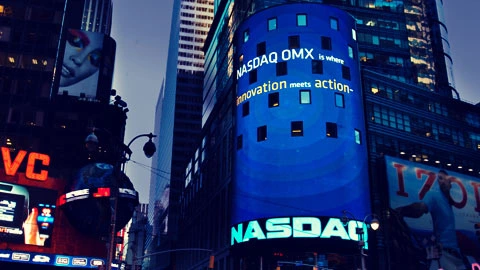
Nasdaq has invested $100 million in Payward, the parent company of crypto exchange Kraken. Nasdaq’s venture capital arm made the investment as part of a wider partnership on tokenized market infrastructure. The deal deepens a relationship that started earlier this year, when both companies revealed they were building Nasdaq Equity Tokens (NETs). In addition, Nasdaq expects NETs to launch in the second quarter of 2027. The project aims to create a foundation for how tokenized equities move across different market environments while preserving the rights and protections intended for issuers and investors.
A $100 Million Bet on Blockchain-Based Stocks
Nasdaq now says the next phase of the collaboration will advance the global distribution, trading, and post-trade capabilities needed to support broader adoption of tokenized equities. In practice, tokenized equities promise faster settlement, 24/7 trading, fractional ownership, and global access. However, the sector has struggled with questions about trust, regulation, and market integrity. This partnership attempts to solve all three.
The money is headline-grabbing. Nevertheless, the more important part of the deal might be what Payward is adopting: Nasdaq’s surveillance technology. Payward will roll out Nasdaq’s surveillance tools across its entire portfolio of trading venues. That portfolio includes crypto, equities, tokenized equities, futures, and options. In plain English, Payward is bringing institutional-grade oversight to a business that started in crypto and now expands into traditional markets.
Surveillance Tech Becomes the Real Prize
That move matters enormously for institutional investors. They want speed and innovation, but they also want to know that someone watches for market manipulation, fraud, and abuse. For example, by using Nasdaq’s surveillance tech, Payward signals that it wants to play by the rules of the big leagues. For Nasdaq, the deal is equally smart. It extends its surveillance business into new venues, shapes standards for tokenized trading, and takes a strategic stake in a company that could become a key bridge between old and new finance.
“The next era of market evolution will be defined by how efficiently and seamlessly capital and assets move across the financial system with durable liquidity,” said Tal Cohen, president of Nasdaq. “Expanding our relationship with Payward reflects our conviction that the company can play an important role in building the infrastructure that supports this evolution.”
Cohen’s quote deserves a second read. He is not talking about a niche crypto product. He is talking about the future of the entire financial system. At the same time, he is signaling that Nasdaq wants a central role in that future.
London Stock Exchange Joins the Race
Nasdaq is not the only exchange operator working with Payward. Earlier this month, the London Stock Exchange (LSE) said it is bringing its 100 largest listed companies onto the blockchain. The LSE is partnering with Payward to launch them as tokenized xStocks. Consequently, two of the world’s most important exchange groups now work with the same crypto-native parent company. Payward, best known for Kraken, is quietly positioning itself as neutral infrastructure for tokenized markets.
The competition between Nasdaq and LSE is real. Both want to lead in tokenized equities. Both see blockchain as a way to modernize trading, settlement, and distribution. Moreover, both have chosen Payward as a partner. That tells you something about Payward’s tech, regulatory posture, and reach. It also tells you that the race to tokenize public markets is no longer a thought experiment. It is a strategic priority.
Why Tokenized Equities Matter
Tokenized equities are not the same as crypto tokens. They represent actual shares, with the same economic rights and protections. The difference is the plumbing. Instead of moving through decades-old clearing and settlement systems, they move on programmable ledgers. As a result, they could reduce counterparty risk, lower costs, and open markets to investors who geography or minimum investment sizes have shut out.
However, tokenized equities also raise hard questions. How do you handle shareholder voting? What happens during a fork? How do regulators supervise a market that never closes? The Nasdaq-Payward partnership is essentially a bet that those questions can be answered. Furthermore, it is a bet that the answer will be built on Nasdaq-grade infrastructure.
What Happens Next?
Nasdaq expects NETs to launch in the second quarter of 2027. That is still a few years away. In the meantime, there are plenty of hurdles. Regulators in the U.S., Europe, and Asia will need to weigh in. Investor protection rules will need to adapt. Market infrastructure will need to be tested. Nevertheless, the $100 million investment from Nasdaq suggests the company is not waiting for perfect clarity. It is placing a bet that tokenized equities will become a meaningful part of public markets. It is also betting that Payward will be one of the companies building the rails.
For Kraken users, the deal could eventually mean access to more than crypto. Payward’s adoption of Nasdaq surveillance across equities, futures, and options suggests a future where Kraken’s parent operates a multi-asset trading venue with institutional-grade compliance. That could attract a new wave of users and capital. For traditional investors, the deal is a reminder that the walls between crypto and Wall Street are getting thinner. Tokenized stocks could one day trade alongside tokens, ETFs, and other digital assets. Settlement could happen in seconds, not days. Markets could stay open around the clock.
No one guarantees that future. But Nasdaq’s investment now funds it much better. Still, the market will decide whether tokenized equities become mainstream or remain a niche experiment.
The Bottom Line
Ultimately, Nasdaq’s $100 million investment in Payward is more than a venture bet. It is a statement of intent. The exchange giant is putting money, technology, and reputation behind the idea that tokenized equities are the next chapter of market infrastructure. Payward gets capital, credibility, and surveillance tools. Nasdaq gets exposure, influence, and a partner with crypto-native DNA. The London Stock Exchange is already in the mix. Meanwhile, the launch clock for Nasdaq Equity Tokens ticks toward 2027.
If the partnership delivers, the way investors access public companies could look very different in a few years. If it does not, it will still serve as a blueprint for how traditional exchanges and crypto companies try to build the future together. Either way, the race to tokenize equities just got a lot more serious.
Comments
No comments yet. Be the first to share your thoughts.
Leave a comment