
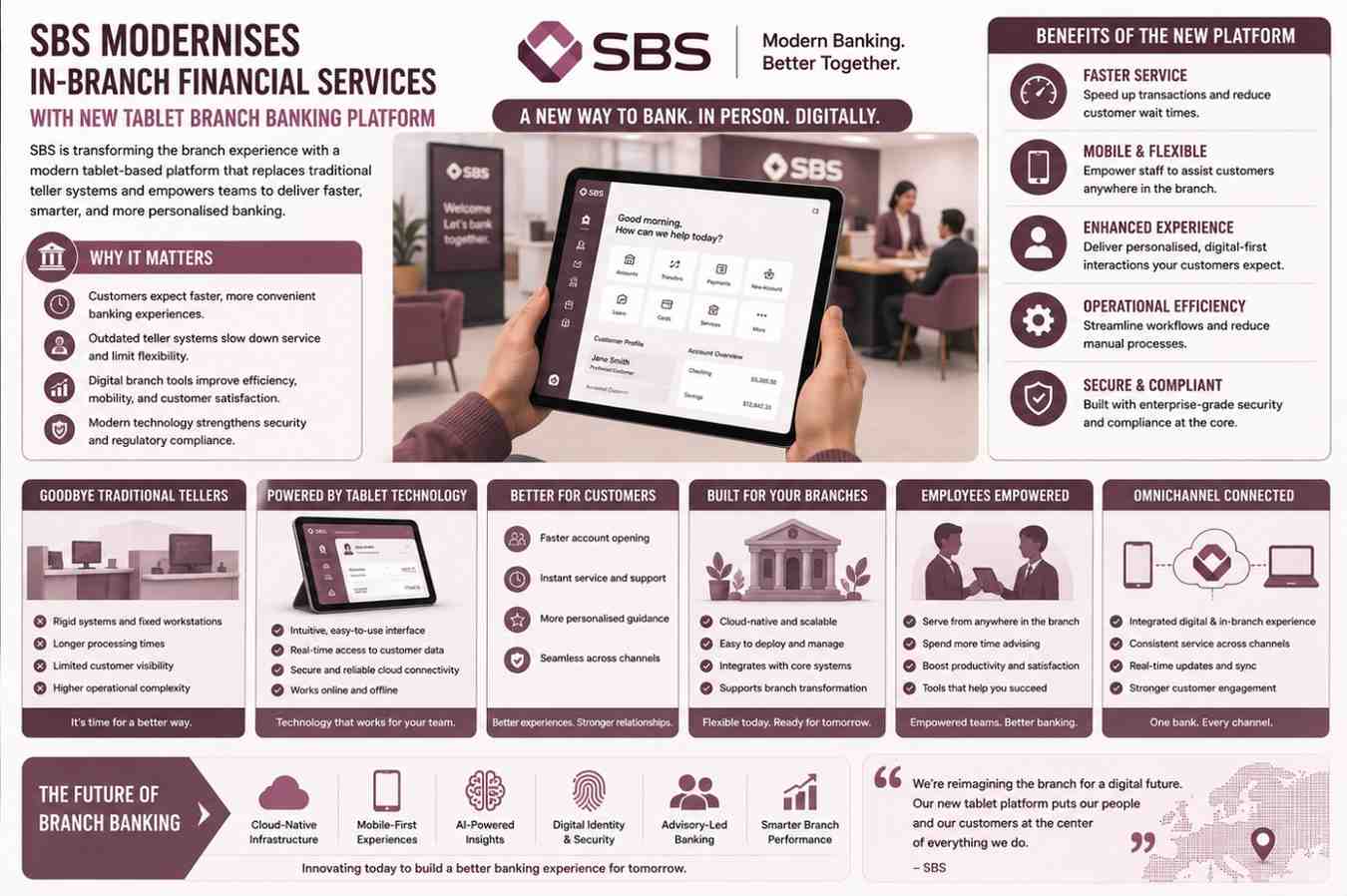
SBS is moving to modernise in-branch financial services with a new tablet branch banking platform designed to replace traditional teller systems. The initiative reflects growing demand for flexible digital banking infrastructure as financial institutions continue transforming physical branch experiences.
Over the past few years, banks worldwide have accelerated digital transformation efforts across both online and in-person banking services. As a result, financial institutions are increasingly investing in modern branch technology capable of improving customer experiences and operational efficiency.
Consequently, the launch of the new tablet-based branch banking platform highlights how banks are rethinking traditional branch operations. Moreover, financial institutions are increasingly focusing on mobile-first tools and flexible service models to modernise customer interactions. In addition, banks are redesigning branches to support more digital and advisory-based services.
Why Tablet Branch Banking Platforms Matter
Traditional teller systems have supported banking branches for decades. However, many older systems now struggle to meet modern customer expectations and digital banking requirements.
Today, customers increasingly expect:
- Faster banking services
- Mobile-style experiences
- Personalised customer support
- Seamless digital integration
- Flexible account management
Because of these changing expectations, banks are investing heavily in digital branch transformation initiatives. Furthermore, financial institutions are prioritising technologies that improve convenience and flexibility.
The new tablet branch banking platform reflects broader efforts to modernise branch infrastructure and improve operational agility.
Additionally, tablet-based systems may help banks:
- Reduce service wait times
- Improve employee mobility
- Simplify customer onboarding
- Improve branch efficiency
- Deliver more personalised services
As a result, digital branch banking platforms are becoming increasingly important across retail banking markets. At the same time, banks are seeking ways to improve branch productivity while reducing operational complexity.
Branch Banking Modernisation Continues to Accelerate
Banks worldwide continue modernising physical branches as digital finance adoption grows rapidly.
Financial institutions are increasingly investing in:
- Cloud-based banking systems
- Mobile banking integration
- Digital customer onboarding
- AI-powered service tools
- Flexible branch infrastructure
Because branch traffic patterns continue evolving, banks are redesigning branches to support more advisory-focused and digitally connected services.
The new tablet branch banking platform highlights broader trends shaping branch modernisation strategies across the financial services industry.
Furthermore, modern branch technology may help banks improve customer engagement while reducing operational complexity. Meanwhile, banks are also looking to improve service consistency across physical and digital channels.
Consequently, branch transformation remains a major priority for many financial institutions globally.
Teller Systems Are Shifting Toward Mobile Technology
Traditional teller desks are increasingly being replaced by mobile and flexible banking tools.
Today, tablet-based systems may allow bank employees to:
- Assist customers anywhere in the branches
- Open accounts digitally
- Process transactions faster
- Access customer data instantly
- Improve service flexibility
Because customers increasingly expect seamless digital experiences, banks are adopting more mobile-focused operational models. In addition, younger consumers are becoming more comfortable with app-based banking interactions.
The new tablet-based branch banking platform reflects how banking technology is evolving toward more flexible customer service environments.
Moreover, mobile branch tools may help financial institutions improve efficiency while modernising physical banking spaces. At the same time, banks continue seeking ways to combine digital convenience with in-person customer relationships.
As a result, branch banking strategies are becoming increasingly customer-centric and technology-driven.
Customer Experience Becomes a Key Focus
Customer experience has become one of the most important competitive factors in banking.
Consumers increasingly value:
- Faster service delivery
- Personalised interactions
- Digital convenience
- Real-time support
- Omnichannel banking access
Because of these expectations, banks are investing heavily in customer-focused technology systems.
The launch of the tablet branch banking platform highlights growing efforts to improve branch experiences through digital innovation.
Additionally, flexible branch technology may help institutions create more interactive and customer-friendly banking environments. Furthermore, banks are increasingly using technology to improve relationship management and customer retention.
Consequently, customer experience strategies continue shaping branch technology investment decisions.
Digital and Physical Banking Continue Converging
Although digital banking adoption continues growing, physical branches still play an important role in financial services.
Today, many customers continue visiting branches for:
- Financial advice
- Complex banking services
- Loan discussions
- Wealth management support
- Identity verification
Because of this ongoing demand, banks are increasingly combining digital tools with traditional branch services.
The new tablet branch banking platform reflects broader industry efforts to create connected and seamless banking ecosystems.
Furthermore, integrated digital branch systems may help financial institutions improve both customer satisfaction and operational efficiency. Meanwhile, banks continue adapting branch layouts to support more collaborative and digitally enabled service models.
Competition Across Banking Technology Intensifies
Competition within banking technology continues to increase rapidly as financial institutions modernise their infrastructure.
Technology providers increasingly compete across areas such as:
- Branch automation
- Cloud banking systems
- Customer engagement tools
- Mobile banking integration
- Digital onboarding platforms
Because banks are prioritising digital transformation, demand for modern branch infrastructure remains strong.
The new tablet branch banking platform, therefore, reflects growing investment in branch technology innovation across the banking sector.
Moreover, institutions that modernise branch systems successfully may strengthen long-term customer relationships and operational performance. In addition, technology providers are competing to deliver faster, more scalable, and more flexible banking solutions.
Security and Compliance Remain Critical
As banking systems become more digital and mobile, financial institutions must continue prioritising:
- Data security
- Customer privacy
- Regulatory compliance
- Transaction monitoring
- Operational resilience
Because digital banking environments face increasing cybersecurity risks, banks must ensure modern systems remain secure and compliant.
The launch of the tablet branch banking platform highlights how security and operational flexibility must work together within modern banking infrastructure.
Additionally, cloud-connected branch systems may help institutions improve monitoring and system management across banking operations. Meanwhile, regulators continue increasing focus on digital banking resilience and customer data protection.
Future Outlook for Tablet Branch Banking Platforms
Looking ahead, branch banking technology is expected to continue evolving rapidly.
Several trends may shape the future of branch banking, including:
- AI-powered customer support
- Cloud-native banking systems
- Mobile-first branch services
- Real-time digital onboarding
- Smart branch automation
Because customer expectations continue shifting toward convenience and digital accessibility, banks will likely continue investing in modern branch infrastructure.
In addition, tablet-based systems may become increasingly common as financial institutions redesign branches around flexible service experiences.
The new tablet branch banking platform initiative could therefore represent part of a larger transformation taking place across global retail banking.
Final Thoughts
SBS’s move to replace traditional teller systems with a tablet-based branch banking platform highlights the growing importance of digital transformation within physical banking environments.
As financial institutions continue modernising customer experiences and operational systems, flexible branch technology is becoming increasingly important.
The new tablet branch banking platform reflects broader industry trends toward mobile-first services, digital integration, and customer-focused banking innovation.
Ultimately, banks that successfully combine digital efficiency with personalised branch experiences may strengthen their competitive position in the evolving financial services market.
Comments
No comments yet. Be the first to share your thoughts.
Leave a comment