
It takes eleven words to ask, and four to answer.
The company doesn’t have any seals at the moment. Can we just sign instead?
Yes.
That’s it. That’s the whole exchange. No follow-up question. No request for an alternative form of corporate authentication. No pause. A legal agreement — the same one governing a 10% reserve, a six-month hold, weekly settlements, chargeback fees, a merchant ID about to move real money — had a requirement, and the requirement turned out to be negotiable in real time, in a chat window, in under a minute.
This is a story about that minute. It’s short on purpose, because the thing it’s about is small on purpose too — small enough to slide past almost anyone, which is exactly the point.
What a Seal Is Actually For
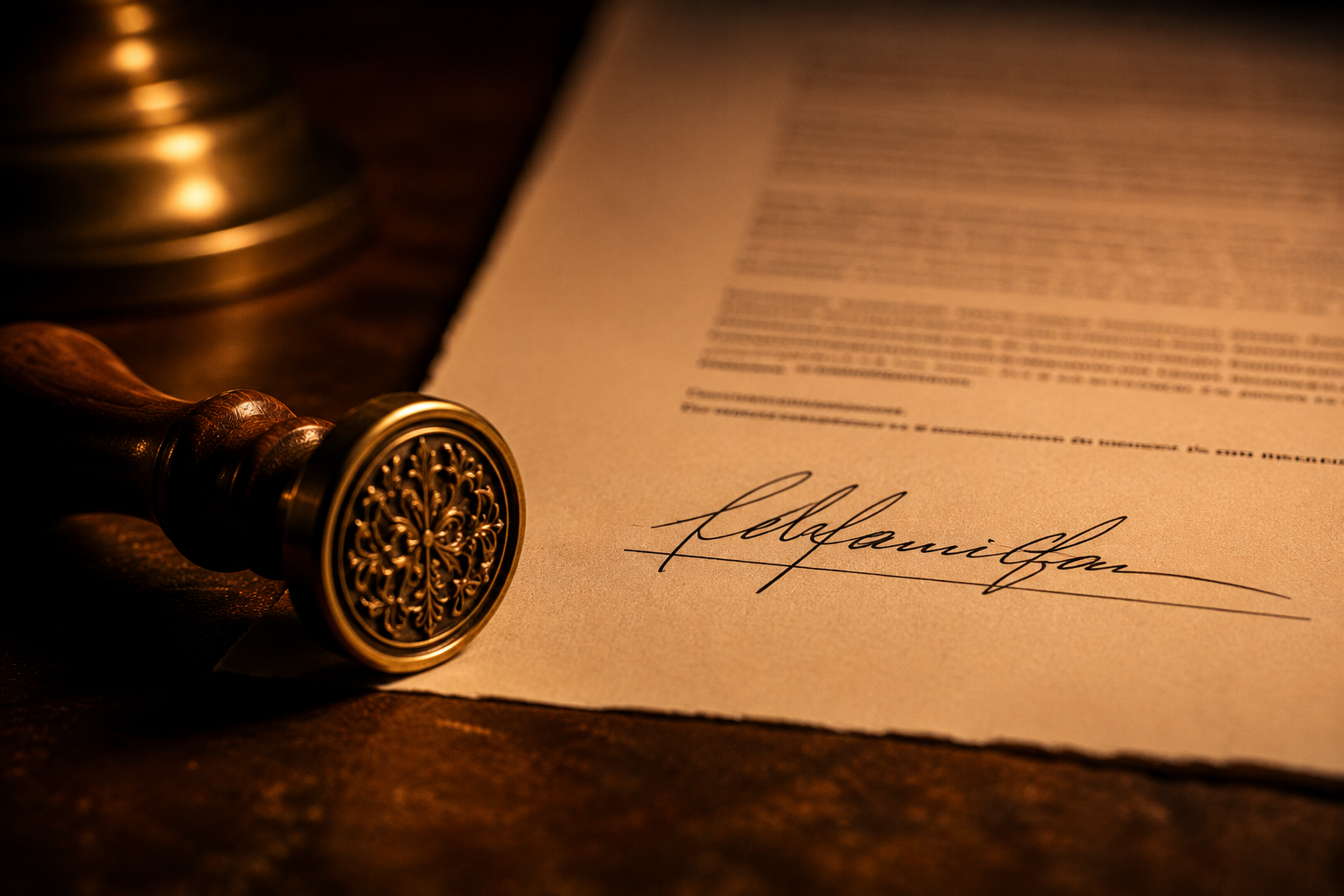
A corporate seal — a stamp, an official chop, whatever form it takes in a given jurisdiction — exists to solve a specific, boring problem: how does a piece of paper prove that a company, as opposed to a person who happens to work there, actually authorized something? A signature proves a human being wrote their name. A seal is supposed to prove the organization itself stood behind the document, independent of which individual happened to be holding the pen that day.
It’s not glamorous. Nobody builds their brand around their corporate seal. It’s the kind of requirement that exists in the boring middle of a contract template, inserted by a legal team years ago, rarely thought about again — right up until the moment it’s actually needed, which is usually the moment something goes wrong and someone needs to prove, definitively, that the company itself — not just an employee, not just a signature — agreed to the terms in front of them.
The Moment It Became Optional
Here’s what makes this particular exchange worth pulling apart: the request to skip the seal didn’t come with an explanation, and none was asked for. The company doesn’t have any seals at the moment is doing an enormous amount of unexamined work in that sentence. At the moment. As opposed to — what? Ever? Later? Is this a brand-new entity that genuinely hasn’t ordered one yet, which happens all the time and is completely mundane? Or is it a company that was never going to have one, structured specifically to avoid the kind of institutional accountability a seal is meant to represent?
The honest answer is: nobody knows, because nobody asked. The requirement existed, hit a mild obstacle, and dissolved on contact — not because the obstacle was investigated and found to be harmless, but because investigating it would have slowed things down, and slowing things down wasn’t what either side wanted in that moment.
Paperwork Theater
Here’s the uncomfortable idea sitting underneath this whole story: a meaningful percentage of the formality in financial contracts isn’t actually load-bearing. It’s theater — ritual, performed consistently enough that everyone assumes it must matter, right up until someone tests that assumption and discovers the ritual bends the second anyone leans on it.
That’s not necessarily a scandal. Plenty of paperwork theater is genuinely harmless — a formatting requirement, a box a signature has to land inside, a font size nobody will ever litigate over. The danger isn’t that some formalities are theater. It’s that you can’t tell, from the outside, which formalities are theater and which ones are the actual mechanism holding the relationship together — until you watch someone ask to skip one and see how easily it goes.
When a company seal — one of the more meaningful authentication requirements in a corporate contract, not a formatting quirk — gets waived in a four-word exchange with zero friction, that tells you something about every other requirement in the same document. Not that they’re all fake. But that the actual enforcement mechanism for all of them is: however much anyone happens to push back in the moment. Which, in this conversation, was nothing at all.
What Doesn’t Get Waived This Easily
Contrast this with what doesn’t bend in these conversations. Pricing terms get negotiated, sometimes, at the margins — a fee here, a percentage point there — but they don’t get waived outright with a one-word yes. Reserve percentages get discussed and occasionally softened, but always within a defined range, never eliminated. KYC document lists get delivered as fixed checklists, non-negotiable, the same seven items every time.
The seal was different. The seal wasn’t negotiated down. It was just… skipped. Which suggests something worth sitting with: not all requirements in a contract carry equal institutional weight, and the ones that bend easiest are not always the ones you’d guess from reading the document cold. You’d think a corporate seal — the literal symbol of an entity standing behind its own signature — would be one of the harder things to talk your way around. It was, in this case, one of the easiest.
The Bigger Question This Raises
If a seal is optional the moment someone says it’s inconvenient, what else in the relationship is optional the moment it becomes inconvenient? Is the KYC document list actually fixed, or does it bend too, under different pressure, phrased differently? Is the 45-day review period before reserve terms can be revisited a real policy, or is it also just the current shape of a boundary that hasn’t been pushed on yet?
None of these questions have answers you can get from reading a contract. They only have answers you get by watching what happens when something — anything — gets tested. The seal wasn’t important because a stamp is inherently important. It was important because it was the one moment in this entire relationship where a formal requirement met resistance and folded immediately, on record, in writing, for anyone reading the transcript later to see exactly how much pressure it actually took.
Not much. Eleven words in. Four words out. Approved, same conversation.
The Smallest Useful Habit
There’s no elaborate lesson to extract here, and that’s sort of the point of telling this story at all. The takeaway isn’t a checklist. It’s a single, small habit worth adopting in any high-stakes negotiation: notice the first time a formal requirement gets waived without explanation, and treat that moment as information about everything else in the document — not as an isolated, harmless exception.
The seal that didn’t matter wasn’t really about the seal. It was a five-second window into how much of the rest of the paperwork was ever actually going to hold, once someone leaned on it. Most people don’t get that window. This conversation happened to leave a transcript, and the transcript happened to catch it — one small, forgettable moment, doing exactly what small, forgettable moments do best: telling you the truth about a relationship before either side has decided to notice.
This piece is a narrative reflection based on a single exchange from an anonymized real conversation. No company is named or identified. It is offered as educational content on contract due diligence and is not legal advice.
Comments
No comments yet. Be the first to share your thoughts.
Leave a comment