
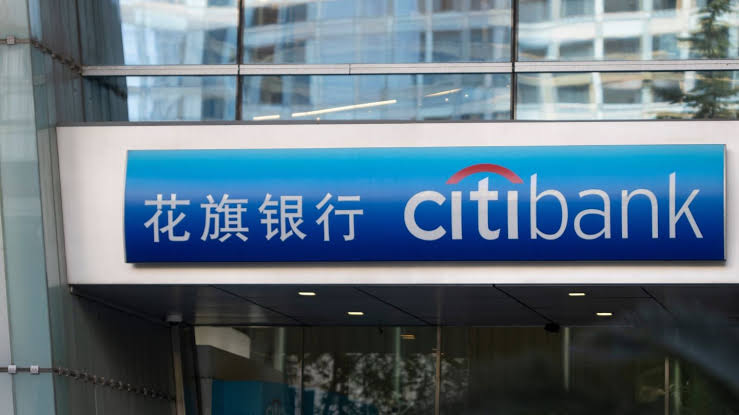
Citigroup is reportedly getting closer to securing a wholly owned brokerage licence in mainland China, with the US bank planning to roughly double the unit’s headcount to about 100 employees by the end of 2026.
Reuters reports that regulatory approval could come as early as September, although Citi has not publicly confirmed the timeline. The bank applied for the license in late 2021 as part of a broader effort to expand its onshore presence in China’s financial markets.
Once approved, Citi would be able to offer A-share brokerage, underwriting, research, and principal trading services in the mainland market. The business would complement Citi’s existing China operations, which have largely focused on helping Chinese companies access international capital markets.
Citi Targets Onshore China Opportunity
Citi’s planned expansion would bring more of its global investment banking capabilities directly into China’s domestic securities market.
The bank plans to build the brokerage team through a combination of internal transfers and external recruitment. Some employees are expected to move from Hong Kong and other Asian markets, while Citi also plans to hire senior front-office professionals and support staff locally.
The expansion is designed to support a wider range of services for Chinese companies and investors.
Citi is expected to target sectors including technology, healthcare, consumer businesses, and financial institutions. The bank also sees opportunities among emerging companies working in areas such as artificial intelligence and semiconductors.
A key advantage could come from Citi’s existing corporate and commercial banking relationships in mainland China.
The bank already provides clients with services such as foreign exchange, cash management, and trade finance. A domestic brokerage license could allow Citi to build on those relationships by pursuing A-share equity mandates and mergers and acquisitions work.
Competition With Global and Chinese Brokerages
Citi would enter a highly competitive market.
Other major US investment banks, including JPMorgan, Goldman Sachs, and Morgan Stanley, already operate wholly owned securities businesses in China. Their experience highlights both the opportunity and the challenges facing international firms seeking a larger share of the country’s domestic capital markets.
The performance of those businesses also suggests there is meaningful demand for onshore securities services.
According to figures cited in the report, Goldman Sachs’ China securities unit almost tripled its profit in 2025 to $217.39 million, while JPMorgan’s unit nearly quadrupled profit to about $146.5 million. Morgan Stanley’s China securities operation also recorded a sharp increase in profit, reaching approximately $20.5 million.
However, Citi will face much tougher competition beyond Wall Street.
China’s domestic brokerage firms remain dominant and have deep local relationships. Foreign firms have also faced difficulties competing in parts of China’s financial-services market, with some international groups scaling back operations.
Recent moves by other financial institutions show both sides of the story.
UBS, for example, announced that it would shut its Chinese fund distribution unit after struggling to gain sufficient scale in a highly competitive market while maintaining its broader wealth-management and securities presence in China.
China Expansion Comes Despite Global Uncertainty
Citi’s push into mainland brokerage services is notable given the broader geopolitical and economic relationship between the United States and China.
The two countries remain strategic competitors across technology, trade, and finance. Yet China’s financial sector has continued to open selected areas to foreign institutions.
Citi’s move suggests the bank sees long-term value in having deeper access to China’s domestic capital markets, even as international firms weigh the costs and risks of operating there.
The possible timing of the license is also attracting attention because it could coincide with a potential late-September meeting between US President Donald Trump and Chinese President Xi Jinping, according to Reuters’ sources.
That timing remains unconfirmed, however, and should not be interpreted as evidence that any political meeting is directly linked to the regulatory decision.
Citi Builds Around Chinese Companies’ Global Needs
The planned brokerage business is also part of Citi’s broader strategy to serve Chinese companies as they expand internationally.
The bank has long positioned its global network as an advantage for multinational and emerging-market clients. A stronger mainland securities operation could connect Citi’s domestic relationships with its international investment banking, markets, and financing capabilities.
That could be particularly valuable for companies in technology and advanced manufacturing, where access to both domestic and international capital markets is becoming increasingly important.
Citi has also been expanding its broader support for North Asian clients. The bank recently said it would increase headcount across South Africa, Europe, and Asia to support North Asian customers, including mainland Chinese companies, with outbound banking needs.
This points to a strategy that goes beyond simply winning domestic brokerage mandates.
Citi appears to be building a broader corridor between China’s domestic economy and global capital markets.
Headcount Expansion Signals Confidence
The plan to increase the China brokerage unit to around 100 employees is significant because it indicates Citi is preparing for a sizeable operation rather than treating the license as a limited regulatory foothold.
Hiring experienced front-office bankers will be particularly important.
Winning equity underwriting, M&A, and institutional trading business requires established relationships and strong local-market expertise. Citi will therefore need to compete for talent as well as clients.
Its ability to move experienced staff from Hong Kong and other Asian markets could help accelerate the build-out.
At the same time, local recruitment will remain essential because domestic market knowledge and relationships are difficult to replicate from offshore locations.
Citi’s China Bet Enters a New Phase
If the license is approved, Citi will gain a much broader set of tools for participating in China’s onshore financial markets.
The bank has already spent several years preparing for that possibility. Now, its focus appears to be shifting toward building the team and commercial infrastructure needed to compete effectively.
The opportunity is substantial.
China remains one of the world’s largest capital markets, with a deep base of listed companies, institutional investors, and rapidly growing businesses in technology and other strategic sectors.
But the competitive environment is equally demanding.
Citi will be competing against established Chinese brokerages, other global investment banks, and financial institutions that already have years of onshore experience.
For Citi, the license would therefore be more than a regulatory milestone. It would be a test of whether a global bank can turn a deeper physical presence in mainland China into sustainable investment banking and market growth.
For now, the approval remains reported rather than confirmed.
But Citi’s planned hiring and operating build-out suggest the bank is preparing as though the next phase of its China strategy is close to beginning.
Comments
No comments yet. Be the first to share your thoughts.
Leave a comment