
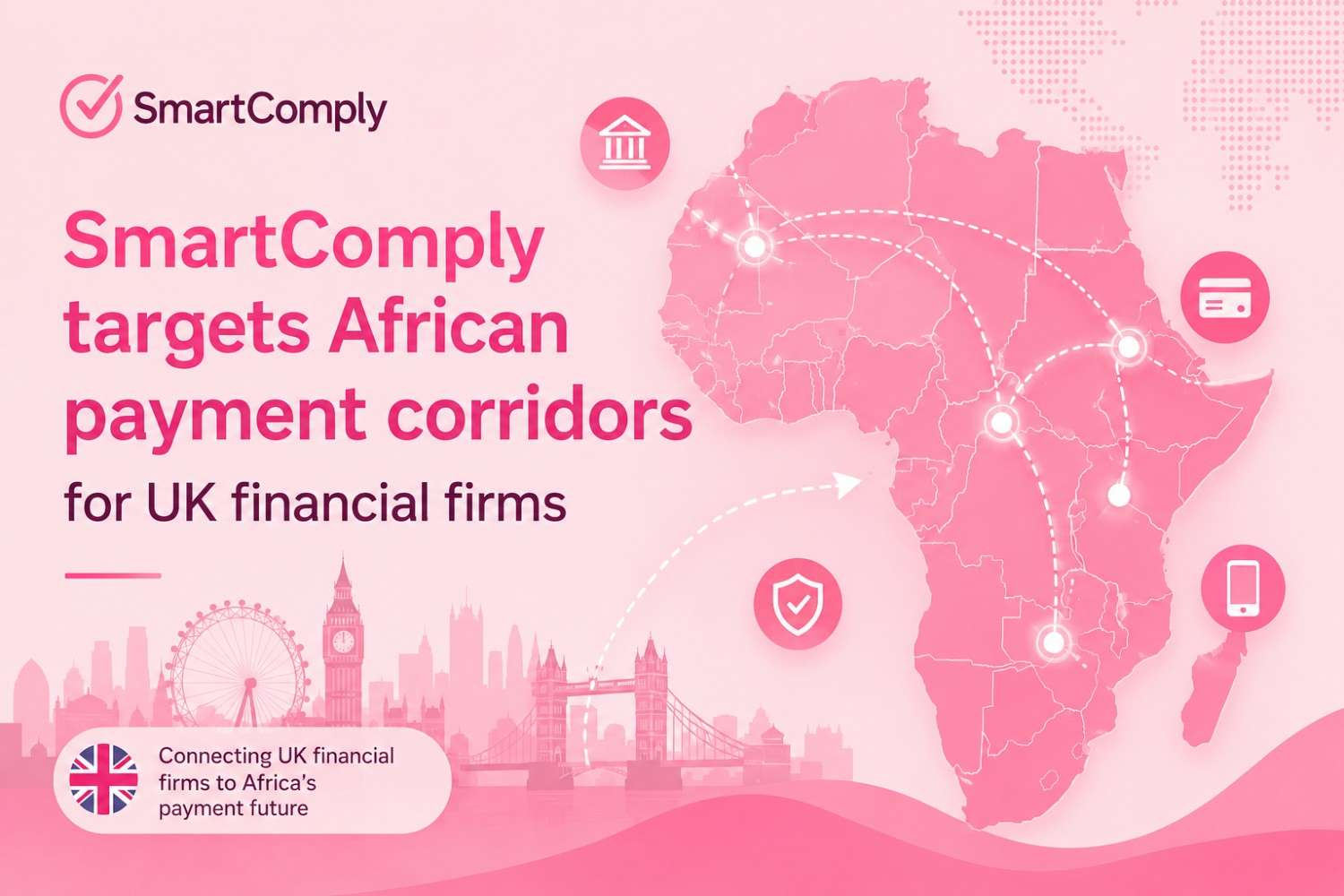
SmartComply is increasing efforts to help UK firms reconnect with important African payment corridors that have faced restrictions in recent years. As global compliance standards become stricter, many banks and payment providers have reduced exposure to several African markets.
Consequently, businesses and consumers have experienced slower international transfers, higher payment costs, and reduced banking access. However, SmartComply believes better compliance systems can help restore confidence in cross-border African transactions.
Moreover, the company is focusing on helping financial institutions improve payment monitoring, customer verification, and transaction transparency. Therefore, UK firms may find it easier to rebuild banking relationships linked to African markets.
Why African payment corridors are important for global finance
The reopening of African payment corridors is important for remittances, trade, and financial inclusion. In particular, payment routes between the UK and Africa support millions of individuals and businesses every year.
For example, these corridors help with:
- Diaspora remittances
- International business payments
- Import and export transactions
- Digital commerce
- SME financing
However, many global financial institutions reduced services because of rising AML concerns, fraud risks, and compliance pressure.
As a result, several African payment channels became more expensive and less efficient. Furthermore, smaller payment firms often struggled to maintain access to global banking systems.
Therefore, rebuilding payment access has become a major goal for fintech companies and regulators alike.
SmartComply focuses on compliance to restore payment access
SmartComply is using compliance-focused technology to improve trust between payment providers and financial institutions. In addition, the company is helping firms strengthen internal controls linked to international transactions.
Its services focus on:
- AML transaction monitoring
- KYC verification
- Risk analysis
- Fraud prevention systems
- Compliance reporting
Because of these tools, financial institutions may feel more comfortable processing transactions connected to African markets.
Moreover, stronger compliance systems can reduce operational risks and improve regulatory confidence. As a result, payment providers may regain access to banking services that were previously restricted.
African payment corridors face rising compliance pressure
Over the last few years, several African payment corridors have been affected by global banking de-risking strategies. Essentially, banks reduced relationships with payment firms operating in higher-risk regions.
This trend happened because many financial institutions wanted to lower their exposure to:
- Regulatory penalties
- Fraud risks
- Sanctions violations
- AML failures
Consequently, many businesses operating between the UK and Africa faced payment delays and banking disruptions.
Furthermore, some remittance providers lost direct banking access completely. Therefore, fintech firms are now trying to rebuild trust using stronger compliance technology.
SmartComply aims to improve the UK-Africa payment infrastructure
SmartComply believes technology-driven compliance systems can help modernise Africa-focused payment infrastructure. In particular, the company wants to improve transparency and reduce friction in cross-border transfers.
The company’s approach includes:
- Automated compliance checks
- Better transaction visibility
- Faster payment reviews
- Real-time monitoring systems
As a result, payment providers may process international transfers more efficiently.
Moreover, stronger monitoring systems can reduce false payment alerts, which often slow down legitimate transactions. Consequently, businesses and consumers may experience faster transfer speeds and lower operational delays.
African payment corridors support remittances and trade growth
Millions of Africans living abroad rely on international payment services to send money home. Therefore, stronger African payment corridors are critical for economic activity across the continent.
In addition, businesses operating across borders depend on stable banking access to complete trade payments efficiently.
Improved payment systems could help:
- Lower transfer costs
- Increase payment speed
- Improve financial inclusion
- Support digital commerce growth
Consequently, a stronger payment infrastructure could benefit both consumers and businesses.
Moreover, small businesses may particularly benefit because they often face the highest payment barriers in international trade.
Fintech firms are reshaping cross-border African payments
Traditional banks have become more cautious about servicing some international African payment routes. However, fintech companies are increasingly filling that gap.
Today, fintech firms provide:
- Digital wallets
- Mobile payment systems
- Real-time transfers
- Automated compliance tools
Furthermore, many fintech companies operate with lower infrastructure costs compared to traditional banks. As a result, they can offer faster and more flexible payment services.
Therefore, fintech infrastructure is becoming increasingly important in global African payment ecosystems.
Comparison between traditional banking and fintech payment systems
| Feature: Traditional | l Banking Systems, Fintech | h Payment Platforms |
|---|---|---|
| Payment speed | Slower | Faster |
| Compliance process | Manual-heavy | Automated |
| Access to African markets | Limited | Expanding |
| Customer experience | Complex | Simpler |
| Operating costs | Higher | More efficient |
This comparison highlights why fintech-led compliance systems are becoming more attractive for cross-border finance.
Regulatory oversight remains critical for African payment corridors
Although fintech firms are improving payment access, regulators continue increasing oversight of cross-border financial activity.
Financial institutions must still comply with:
- AML regulations
- KYC rules
- Fraud prevention standards
- Sanctions screening requirements
Because of this, payment providers need strong compliance frameworks to maintain banking relationships.
Therefore, SmartComply’s compliance-focused approach may help firms reduce regulatory risk while improving operational efficiency.
Risks linked to reopening African payment corridors
Despite the opportunities, reopening African payment corridors still carries risks.
For example, financial institutions may face:
- Cybersecurity threats
- Fraud attempts
- Compliance failures
- Regulatory investigations
Moreover, weak monitoring systems could expose firms to financial penalties and reputational damage.
Therefore, companies must balance payment access with strong operational controls.
At the same time, fintech companies are investing heavily in AI-driven monitoring tools to improve payment security.
Future outlook for African payment corridors
The future of African payment corridors may depend heavily on fintech innovation and regulatory cooperation. As digital payments continue growing across African markets, demand for reliable cross-border infrastructure is expected to rise.
Furthermore, cloud technology and AI-based monitoring systems could improve payment efficiency and reduce operational risks.
Future trends may include:
- Faster remittance systems
- Increased mobile payment adoption
- More fintech-bank partnerships
- Better compliance automation
Consequently, international payment systems linked to African markets may become more efficient and accessible over time.
Final Thoughts on SmartComply and African Payment Corridors
SmartComply’s efforts to help UK firms reconnect with African payment corridors reflect a broader shift happening across global finance. As compliance expectations continue rising, fintech firms are increasingly using technology to improve trust and rebuild payment access.
Moreover, stronger compliance systems could help reduce delays, improve remittance services, and support international trade growth.
Ultimately, the modernisation of African payment infrastructure may create long-term benefits for businesses, consumers, and the wider fintech industry.
Comments
No comments yet. Be the first to share your thoughts.
Leave a comment