
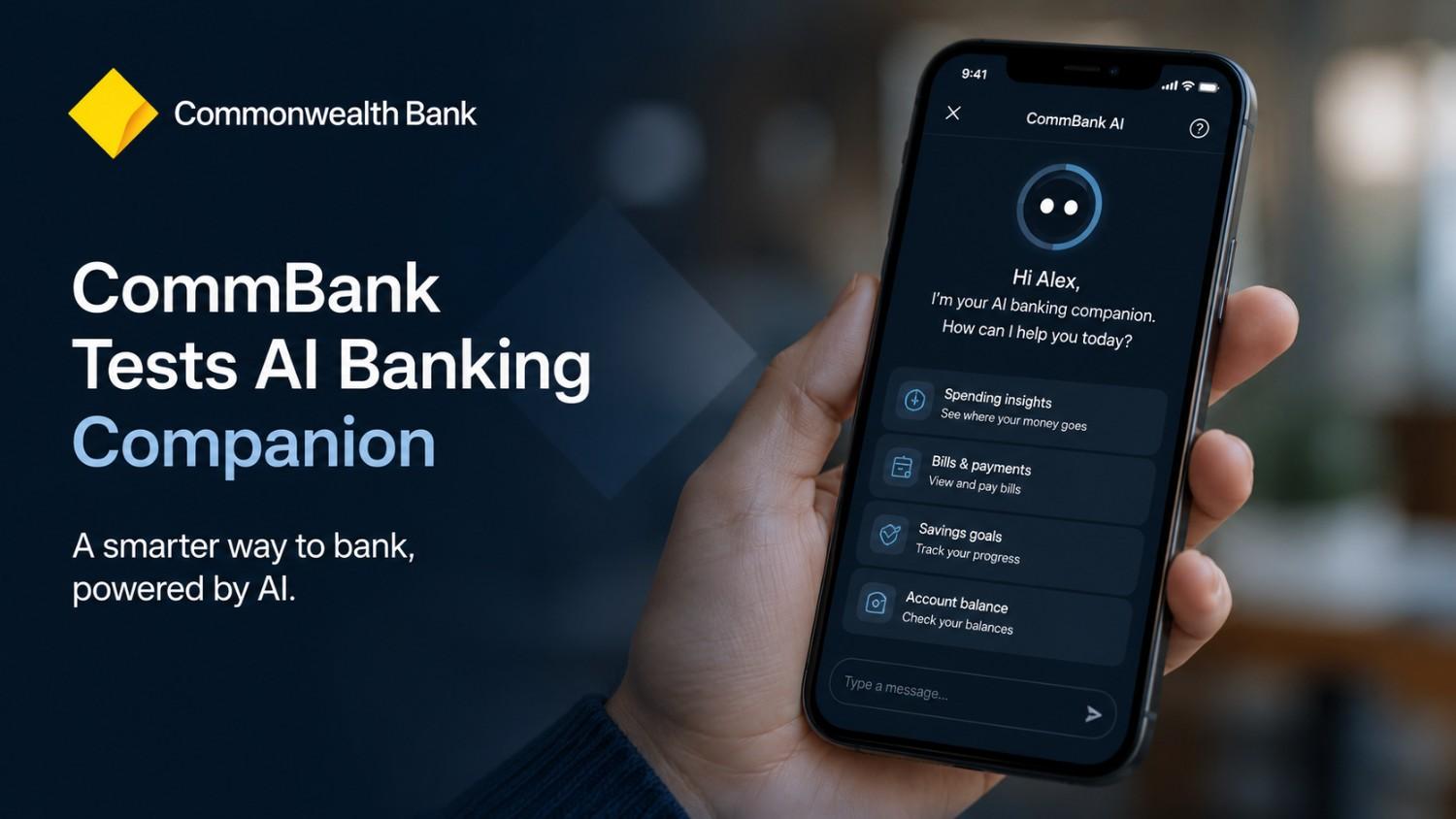
CommBank has started testing an AI banking companion within its banking app as financial institutions continue investing in artificial intelligence and digital customer experiences.
The move reflects growing interest in AI-powered banking tools designed to improve customer support, financial guidance, and app engagement.
Moreover, banks globally are adopting AI systems to streamline operations and provide faster customer assistance.
As a result, AI-driven banking services are becoming an important part of digital transformation strategies across the financial sector.
Furthermore, the latest development highlights how banks are increasingly using automation and machine learning to improve customer interaction.
Why the AI banking companion matters
The new AI banking companion could help improve how customers interact with digital banking services.
Today, banking customers increasingly expect:
- Faster support responses
- Personalised recommendations
- Easy app navigation
- Real-time financial assistance
Because mobile banking usage continues growing, banks are under pressure to deliver more intelligent and responsive digital experiences.
Consequently, AI-powered assistants are becoming more common across financial services platforms.
Moreover, AI tools can help banks improve efficiency while reducing pressure on customer support teams.
AI becomes a larger focus in banking.
Financial institutions globally are expanding investments in artificial intelligence technologies.
Banks are increasingly using AI for:
- Customer support automation
- Fraud detection
- Spending insights
- Personalised banking recommendations
Because digital banking competition continues to increase, financial firms are searching for ways to improve customer experience and operational speed.
As a result, AI systems are becoming central to many banking technology strategies.
Furthermore, automation may help financial institutions reduce costs and improve service quality.
CommBank strengthens digital banking strategy.
The launch of the AI banking companion reflects CommBank’s broader focus on digital banking innovation.
Several areas remain important for modern banks:
- Mobile banking experiences
- AI-driven customer engagement
- Real-time financial support
- Digital self-service tools
Because customers increasingly prefer app-based banking, financial institutions are investing heavily in digital platforms.
Consequently, banks are integrating AI features directly into mobile applications and online services.
Moreover, AI systems can help users complete tasks more efficiently within banking apps.
AI-powered customer support continues expanding.
Customer service remains one of the largest areas of AI adoption in financial services.
AI banking systems can help users with:
- Account questions
- Transaction support
- Spending information
- Financial planning insights
Additionally, AI tools may provide support outside normal banking hours.
As a result, banks can improve customer accessibility and response times.
Furthermore, automated systems may reduce waiting times for basic customer requests.
Comparison between traditional banking support and AI banking systems
| Feature | Traditional Support Systems | AI Banking Systems |
|---|---|---|
| Availability | Limited hours | 24/7 access |
| Response speed | Slower | Faster |
| Personalization | Moderate | Higher |
| Operational cost | Higher | Lower potential |
| Automation level | Limited | Advanced |
This comparison shows why AI tools are becoming more valuable in digital banking environments.
Digital banking competition continues to rise
The banking industry continues facing strong competition from:
- Digital-only banks
- Fintech startups
- Payment apps
- AI-powered finance platforms
Because customers now expect smooth and intelligent digital experiences, banks are accelerating technology investments.
Consequently, AI-based banking tools are becoming a competitive advantage within financial services.
Moreover, customer expectations around digital convenience continue increasing.
As a result, banks are expanding automation and personalisation efforts.
Risks linked to AI banking systems
Although AI tools offer several advantages, they also create new risks and challenges.
Main concerns include:
- Data privacy issues
- Cybersecurity threats
- Incorrect AI responses
- Regulatory compliance challenges
Because financial data is highly sensitive, banks must ensure AI systems remain secure and reliable.
Moreover, regulators increasingly expect strong oversight around automated financial services.
Therefore, banks must carefully manage AI deployment and monitoring processes.
AI regulation and trust remain important.
As AI adoption grows, financial institutions must balance innovation with customer trust and regulatory compliance.
Key priorities include:
- Transparent AI systems
- Customer data protection
- Responsible automation
- Secure digital infrastructure
Consequently, banks are expected to invest more heavily in AI governance and risk management frameworks.
Moreover, customer trust will remain critical for successful AI adoption in banking services.
As a result, financial institutions must ensure AI systems deliver accurate and safe experiences.
AI could reshape future banking experiences.
The testing of the AI banking companion may signal broader changes in how customers interact with banks in the future.
Several trends are likely to shape banking technology:
- More conversational AI tools
- Personalised financial guidance
- Automated banking support
- AI-powered spending analysis
Additionally, AI systems may become more integrated across mobile banking platforms.
As a result, customer experiences could become faster, smarter, and more personalised over time.
However, banks will still need strong human oversight and security protections.
Future outlook for the AI banking companion
The future of the AI banking companion will depend on customer adoption, technology performance, and regulatory developments.
Several areas may influence future growth:
- Expansion of AI-powered banking
- Better personalisation tools
- Improved digital engagement
- Faster customer support systems
Furthermore, financial institutions globally are expected to continue testing AI applications across banking services.
Consequently, AI may become a standard feature within digital banking platforms.
However, security, transparency, and customer trust will remain essential for long-term success.
Final Thoughts on the AI Banking Companion
CommBank’s testing of an AI banking companion reflects the banking industry’s growing focus on artificial intelligence and digital customer experiences.
As mobile banking continues expanding, financial institutions are increasingly using AI to improve customer support, personalisation, and operational efficiency.
Moreover, AI-powered tools may help banks deliver faster and more convenient services while reducing operational pressure.
Ultimately, the success of AI banking systems will depend on responsible deployment, strong security measures, and the ability to maintain customer trust.
Comments
No comments yet. Be the first to share your thoughts.
Leave a comment